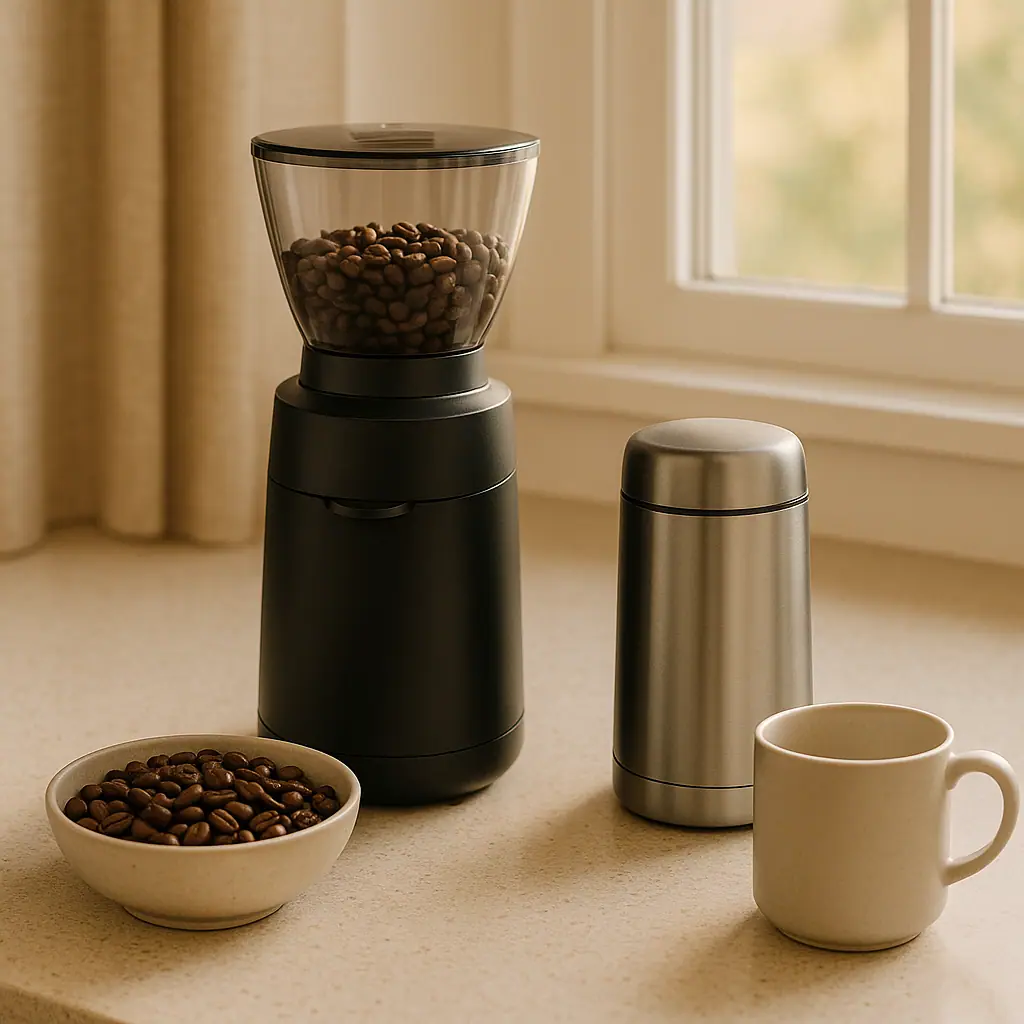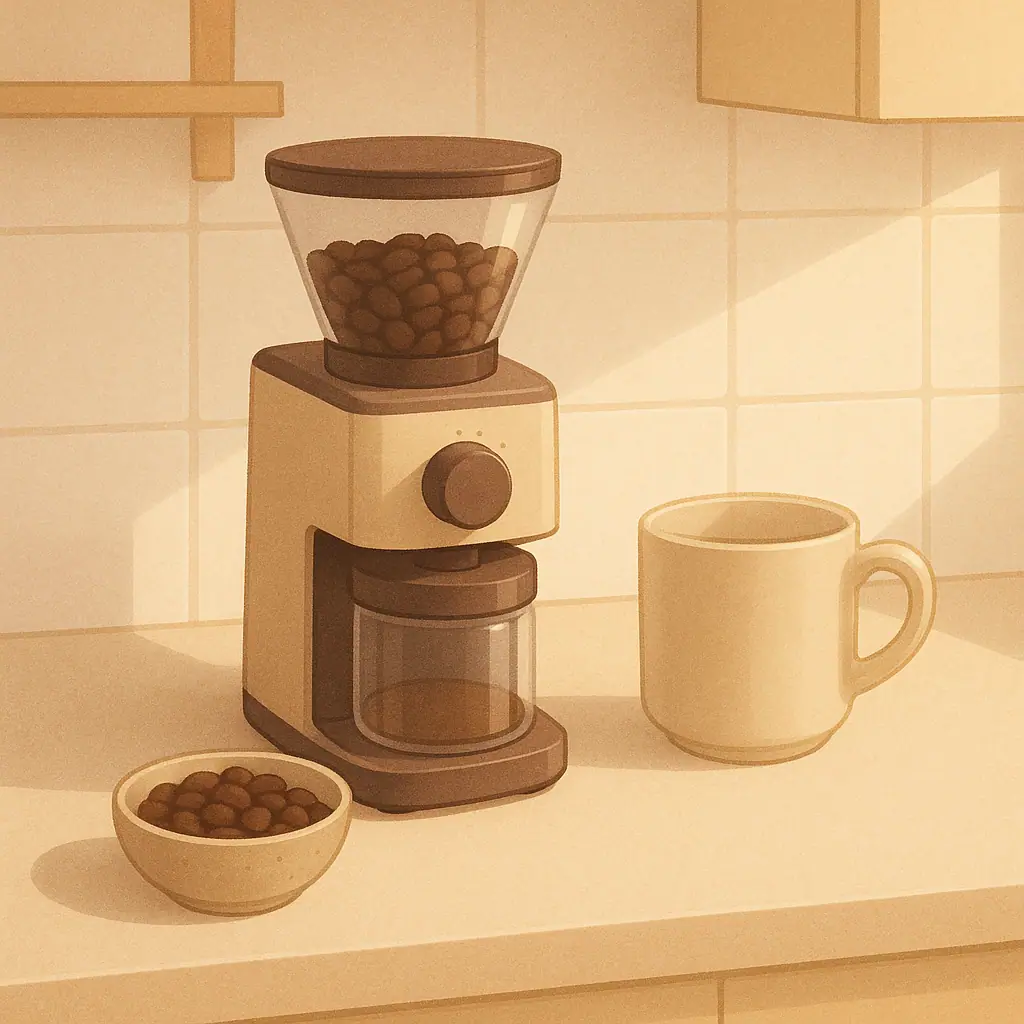
The best beginner coffee grinder features to look for are the ones that make your daily cup easier to repeat. A grinder does not need to look professional or have dozens of confusing controls. It needs to help you choose a useful grind size, measure a normal dose, clean up without stress, and make the same cup again tomorrow.
If you are buying your first grinder, start with your routine instead of the biggest feature list. Think about the brewer you use most, how much coffee you make, where the grinder will live, and whether you will actually clean it. Those four questions will tell you more than a long product page.
Why Grinder Features Matter for Beginners
Grind size changes how quickly water pulls flavor from coffee. Too fine for your method can make coffee taste harsh or heavy. Too coarse can make it taste weak, thin, or sour. A beginner-friendly grinder gives you enough control to make small adjustments without turning the morning into a science project.
The Specialty Coffee Association's home grinder standard is a useful formal reference because it treats grinder performance around practical brew settings, capacity, and grind distribution. If you want the technical background, the SCA home coffee grinder standard explains how grinders are evaluated beyond marketing language.
Start With the Brew Method You Use Most
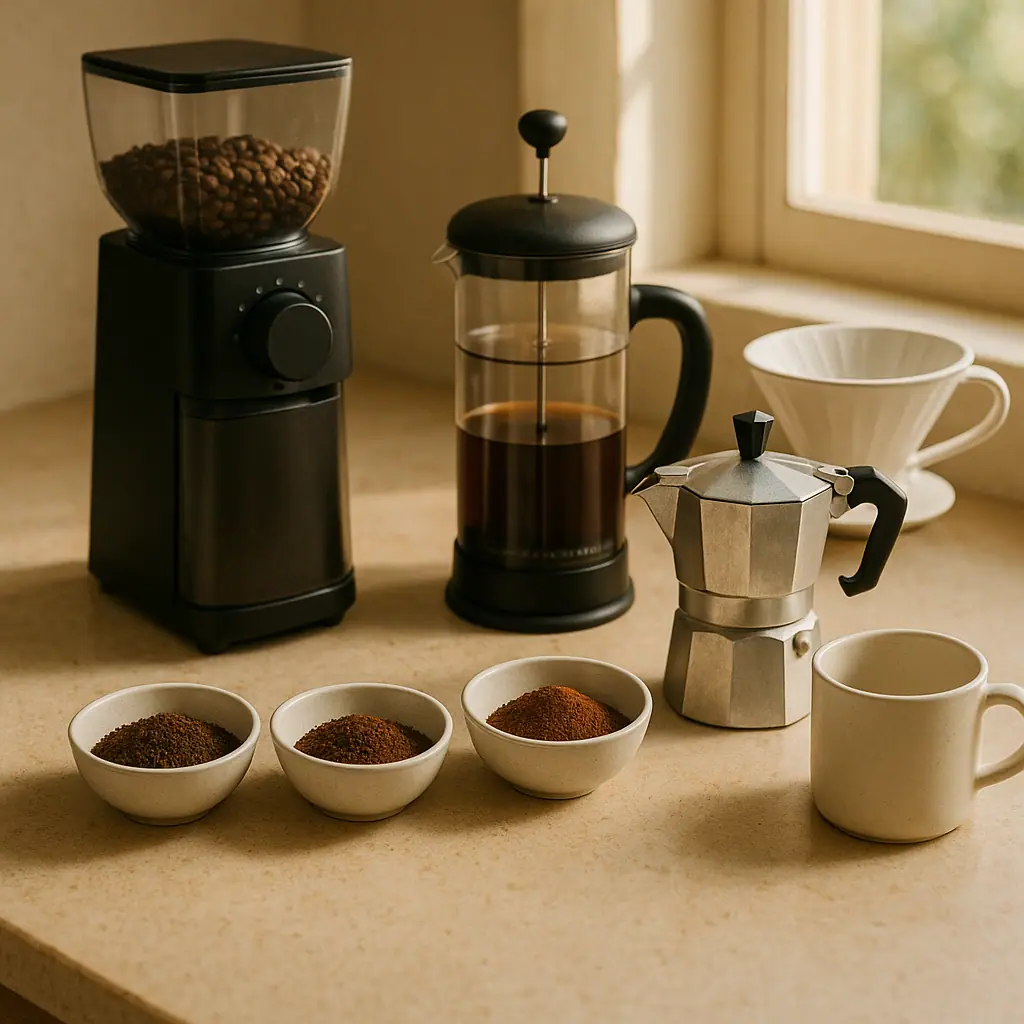
Before comparing grinders, name your main brewing method. French press, drip coffee, pour-over, moka pot, and cold brew all ask for different grind ranges. You do not need perfect laboratory precision, but you do need a grinder that can reach the range you actually use.
For French press and cold brew, you need a grinder that can produce a fairly coarse setting without turning everything into dust. For drip and pour-over, you need a reliable medium range. For moka pot, you need a finer setting than drip, but usually not the kind of espresso precision that raises the price quickly.
Do not buy for every possible future method
A common beginner trap is buying for a future espresso setup before you even know your daily coffee habit. If your normal cup is drip coffee or French press, choose a grinder that handles those methods well. You can always upgrade later if your routine changes.
Use setting numbers as a guide, not a recipe
Grinder setting numbers are not universal. One brand's setting 12 may be another brand's setting 24. What matters is whether the grinder lets you move a little finer or coarser and then repeat the setting once the coffee tastes right.
What to Check First in Beginner Coffee Grinder Features
The best beginner coffee grinder features to look for are practical, visible, and easy to test from the product description or manual. Skip vague promises and look for specific details that match daily use.
- Burr grinding: Burrs crush coffee between two surfaces and give more adjustable, repeatable grounds than blade choppers.
- Clear grind settings: You want markings or clicks that make it easy to return to yesterday's setting.
- Useful range: Check whether the grinder supports your main brewer, especially if you use French press, pour-over, drip, or moka pot.
- Dose control: A simple timer, cup marking, or single-dose workflow helps you avoid grinding too much.
- Cleaning access: Removable burr access, a brush, and clear instructions matter more than decorative features.
- Counter fit: Measure the space before buying, including height under cabinets and room for the hopper or lid.
How to Choose Step by Step
Use this calm process before you buy. It keeps the grinder tied to your actual kitchen and prevents feature overload.
- Pick your main brewer: Write down the method you use most often, not the one you might try once a month.
- Estimate your daily dose: Decide whether you usually grind for one mug, two mugs, or a full pot.
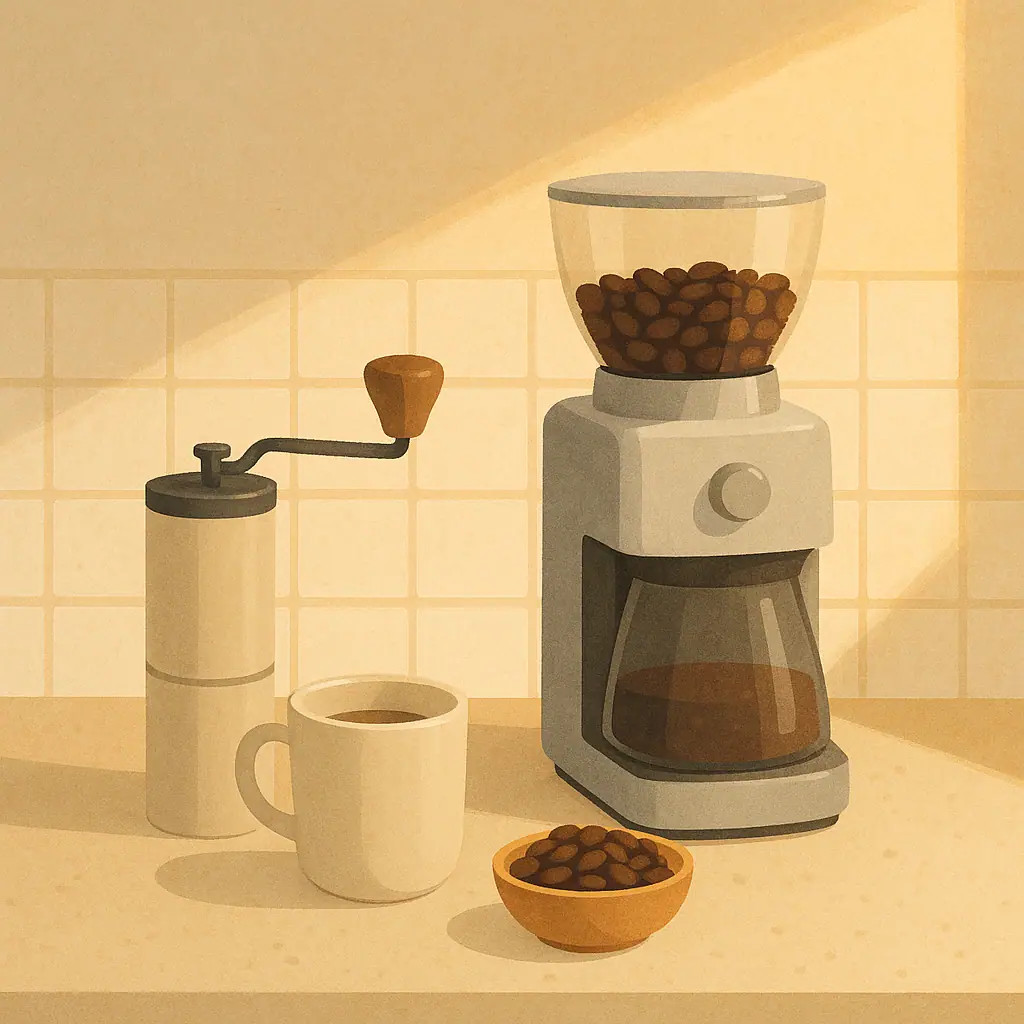
- Choose manual or electric: Manual can be compact and quiet. Electric is easier for larger batches and faster mornings.
- Check the grind range: Read the maker's guidance and make sure your main brewer is clearly supported.
- Look for cleaning instructions: If the manual makes cleaning sound vague or difficult, that grinder may become annoying quickly.
- Plan one adjustment habit: Start with the recommended setting, then move one step finer or coarser based on taste.
Common Grinder Feature Mistakes to Avoid
One mistake is focusing only on the number of settings. More settings can help, but only if they are clear and repeatable. A beginner with a simple drip coffee routine may be better served by a modest burr grinder that is easy to use than by a complicated machine with tiny adjustments that feel intimidating.
Another mistake is ignoring mess. Some grinders scatter chaff, hold old grounds inside, or make it hard to empty the chamber neatly. That may not sound important on a shopping page, but it matters when you are trying to keep a small coffee nook calm.
A third mistake is buying too large. A grinder that blocks a cabinet, crowds your brewer, or stays difficult to move will feel like clutter. Better coffee should make the routine smoother, not make your counter harder to use.
Pros and Cons
Repeatable settings
Clear markings help you return to a setting that worked instead of guessing every morning.
Easier taste troubleshooting
Small grind changes give you a simple first step when coffee tastes bitter, sour, weak, or muddy.
Cleaner routine
Good access, a brush, and a simple workflow make stale grounds less likely to build up.
Too many controls can distract
A long feature list may make a beginner change too many variables at once.
Large grinders need real space
A tall hopper or wide base can crowd a small apartment counter.
A Simple Checklist
- Yes or no: does it use burrs instead of a blade?
- Yes or no: does the maker clearly mention your main brew method?
- Yes or no: can you see or feel the grind settings clearly?
- Yes or no: can you clean the burr area without special frustration?
- Yes or no: does it fit your counter, cabinet height, and storage habit?
- Yes or no: will it grind the amount you normally brew without feeling like a chore?
Frequently Asked Questions
What should I check first in a beginner coffee grinder?
Check whether it uses burrs, supports your main brewer, and has settings you can repeat. Those basics matter more than extra modes.
How many grind settings do beginners need?
You need enough range for your brewer and small adjustments by taste. The exact number matters less than clear, repeatable steps.
Should I buy a grinder that can do espresso?
Only if espresso-style brewing is part of your real routine. If you mainly brew drip, pour-over, or French press, choose for those methods first.
How often should I review my grinder choice?
Review it after a few weeks of normal use. If cleaning, dosing, or adjusting feels annoying every day, that is useful feedback for your next upgrade.
Final Thoughts
The best beginner coffee grinder features to look for are not the loudest selling points. They are the small practical details that help you repeat a better cup: burrs, clear settings, sensible size, easy cleaning, and enough range for your main brewer.
Choose the grinder that fits the coffee you already make most often. Once it becomes easy to grind, brew, taste, and adjust one step at a time, your whole coffee nook starts to feel calmer.