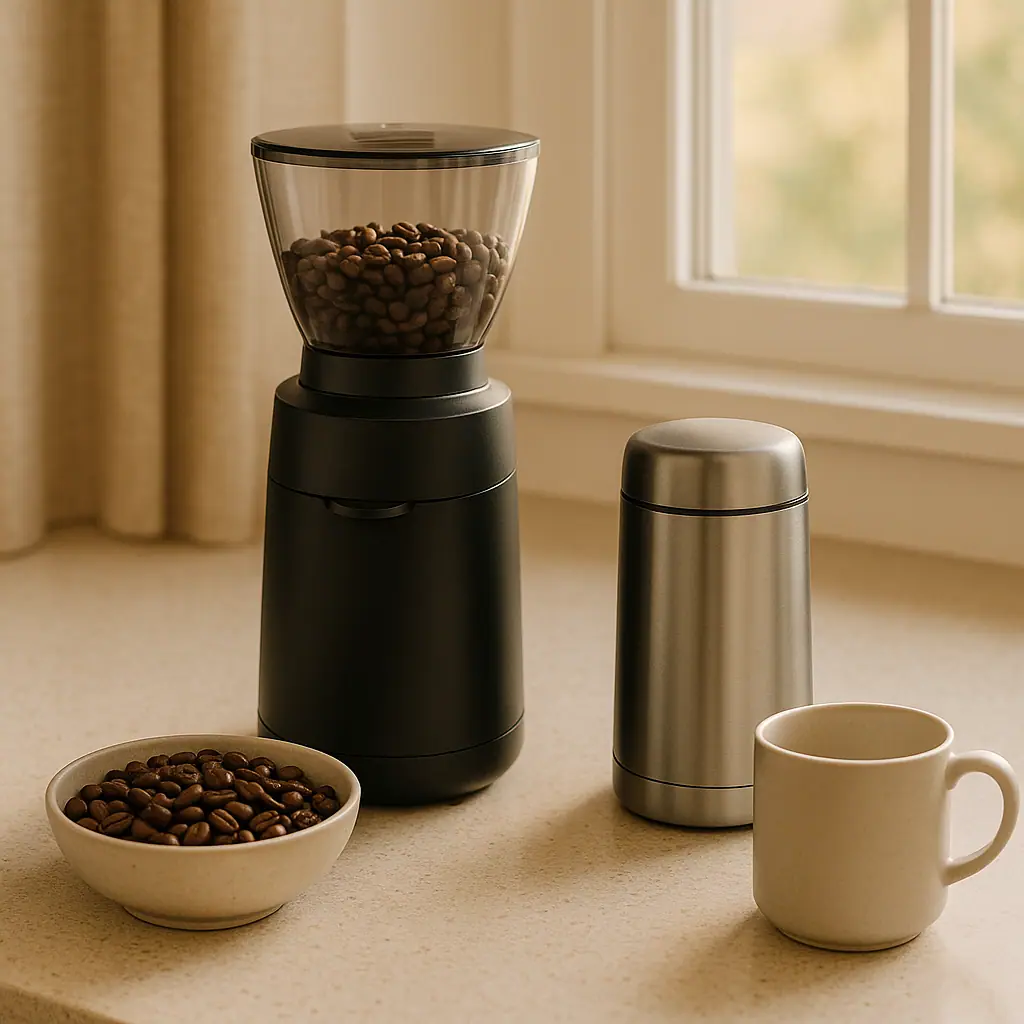
Choosing between a manual coffee grinder and an electric grinder for home use is less about owning the fanciest tool and more about matching your morning routine. A grinder should help you repeat a better cup, not add another stressful step to the counter.
The simple question is this: do you value quiet control, lower cost, and small storage, or do you value speed, convenience, and easier grinding for several cups? Once you answer that, the choice becomes much calmer.
Why This Choice Matters for Daily Coffee
Freshly ground coffee can make a noticeable difference because grind size affects how quickly water extracts flavor from the beans. A grinder that lets you repeat the same setting gives you a better chance of fixing sour, bitter, weak, or muddy cups without changing everything at once.
The Specialty Coffee Association's grinder standard frames home grinders around practical brewing use and grind-size settings, which is a useful reminder that the goal is repeatable grounds for your brewer, not a complicated ritual. You can read the technical context in the SCA home coffee grinder standard if you want the formal reference.
Manual Coffee Grinder vs Electric Grinder at a Glance
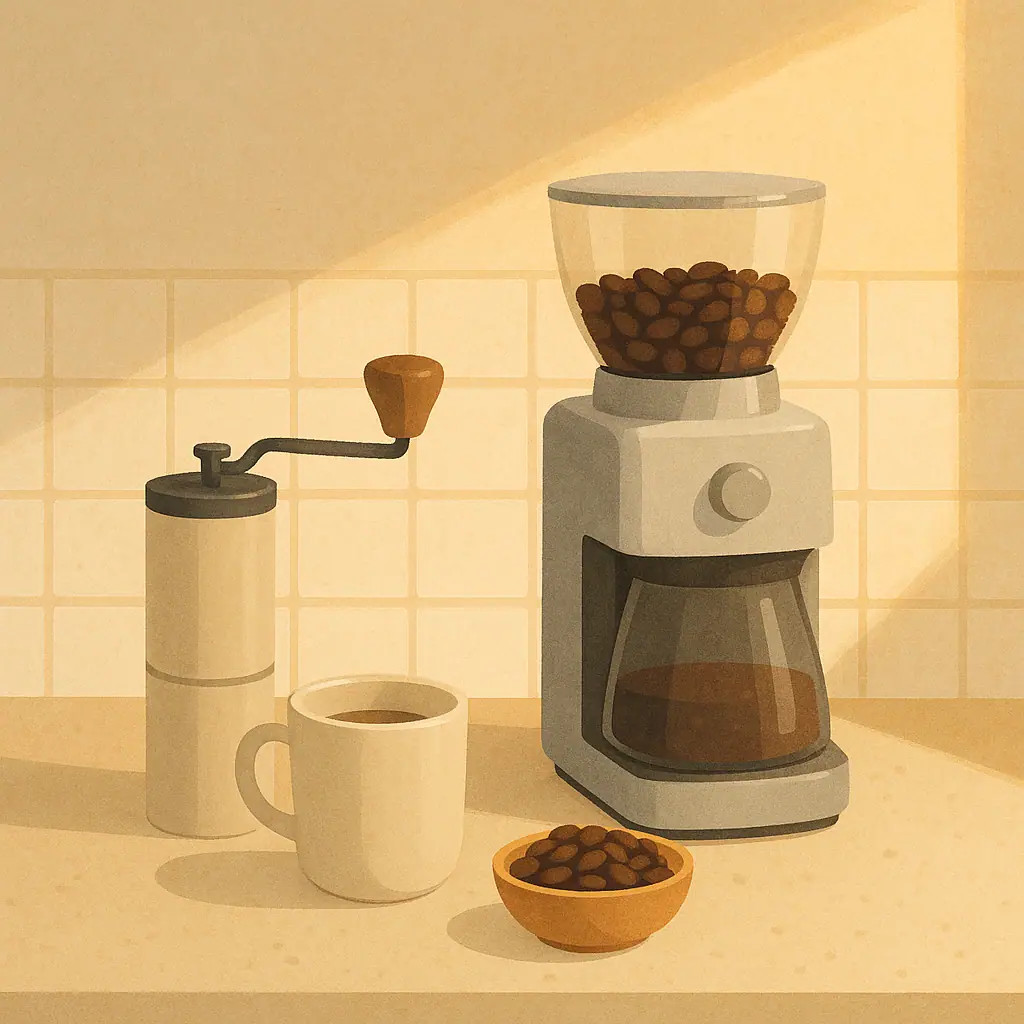
A manual grinder uses a hand crank to turn burrs that crush coffee beans into a chosen grind size. It usually stores easily, runs quietly, and keeps the setup simple. The tradeoff is effort: fine settings can take time, and larger batches can feel tedious.
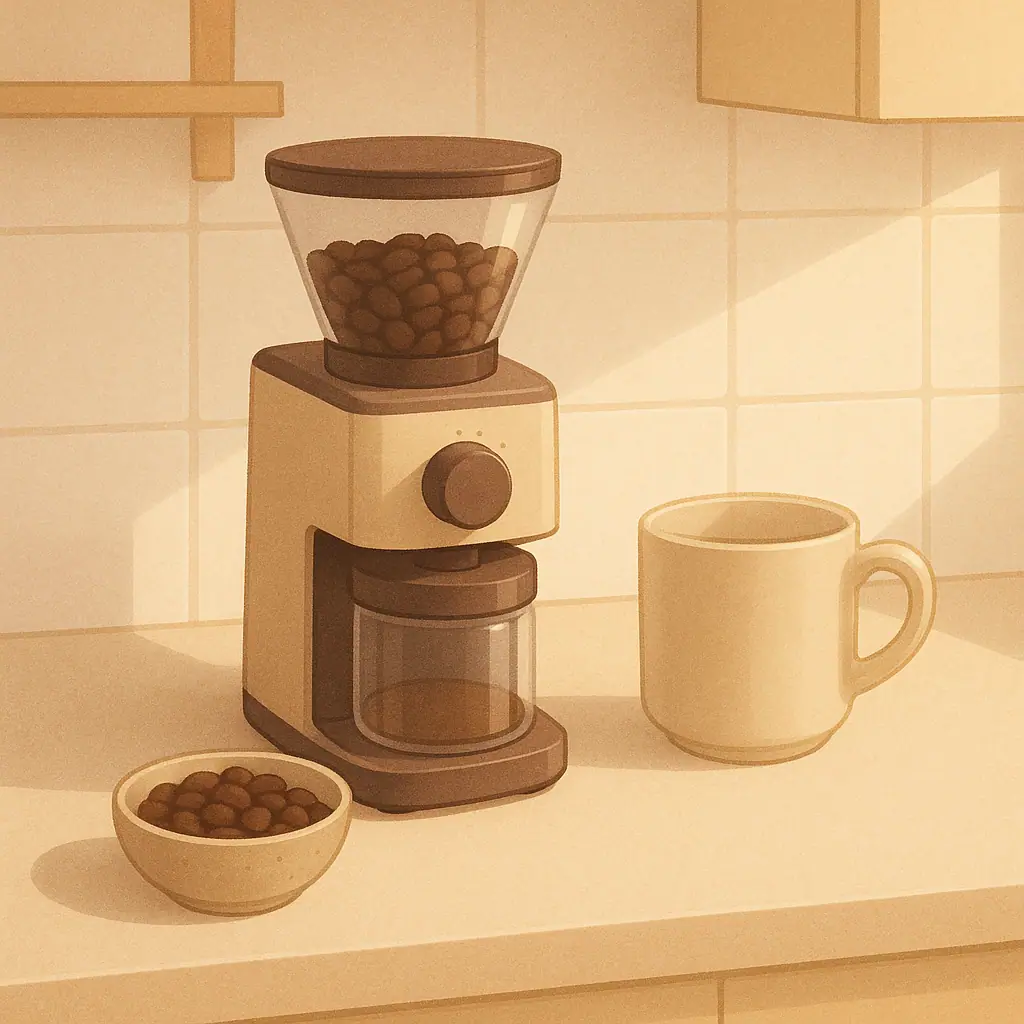
An electric grinder uses a motor to spin the burrs. It is faster and easier for daily batches, especially if you brew drip coffee, French press, or pour-over for more than one person. The tradeoff is counter space, noise, cleaning access, and usually a higher entry cost for a burr model worth keeping.
Where manual grinders fit best
- One or two cups: Hand grinding feels more reasonable when the dose is small.
- Small kitchens: Many manual grinders fit in a drawer or cabinet.
- Quiet mornings: They are useful when a loud motor would bother someone nearby.
- Budget control: More of the cost can go toward burr quality instead of a motor and housing.
Where electric grinders fit best
- Daily volume: Grinding for a full drip basket or several cups is much easier.
- Consistency habit: A timer or simple button press helps you repeat the same workflow.
- Limited hand strength: Electric grinding removes the physical effort.
- Shared households: Several people can use the same setting with less explanation.
What to Check Before You Buy
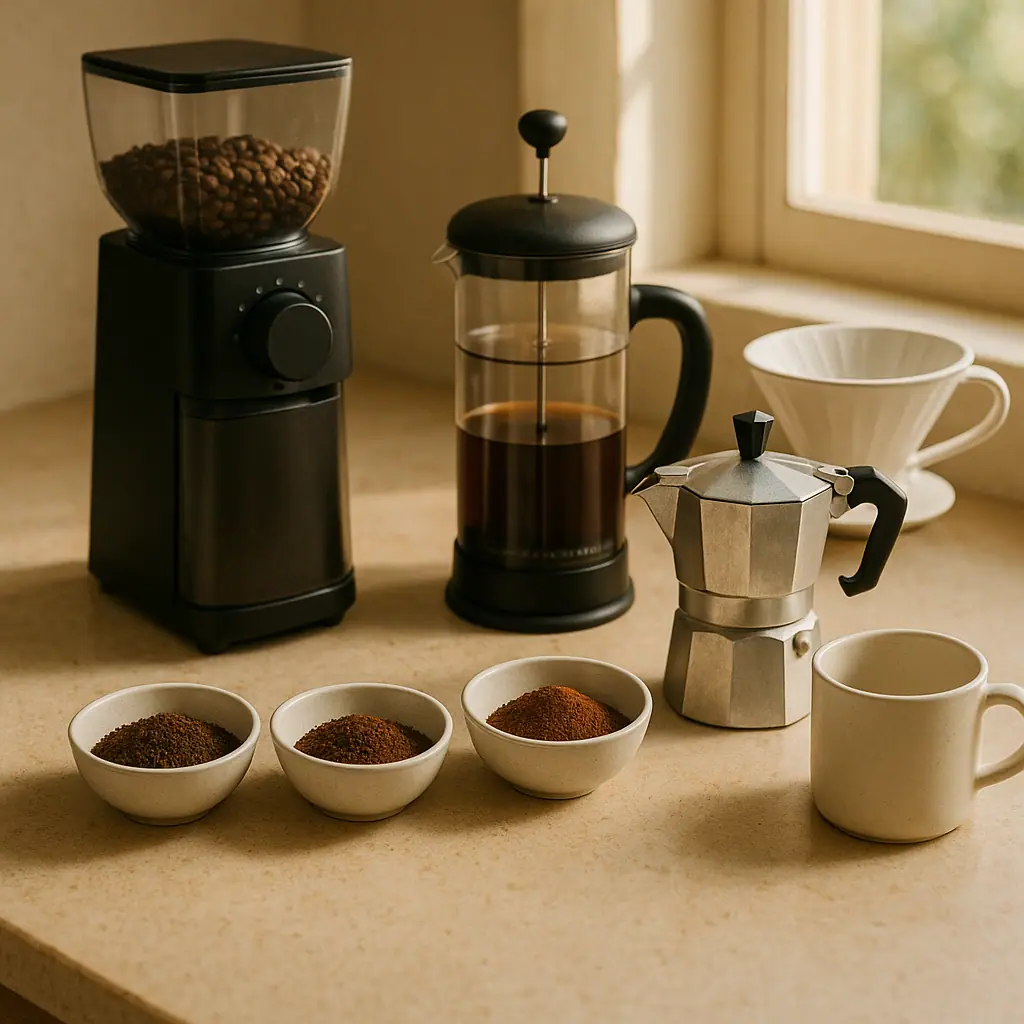
Start with your brewer, not the grinder shelf. A French press needs a coarser grind than a moka pot. Pour-over and drip coffee usually sit in the middle. Espresso-style brewing asks much more from a grinder, so beginners should be careful about buying a cheap grinder and expecting it to handle every method.
Next, look at the actual amount of coffee you grind. If your routine is 15 to 20 grams for one mug, hand grinding may feel pleasant. If you regularly grind 45 to 60 grams for a pot, an electric grinder will probably save more energy than it costs in counter space.
Finally, check cleaning. Coffee oils and tiny particles build up inside grinders. A grinder with accessible burrs, a small brush, and clear instructions is easier to keep fresh. This matters more than a long feature list.
A Step-by-Step Way to Choose
Use this short process before spending money. It keeps the decision tied to your real counter, your real brewer, and your actual mornings.
- Name your main brewer: Choose for the method you use most, not the one you might try later.
- Measure your usual dose: Write down how many grams or scoops you grind on a normal day.
- Choose your friction point: If time and hand effort bother you, lean electric. If storage and quiet matter more, lean manual.
- Prefer burrs over blades: Burr grinders give you adjustable settings and more repeatable grounds than blade choppers.
- Check cleaning access: Look for removable parts, a brush, and instructions you can understand before buying.
Common Mistakes to Avoid
One common mistake is buying for an imaginary routine. A beautiful manual grinder is not helpful if you always rush out the door. A large electric grinder is not helpful if it crowds a tiny counter and makes cleanup feel heavy.
Another mistake is treating every setting number like a universal recipe. Grinder numbers vary by brand and model. Use the setting as a starting point, then adjust by taste: go a little finer if the coffee tastes weak or sour, and a little coarser if it tastes harsh, dry, or bitter.
A third mistake is ignoring retention and mess. Some grinders leave more grounds inside or scatter chaff and dust around the counter. That may not matter once in a while, but it matters in a daily nook you want to keep calm.
Pros and Cons
Compact and quiet
It suits small kitchens, shared apartments, and early mornings where noise matters.
Good control for small doses
For one cup at a time, a manual burr grinder can feel precise and manageable.
Easy to store between brews
Most manual grinders fit in a drawer or small coffee bin, which helps tiny kitchens keep the counter clear.
Needs space and power
An electric grinder usually stays on the counter and adds another cord to manage.
Cheap models can disappoint
Very low-cost electric grinders may be noisy, messy, or less consistent than expected.
A Simple Checklist
- Manual makes sense if: you brew one or two cups, want quiet, and can comfortably crank for your dose.
- Electric makes sense if: you brew larger batches, share coffee, or need speed before work.
- Skip blade grinders if possible: choose burrs when repeatable grind size matters.
- Keep a tiny log: note the setting, brewer, and taste for the first week.
- Clean on a routine: brush out loose grounds before they become stale buildup.
Frequently Asked Questions
Is a manual coffee grinder better than an electric grinder?
Not always. A manual grinder can be better for small, quiet routines, while an electric grinder is better for speed, bigger batches, and less physical effort.
Should beginners buy a burr grinder first?
Yes, if the budget allows. Burrs make grind size easier to adjust and repeat, which helps beginners troubleshoot taste without guessing.
Can one grinder work for every brew method?
Some grinders cover a wide range, but not all handle very fine settings well. Choose for your main brewer first, then treat other methods as a bonus.
How often should I clean a coffee grinder?
Brush out loose grounds regularly and follow the maker's instructions for deeper cleaning. If coffee starts smelling stale near the grinder, it is time to clean.
Final Thoughts
The manual coffee grinder vs electric grinder decision is really a routine decision. Manual grinders reward small, quiet, intentional cups. Electric grinders reward speed, volume, and convenience. Pick the one that removes friction from the coffee you already make most often.
For a calm first purchase, choose a burr grinder that fits your usual dose, your storage space, and your willingness to clean it. That will do more for your daily cup than chasing every feature on the box.