A grinder is one of the first coffee tools that can make a daily cup taste more consistent, but beginners often get stuck on the same question: burr grinder vs blade grinder, which one should come first?
The calm answer is that both can grind coffee, but they do not behave the same way. A blade grinder chops beans with a fast spinning blade. A burr grinder crushes beans between two abrasive surfaces set at a chosen distance. That difference affects how even the grounds are, how easy the routine feels, and how much control you have when switching between French press, drip coffee, pour-over, or moka pot.
You do not need to buy the most expensive grinder on the shelf. The useful goal is simpler: choose the grinder that fits your brewing method, your counter space, and the amount of coffee you make most mornings.
Why This Matters
Grind size is one of the main reasons home coffee tastes different from day to day. If some pieces are dusty and others are chunky, water pulls flavor from them at different speeds. That can make one cup taste bitter, weak, muddy, or sharp even when the beans and brewer stayed the same.
A burr grinder gives you a better chance at repeatable grounds because the coffee passes through a set gap. A blade grinder gives you less control because it keeps chopping while the cup fills with mixed sizes. The Specialty Coffee Association is a useful reference point for coffee education and professional brewing terminology, but a beginner at home can start with a practical rule: more even grounds usually make troubleshooting easier.
Start With Your Brewing Routine
Before comparing price tags, look at how you actually make coffee. A person making one auto-drip pot before work has different needs than someone experimenting with pour-over recipes on weekends.
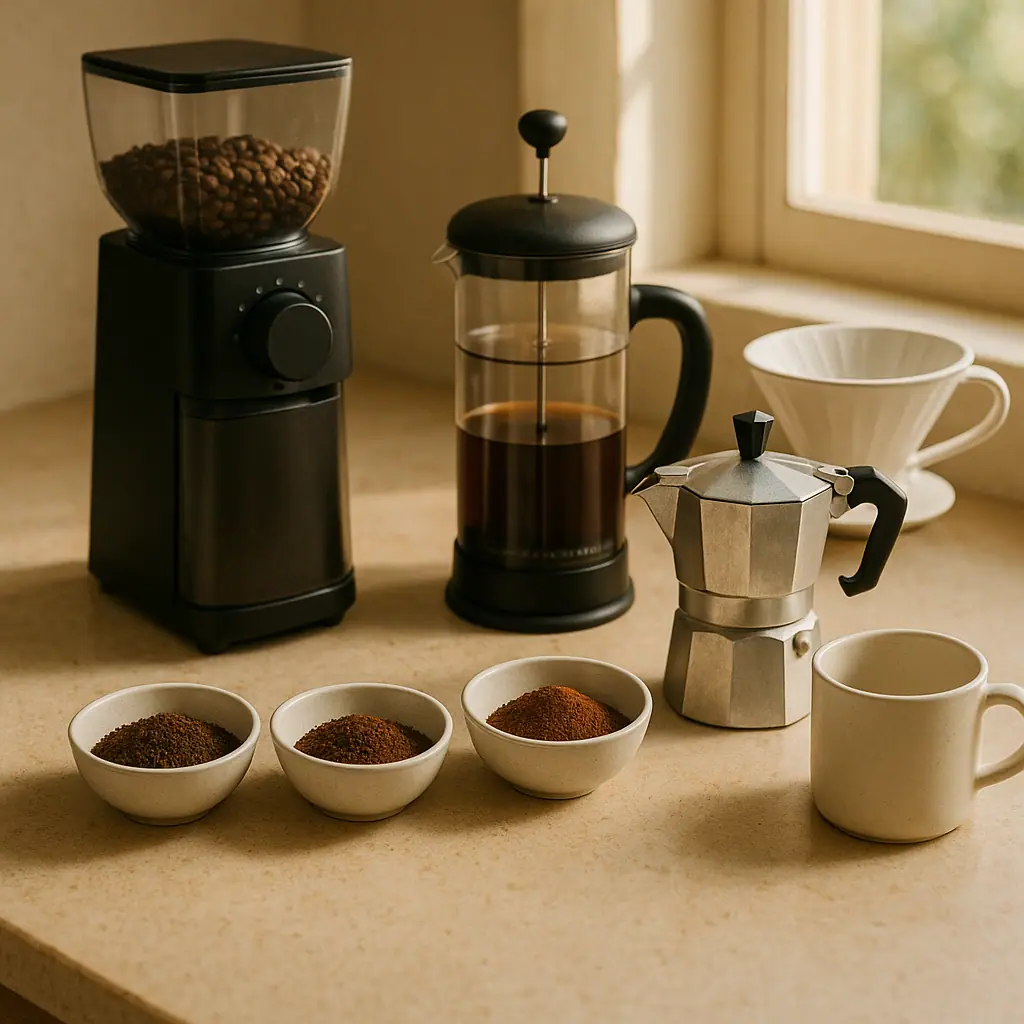
- Drip coffee: A medium grind works best for most machines, so repeatability matters more than fancy settings.
- French press: Coarser grounds help reduce sludge, which makes burr consistency noticeable.
- Pour-over: Small grind adjustments can change drawdown time and flavor, so a burr grinder is easier to learn with.
- Moka pot: A fine-to-medium grind needs control, but it should not be powdery like espresso.
- Cold brew: Coarse, even grounds make filtering easier and reduce heavy sediment.
If you only make coffee once in a while, a blade grinder can be an inexpensive bridge. If coffee is part of your morning routine, a basic burr grinder is usually the more stable first buy.
What to Check First Before Buying
The best beginner grinder is not always the biggest or most technical one. Check the few details that affect daily use.
Consistency and Settings
A burr grinder should offer clear grind settings and produce grounds that look reasonably even for your chosen method. You do not need dozens of settings at first, but you do need enough range to move from coarse French press to medium drip or pour-over.
Cleaning and Counter Space
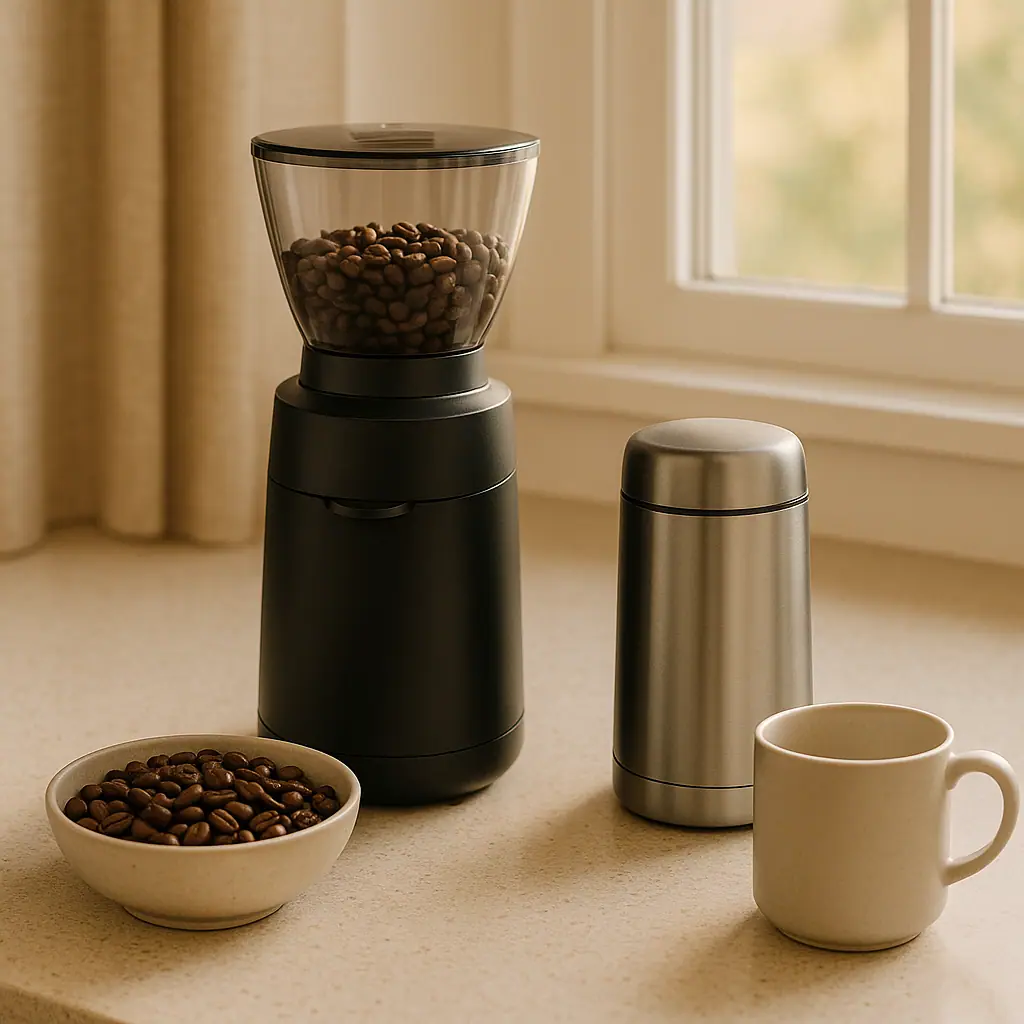
Coffee oils and tiny particles build up quickly. Look for a grinder with a removable hopper, accessible burr area, and simple brush cleaning. If your coffee nook is small, measure where the grinder will live before buying. A tool that has to be dragged out of a cabinet every morning often gets skipped.
How to Choose Step by Step
Use this simple path instead of comparing every model at once.
- Name your main brewer. Pick the method you use at least three times a week.
- Decide how much control you need. Pour-over, moka pot, and French press benefit from burr settings. Occasional drip coffee can tolerate a simpler setup.
- Set a realistic budget. A basic burr grinder is often enough for beginners. Save premium espresso grinders for later unless espresso is your real goal.
- Check cleaning access. If the grinder is hard to brush out, stale coffee dust will become part of the flavor.
- Read the manual before use. Confirm what the brand says about run time, cleaning, and what parts should not be washed.
For most beginners who brew several times a week, the practical answer is to buy a burr grinder first. For someone who only needs occasional ground coffee for a simple drip machine, a blade grinder can work temporarily if used carefully and cleaned often.
Pros and Cons
More even grounds
Better consistency makes it easier to repeat a good cup and fix a bad one.
Useful settings
You can adjust for drip, French press, pour-over, moka pot, or cold brew without guessing as much.
Better troubleshooting
When the grind is repeatable, it is easier to know whether to change ratio, brew time, or beans.
Higher starting cost
Even entry-level burr grinders usually cost more than blade grinders.
More parts to clean
The routine is still simple, but burrs and chutes need regular brushing.
Blade Grinder Mistakes to Avoid
If you already own a blade grinder, you can still improve your routine while deciding whether to upgrade.
- Do not fill it to the top: Smaller batches move more evenly.
- Pulse instead of holding the button down: Short bursts reduce heat and give you more visual control.
- Shake gently between pulses: This helps larger pieces reach the blade, but keep the lid firmly closed.
- Match expectations to the tool: A blade grinder can help with freshness, but it will not behave like a burr grinder.
- Clean after flavored or oily beans: Strong residues can carry into the next batch.
A Simple Buying Checklist
Before you buy, run through these yes-or-no checks.
- Do I brew coffee at least several times per week? If yes, lean burr grinder.
- Do I switch between brewing methods? If yes, settings matter.
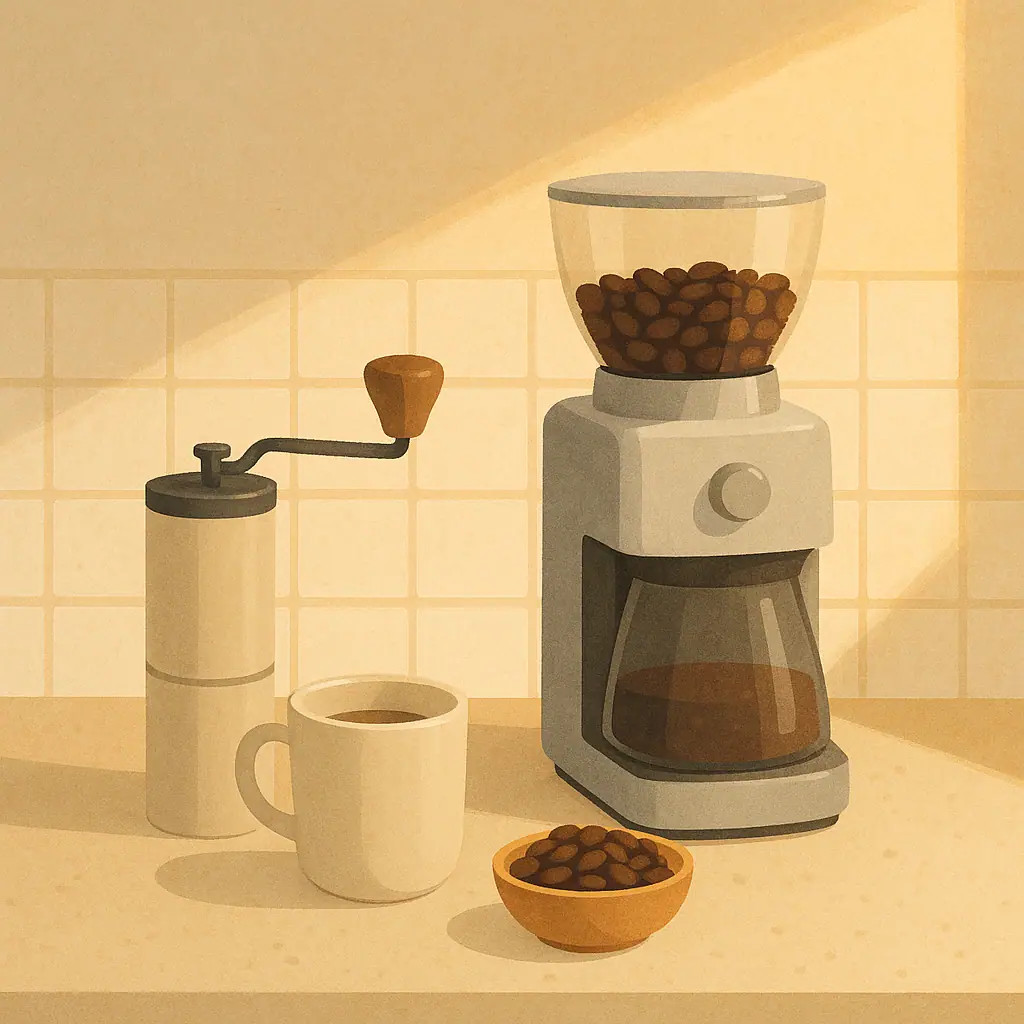
- Do I make only one small cup? A manual burr grinder may be enough.
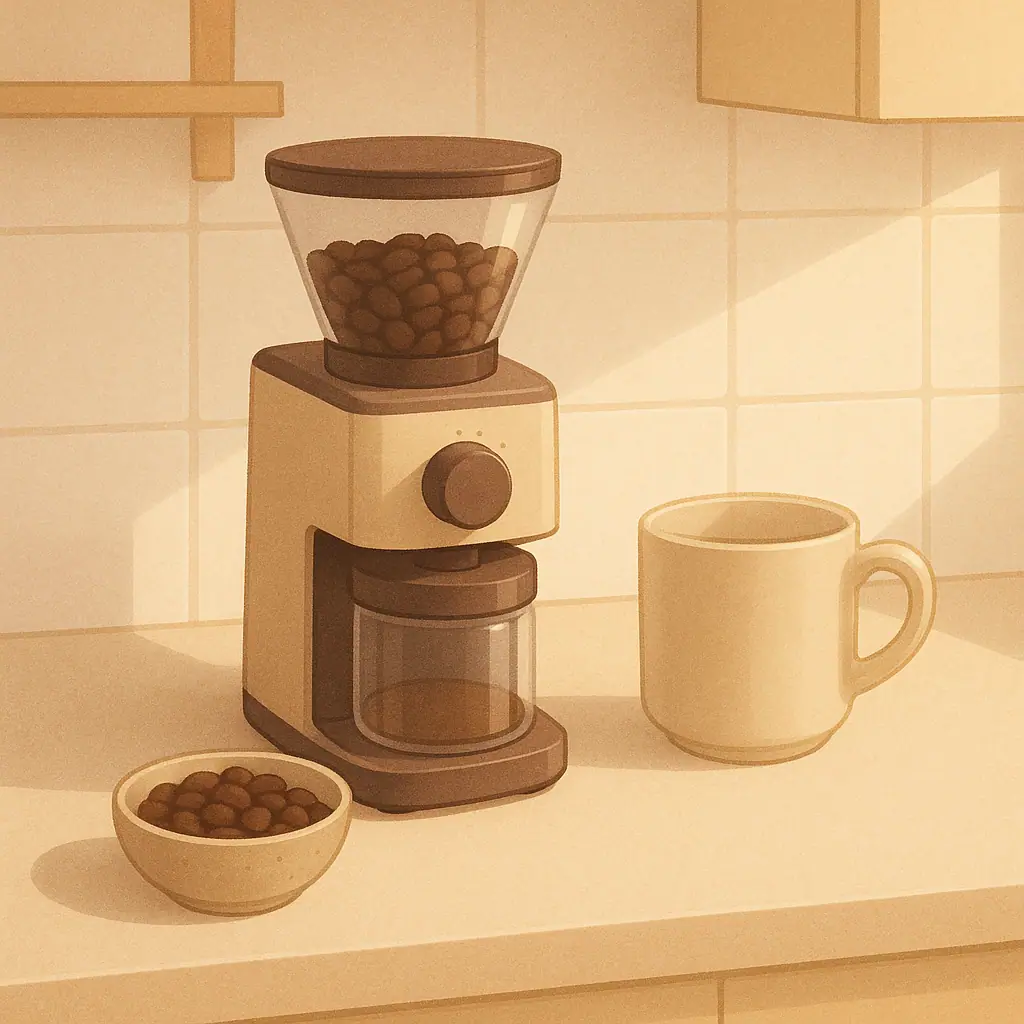
- Do I need speed for a full pot? An electric burr grinder will feel easier.
- Will I clean it weekly? Choose a grinder you can actually maintain.
Frequently Asked Questions
Is a burr grinder worth it for beginners?
Yes, if you brew coffee regularly. It gives you more consistent grounds and makes flavor adjustments easier to understand.
Can a blade grinder make good coffee?
It can make acceptable coffee for casual use, especially with fresh beans and short pulses, but the grind will usually be less even.
Should I buy manual or electric?
Choose manual for one or two cups and low counter clutter. Choose electric if you make larger batches or want a faster morning routine.
How often should I clean a grinder?
Brush loose grounds out weekly if you use it often, and follow the grinder manual for deeper cleaning intervals and part safety.
Final Thoughts
For most home coffee beginners, the burr grinder is the better first serious grinder because it supports consistency, repeatable settings, and easier troubleshooting. A blade grinder is cheaper and can be useful for occasional coffee, but it is more limited when you want to improve cup quality on purpose.
Start with the brewer you use most, the amount of coffee you make, and the cleaning routine you can maintain. A simple grinder that fits your morning will help more than an advanced one that stays in the box.