Coffee canisters and storage jars look simple on the counter, but they quietly affect how your beans smell, taste, and fit into your morning routine. The right container will not rescue old coffee or replace a good grinder, but it can protect the beans you already bought from the common things that make coffee fade faster.
For most beginners, the best canister is not the most complicated one. It is a container that seals well, blocks light, holds the amount of coffee you actually use, and is easy enough to open and close every day. If the jar is annoying, oversized, or too pretty to be practical, it may not help your coffee as much as you hoped.
This guide explains what matters most in coffee canisters and storage jars: airtightness, opacity, size, material, cleaning, counter placement, and when a simple bag-plus-clip routine is still good enough.
Why Coffee Canisters and Storage Jars Matter
Roasted coffee is sensitive to air, moisture, heat, and light. That does not mean you need to treat every bag like laboratory equipment, but it does mean storage choices can make a difference once the bag is open. A calm storage routine helps preserve aroma, keeps beans away from kitchen heat, and makes your coffee station easier to reset.
The National Coffee Association explains that coffee keeps best when protected from air, moisture, heat, and light, and recommends storing coffee in an airtight, opaque container in a cool, dark location. Its guide to coffee storage and shelf life is a useful reference if you want the simple principle behind most canister advice.
At home, the goal is not perfection. The goal is to reduce the biggest freshness problems without adding a fussy chore to every morning.
Start With Your Actual Coffee Habit
Before buying a coffee canister, look at how you already use coffee. A person who finishes a 10 or 12 ounce bag in a week has different needs than someone who buys several pounds at once. A one-person apartment setup also needs a different footprint than a large family coffee station.
Start with the bag size you usually buy, how fast you finish it, and where the coffee lives now. If the answer is a sunny glass jar beside the stove, a better container and a cooler location will help. If the answer is a resealed valve bag in a dark cabinet and you finish it quickly, you may not need an expensive upgrade.
Whole beans vs ground coffee
Ground coffee has more exposed surface area, so it tends to lose aroma faster than whole beans. If you buy ground coffee, an airtight container matters even more, but the bigger freshness upgrade may be buying smaller amounts more often. If you buy whole beans, the canister mainly protects the beans between grinding sessions.
Counter display vs cabinet storage
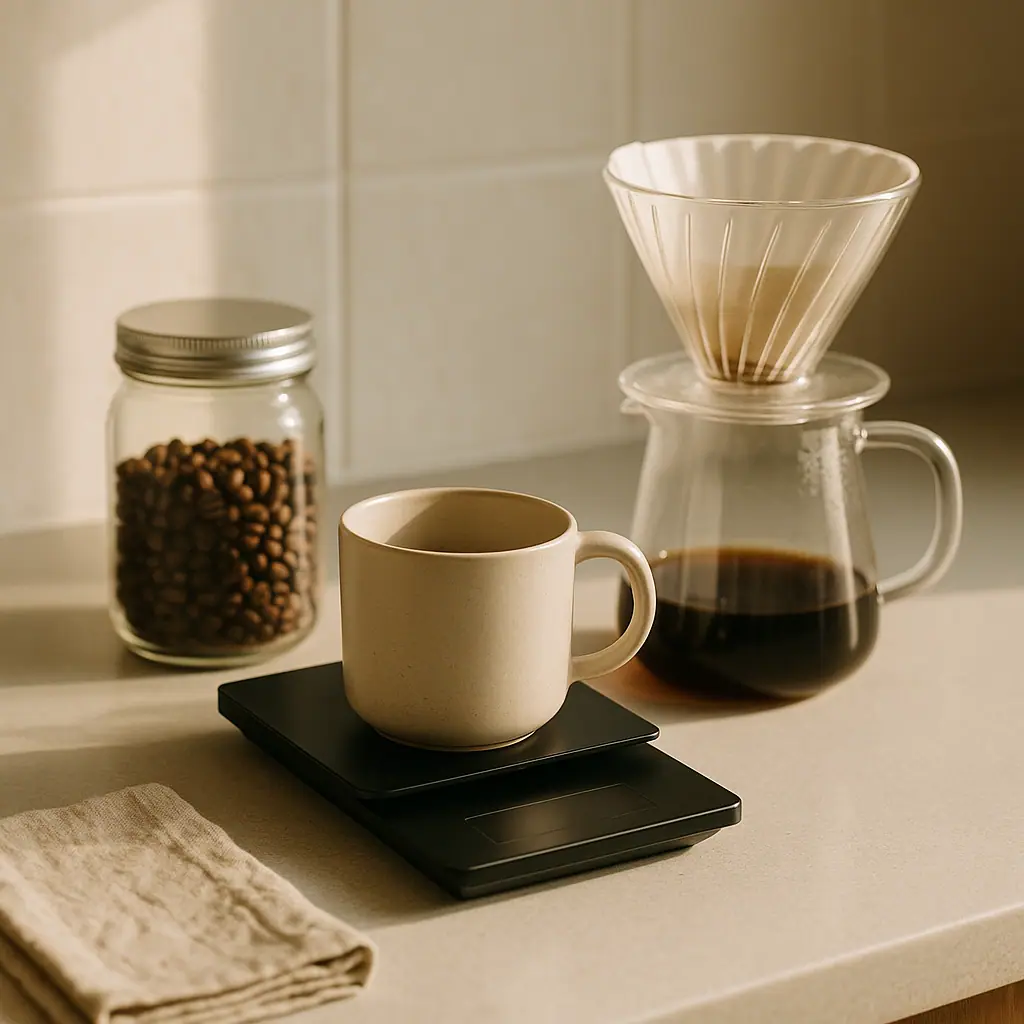
Clear jars can look beautiful, but they let in light. If you love the look of beans on display, treat that jar as decor rather than your main storage. For everyday beans, an opaque canister in a cabinet or shaded corner is usually a better choice.
What to Check First for Coffee Canisters and Storage Jars
Use these checks before choosing a container. They keep the decision practical and prevent buying a jar that looks good but works poorly in a real kitchen.
- Airtight seal: the lid should close firmly and consistently. If it wiggles, gaps, or depends on a loose decorative top, it is not ideal for coffee.
- Opaque sides: choose metal, ceramic, or another material that blocks light. Clear glass is better for short-term display than long-term freshness.
- Right size: the container should hold your normal bag with a little room, not a huge empty space that stays full of air for weeks.
- Easy opening: if the lid is awkward, you may leave it partly open or avoid using it. A good routine should feel natural.
- Clean interior: the inside should be smooth enough to wipe and dry fully. Old coffee oils can smell stale over time.
- Stable footprint: the canister should fit your shelf, drawer, or coffee station without crowding the grinder, scale, or brewer.
If your coffee corner is still crowded, storage may work better after you simplify the station itself. A clear routine for mugs, filters, beans, and tools makes the container easier to use every day.
Best Materials for Everyday Coffee Storage
Different materials can work well if the seal is good and the container blocks light. The best choice depends on your counter space, cleaning habits, and how much weight you want to handle before coffee.
Stainless steel is common because it blocks light, resists breakage, and usually looks tidy on a counter. It is a strong choice for busy kitchens, but check that the lid seal is replaceable or easy to clean.
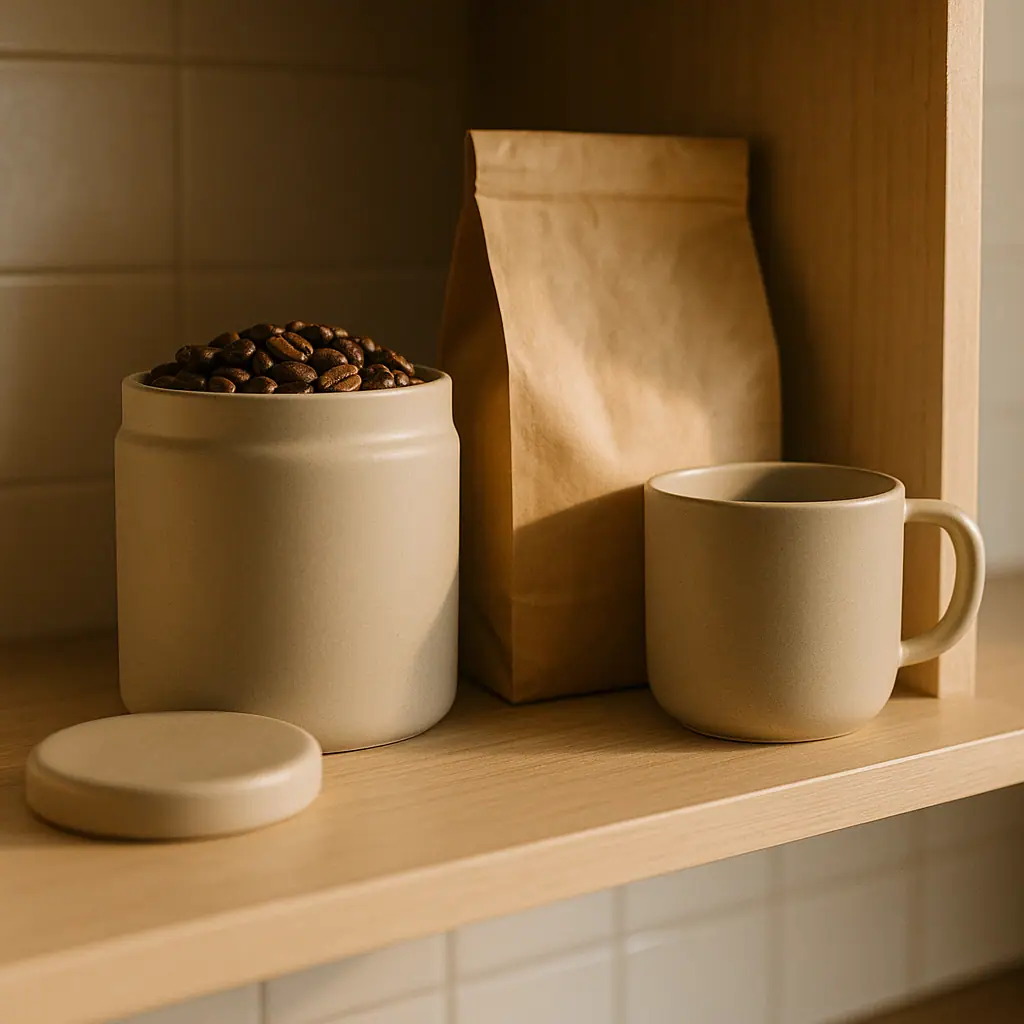
Ceramic can also work well when it has a proper gasketed lid. It feels steady and often looks calmer than shiny metal, though it can chip or break if dropped.
Opaque plastic can be lightweight and affordable, but it may hold odors over time. If you use plastic, choose food-safe storage, keep it clean, and replace it if old coffee smell lingers.
Clear glass is useful when you need to see contents at a glance, but it does not protect coffee from light. If you use glass, keep it inside a dark cabinet instead of on a bright counter.
How to Handle Coffee Storage Step by Step
A simple storage routine matters more than a complicated container. Once you choose a canister or jar, use it the same way each time so coffee stays easy to find, measure, and reset.
- Buy an amount you can finish: smaller, fresher bags are often easier to manage than a large supply that sits open for weeks.
- Label the roast date if needed: if the bag has a date, keep it visible or write it on a small removable label outside the canister.
- Transfer only with dry tools: moisture is not your friend in coffee storage. Use a dry scoop and dry hands.
- Close the lid immediately: avoid leaving the canister open while you grind, heat water, or clean the counter.
- Store it away from heat: choose a cabinet, shelf, or shaded counter spot away from the stove, dishwasher, and sun.
- Wipe before refilling: when one bag is finished, empty loose chaff or fines and wipe the inside before adding a new coffee.
This routine also helps if you use a scale, grinder, or pour-over setup. The fewer tiny decisions you make before brewing, the easier it is to repeat a good cup.
Pros and Cons
Protects the beans from the biggest freshness problems
A sealed, opaque container helps reduce exposure to air, light, kitchen moisture, and heat.
Makes the coffee station easier to reset
A dedicated container gives beans one clear home instead of leaving bags folded, clipped, or half-open.
Can reduce buying mistakes
When the container size matches your normal bag, it quietly reminds you not to overbuy coffee you will not finish soon.
Looks can distract from function
Pretty clear jars, loose lids, and oversized containers may look better than they protect coffee.
Still needs cleaning
A good seal will not help if old oils and fines build up inside and make new beans smell stale.
Common Storage Mistakes to Avoid
The first mistake is buying a huge canister because it seems efficient. If you normally buy small bags, a large container can leave a lot of air space above the beans. That does not automatically ruin the coffee, but it makes the container less precise than it looks.
The second mistake is storing coffee near heat. A canister beside the espresso machine, toaster oven, or sunny window may be convenient, but warmth and light work against freshness. Move the container a few steps away if the current spot gets warm.
The third mistake is mixing old and new beans without cleaning. If the last coffee left oils, chaff, or a stale smell, the new coffee starts in a tired container. Empty, wipe, and dry the jar before refilling.
The fourth mistake is assuming a canister replaces good buying habits. Coffee storage helps most when the coffee is reasonably fresh, bought in a manageable amount, and ground close to brewing when possible.
A Simple Canister Checklist
- Does it seal tightly? If not, keep looking.
- Does it block light? Opaque is better for everyday bean storage.
- Does it fit one normal bag? Avoid containers that are much bigger than your buying habit.
- Can I clean it easily? Smooth, dry interiors are easier to maintain.
- Will I actually close it every time? The best lid is the one you will use without thinking.
- Is it stored away from heat? Location matters as much as the jar.
When the Original Bag Is Enough
You do not always need a separate coffee canister. Many coffee bags are designed to protect beans for normal short-term use, especially if you finish the bag quickly and keep it sealed in a cool, dark cabinet. If the bag has a good closure and the coffee is gone within a week or two, a canister may be more about organization than freshness.
A canister becomes more useful when the bag does not close well, you buy ground coffee, your cabinet is messy, or you want one clean home for beans in a visible coffee station. In that case, choose function first and decoration second.
Frequently Asked Questions
Are coffee canisters better than the original bag?
Sometimes. If the original bag seals well and you finish it quickly, it may be enough. A canister helps more when the bag closes poorly, sits in light, or makes the station messy.
Should a coffee storage jar be airtight?
Yes. Airtight storage is one of the most important checks because it limits air exposure after the bag is open. The lid should close firmly every time.
Is clear glass bad for coffee beans?
Clear glass is not ideal on a bright counter because it lets in light. If you already use a clear jar, keep it inside a dark cabinet and make sure the lid seals well.
How often should I clean a coffee canister?
Wipe it between bags or whenever you notice oils, fine grounds, or stale smell. Let it dry fully before adding new beans or ground coffee.
Final Thoughts
Coffee canisters and storage jars are useful when they solve real problems: loose bags, light exposure, messy counters, stale smells, or overbuying. The best one has a tight seal, opaque sides, a size that matches your normal bag, and a lid you will close without thinking.
If you want the calmest next step, move your current coffee away from heat and light first. Then decide whether a simple airtight, opaque canister would make your daily coffee routine cleaner and easier to repeat.