Do you need a coffee scale at home? Not always. If your coffee already tastes steady, your scoop routine may be good enough. But if the same bag tastes strong one morning, weak the next, and muddy by the weekend, a small scale can remove one of the easiest variables to control.
A coffee scale is not a personality test for serious coffee people. It is just a measuring tool. For many beginners, the useful question is not whether a scale is required. It is whether measuring by weight would make your daily cup calmer, easier to repeat, and less dependent on guesswork.
This guide keeps the decision practical. You will see when a scale helps, when it can wait, what features matter, and how to use one without turning breakfast into a lab session.
Why This Matters Before You Buy Another Coffee Tool
Coffee can taste different for many reasons: grind size, water amount, bean age, roast level, brewer shape, filter type, and brewing time. A scale does not fix every problem, but it makes the amount of coffee and water easier to repeat.
The Specialty Coffee Association explains that coffee standards can define shared requirements, vocabulary, and technical details for products and equipment. Its overview of coffee standards is a useful reminder that coffee gets easier to compare when the important variables are clear.
Do You Need a Coffee Scale at Home for Your Routine?
The answer depends on the coffee you make most often. A scale helps more with pour-over, French press, AeroPress-style brewers, moka pot dosing, and cold brew batches than it does with a basic drip machine that already has a marked water tank and basket.
Still, even drip coffee can improve when you weigh the ground coffee once and learn what your usual scoop actually holds. Scoops vary by size, roast density, grind, and how full you make them. Weight gives you a clearer baseline.
When a scale is worth it
A scale is worth considering if you keep changing the amount of coffee by feel, brew for different mug sizes, waste beans while troubleshooting, or want to copy a simple recipe from a roaster without translating grams into uncertain scoops.
When you can wait
You can wait if you are just starting, happy with your current cup, using pre-measured pods, or trying to decide which brewing method you enjoy. In that case, spend a week learning your brewer before buying another accessory.
What to Check First for a Home Coffee Scale
Before you buy, check the routine and space. A scale should solve a real friction point, not become another item that lives beside the grinder unused.
- Brewer size: make sure your mug, carafe, French press, or pour-over setup can sit on the platform without covering the display.
- Weight capacity: choose enough capacity for the full brewer plus water, not just the dry coffee dose.
- Readability: look for grams and small increments, especially if you brew one cup at a time.
- Timer needs: a built-in timer is helpful for pour-over and immersion recipes, but not required for every drip routine.
- Counter storage: the best scale is the one you can keep clean, dry, and easy to reach.
If you are still deciding what belongs in your daily setup, compare this choice with your core coffee station essentials. A scale earns its place only when it supports the drink you already make.
How to Use a Coffee Scale Step by Step
Start with one repeatable recipe. Do not weigh every possible variable on day one. Your first goal is to make tomorrow's cup match today's cup.
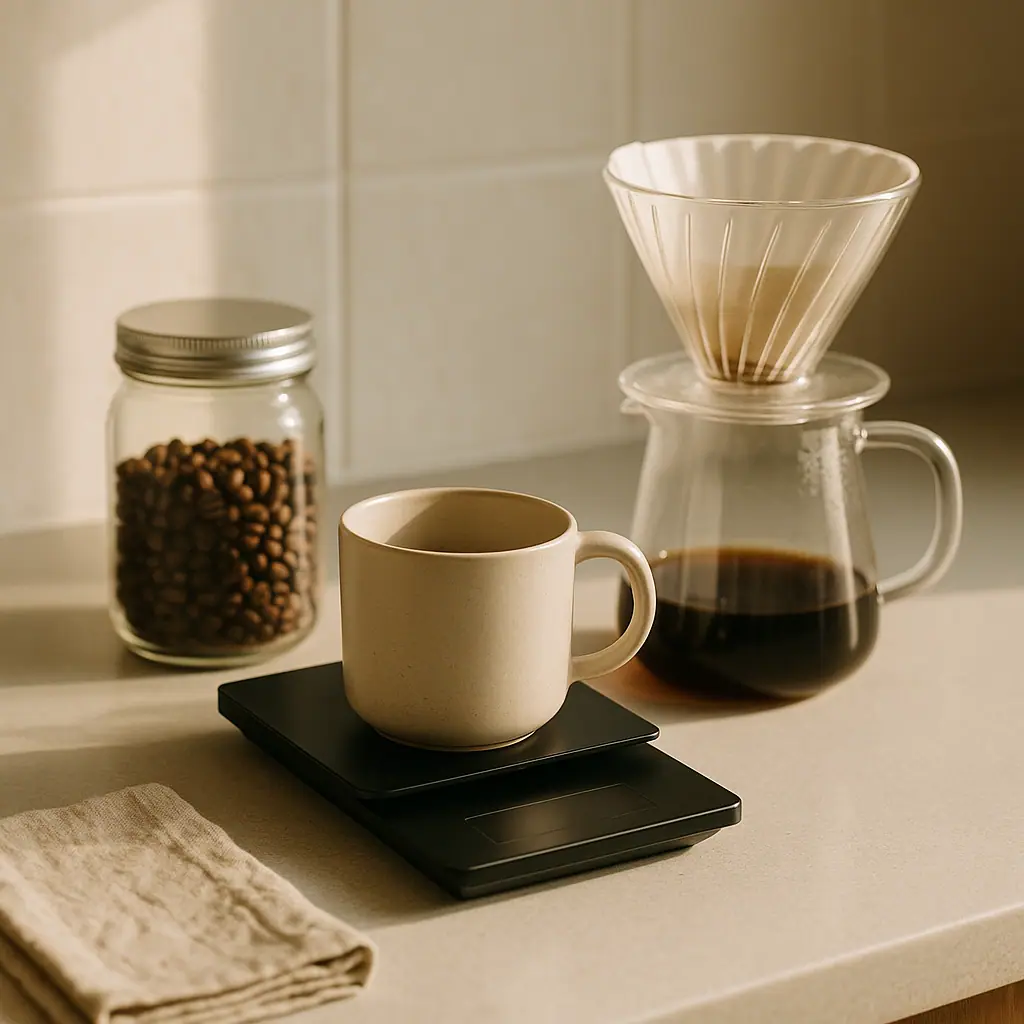
- Put the empty brewer or filter holder on the scale: press tare so the display returns to zero.
- Add the coffee: weigh the ground coffee you normally use and write that number down.
- Add water by weight: if your brewer allows it, pour to the same water weight each time instead of relying only on a line or guess.
- Brew normally: keep grind, water temperature, and timing as close as you reasonably can.
- Taste before changing anything: if the cup is weak, use a little more coffee or less water next time. If it is too strong, do the opposite.
- Repeat once: make the same recipe again before deciding whether the adjustment helped.
For pour-over drinkers, this pairs naturally with a beginner routine like pour-over coffee without expensive gear. The scale should make the recipe easier to repeat, not make the setup feel fussy.
Common Coffee Scale Mistakes to Avoid
The first mistake is buying a scale before you know what problem you want it to solve. If the problem is stale beans, a dirty brewer, or a grind that is far too fine, weight alone will not rescue the cup.
The second mistake is chasing exactness that does not matter for a normal morning. You do not need to panic over a few drops of water or one bean. Use the scale to build a steady baseline, then make small changes.
The third mistake is storing the scale where it gets wet or dusty. Coffee scales should stay dry, flat, and easy to wipe. If it is buried under mugs or beside a splashy sink, you will stop using it.
Pros and Cons
Makes recipes repeatable
Weight gives you a clearer baseline than scoops, especially when you change beans, grind size, or mug size.
Helps reduce wasted coffee
Instead of guessing your way through a bad cup, you can adjust one measured variable at a time.
Supports many brew methods
A small scale can help with pour-over, French press, cold brew, AeroPress-style recipes, and simple drip coffee dosing.
Adds one more step
If your morning routine is intentionally quick, weighing coffee may feel annoying until it becomes familiar.
Does not fix every flavor issue
Old beans, dirty gear, poor grind size, and uneven brewing can still make coffee taste flat or harsh.
A Simple Coffee Scale Checklist
- Do I brew by recipe? If yes, a scale makes recipes easier to follow and repeat.
- Do my scoops vary? If the amount changes every morning, weighing can quickly improve consistency.
- Does the scale fit my brewer? Check platform size, display visibility, and total capacity before buying.
- Will I keep it within reach? A hidden scale usually becomes unused gear.
- Can I clean it easily? Choose a simple surface that wipes down after grounds, drips, and steam.
- Am I solving the right problem? If the brewer is dirty or the beans are stale, handle that first.
When to Get Extra Help or Skip the Purchase
Skip the purchase for now if you are still choosing a brewer, only make coffee occasionally, or do not enjoy measured routines. A better first step may be cleaning the coffee maker, buying fresher beans in smaller amounts, or learning your grinder settings.
Get extra help from the product manual or manufacturer support if a scale will sit under a heavy machine, near water, or in a commercial-style setup. For a normal home counter, the main checks are capacity, stability, battery or charging setup, and keeping the scale dry.
Frequently Asked Questions
What should I check first before buying a coffee scale?
Check your main brewing method. If you follow recipes, adjust ratios, or brew different cup sizes, a scale is more likely to help than if you use one fixed machine routine.
How often should I use a coffee scale?
Use it whenever you are dialing in a recipe or changing beans. Once your routine feels steady, you may only need it for occasional checks.
Do I need a timer on the scale?
A timer is helpful for pour-over and some immersion recipes, but it is not mandatory. You can also use a phone timer or kitchen timer if the scale reads clearly.
Can I go back to using scoops later?
Yes. Many people use a scale to learn their preferred amount, then use a familiar scoop on busy mornings. The scale remains useful when something tastes off.
Final Thoughts
Do you need a coffee scale at home? You need one only if it supports the coffee you actually make. For a beginner who wants steadier cups, easier troubleshooting, and clearer recipes, it can be one of the most useful small accessories.
Start by weighing your current scoop and water once. If that simple check explains why your coffee keeps changing, a scale has earned its space. If your routine already works, keep brewing and spend your attention where it matters more.