Pour-over coffee can look fussy from the outside, but the beginner version is simple: hot water, fresh coffee, a filter, and a few steady habits. You do not need a cafe counter or a drawer full of tools to make a cleaner cup at home.
The goal is not to copy a competition routine. The goal is to make one repeatable morning cup, notice what changes the flavor, and improve the routine without buying gear you will not use.
This guide keeps the setup modest on purpose. If you already have a basic dripper, paper filters, a kettle, and coffee you like, you can start there and upgrade only after the routine tells you what is missing.
Why This Matters
Pour-over brewing gives beginners a direct way to understand coffee flavor. Small changes in grind, water flow, coffee amount, and timing are easier to notice because the method is so visible.
That visibility is helpful, but it can also create pressure to make every detail perfect. For a home routine, it is better to use simple defaults, brew the same way for several mornings, and change only one variable at a time.
For broader brewing terminology and standards, the Specialty Coffee Association's coffee standards resource is a useful reference when you want a more formal baseline. For everyday beginners, a steady routine matters more than memorizing technical language.
Start With the Basic Setup
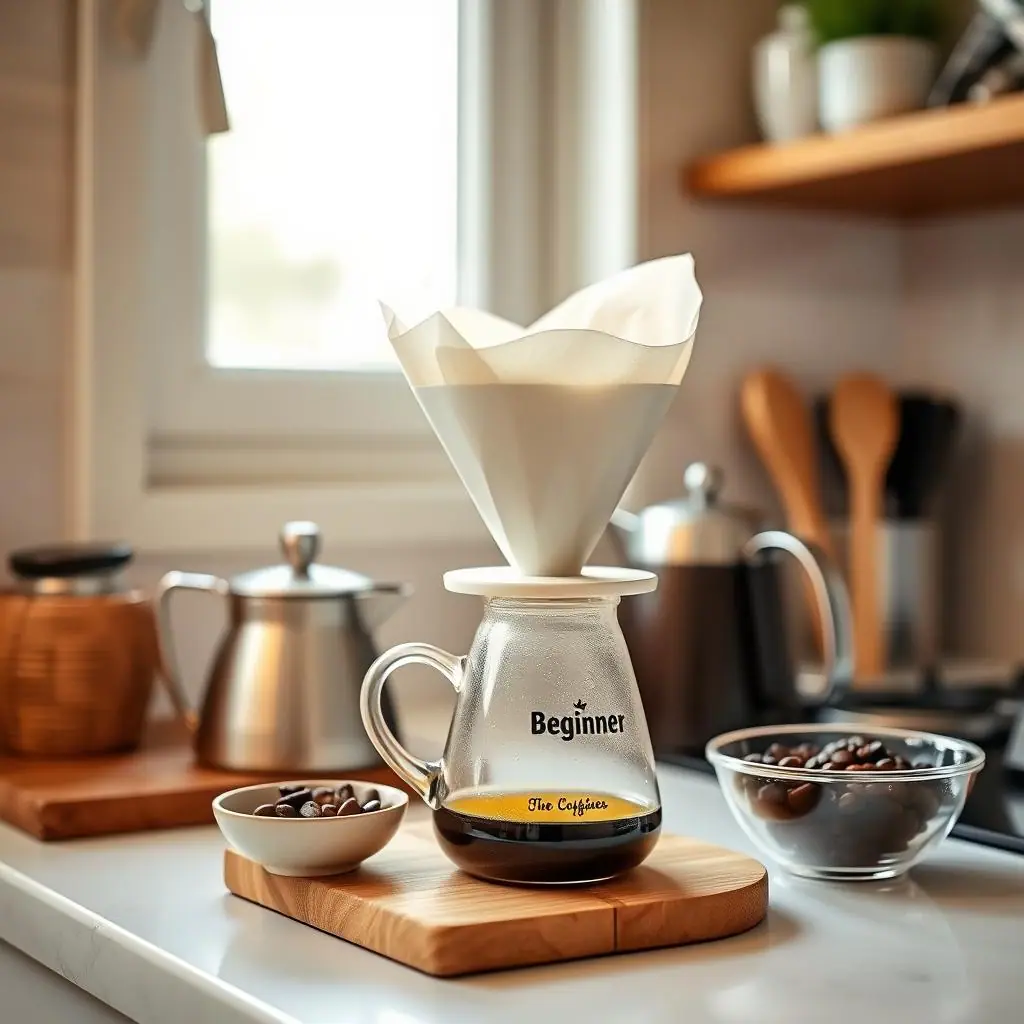
A simple pour-over station can be small enough for an apartment counter. The core pieces are a dripper, matching filters, a mug or carafe, coffee, hot water, and a way to measure roughly the same amount each time.
A gooseneck kettle gives more control, but it is not mandatory on day one. If you use a regular kettle, pour slowly and aim for a gentle stream instead of a splashy rush. The cup may not be perfect, but it can still be clear, pleasant, and much better understood than a random brew.
What to Check First for Pour-Over Coffee
Before chasing accessories, check the basics that change flavor the most. These are the parts of the routine that beginners can control without turning the kitchen into a lab.
Coffee amount and water amount
Use the same scoop or the same scale measurement each morning. Exact ratios can come later; the important first habit is not changing the amount by accident every time you brew.
Grind and freshness
Medium grind is usually a friendly starting point for pour-over. If the coffee drains too fast and tastes thin or sour, the grind may be too coarse. If it stalls and tastes harsh, the grind may be too fine.
Filter rinse and water flow
Rinsing the paper filter warms the dripper and helps remove papery flavor. Pouring slowly helps the grounds wet evenly instead of carving one channel through the coffee bed.
How to Brew Step by Step
Use this beginner workflow for a normal morning cup. It is intentionally plain so you can repeat it without pausing to decode a recipe.
- Set the filter: place the paper filter in the dripper and rinse it with hot water. Discard the rinse water.
- Add coffee: use the same amount each time. If you have a scale, weigh it. If not, use a level scoop and stay consistent.
- Start with a small pour: wet all the grounds and wait briefly so the coffee can bloom and release gas.
- Pour in small rounds: add water slowly, keeping the stream gentle and centered enough to wet the bed evenly.
- Let it drain: avoid stirring aggressively at the end. Taste the cup, then write down one note if something seems bitter, sour, weak, or balanced.
Common Beginner Mistakes to Avoid
The most common pour-over problems are not expensive-gear problems. They are routine problems: rushing the pour, using a different coffee amount each morning, ignoring grind size, or switching beans before learning how the current bag behaves.
- Pouring too fast: a heavy rush can disturb the bed and make extraction uneven.
- Guessing every amount: even a simple scoop works better when used the same way each time.
- Skipping the filter rinse: it is a small step, but it helps the setup feel cleaner and warmer.
- Buying upgrades too early: brew for a week before deciding whether the kettle, grinder, or scale is the actual bottleneck.
A Simple Checklist
Use this checklist when the cup feels unpredictable. It keeps the troubleshooting calm and practical.
- Same coffee amount? Keep the dose steady before judging the method.
- Same water amount? Fill to the same mug line or use a scale if you have one.
- Medium grind? Start moderate, then adjust finer or coarser based on taste and drain time.
- Slow pour? Keep the flow gentle enough that the coffee bed stays even.
- One change at a time? Write down the change so tomorrow's cup teaches you something.
Pros and Cons
Low-cost starting point
A basic dripper and filters can teach the method before larger upgrades make sense.
Easy to observe
You can see the pour, the coffee bed, and the drain speed, which makes troubleshooting easier.
Good routine control
Small changes are easy to repeat once you know which part of the cup you want to improve.
Needs attention
Pour-over is simple, but it is not as hands-off as pressing a drip machine button.
Inconsistent habits show up
Random amounts, fast pouring, or changing grind too often can make the cup confusing.
When to Get Extra Help
If your cup keeps tasting harsh, sour, or thin after a week of consistent brewing, check the grinder, beans, and water before buying a new brewer. A local roaster can often suggest a sensible grind range for the coffee you already bought.
It is also worth reading the instructions for your dripper and filters. Some brewers are shaped for specific filter styles, and a poor fit can cause slow draining or uneven flow even when your technique is reasonable.
Frequently Asked Questions
Do I need a gooseneck kettle for pour-over?
No. It helps with control, but beginners can start with a regular kettle by pouring slowly and carefully.
Should I buy a scale right away?
A scale makes repeatable cups easier, but a consistent scoop is enough for learning the first version of the routine.
Why does my pour-over taste bitter?
It may be too fine, too slow, too hot, or over-extracted. Change one variable next time so you can identify the cause.
Can I use pre-ground coffee?
Yes. Freshly ground coffee gives more control, but pre-ground coffee can still work while you learn the basic pour and cleanup routine.
Final Thoughts
Pour-over coffee for beginners works best when the routine stays calm and repeatable. Start with the gear you have, measure consistently, pour gently, and let several normal mornings teach you what actually needs improvement.
The first win is not a perfect cafe cup. The first win is knowing why tomorrow's cup can be a little better without making the process harder than it needs to be.