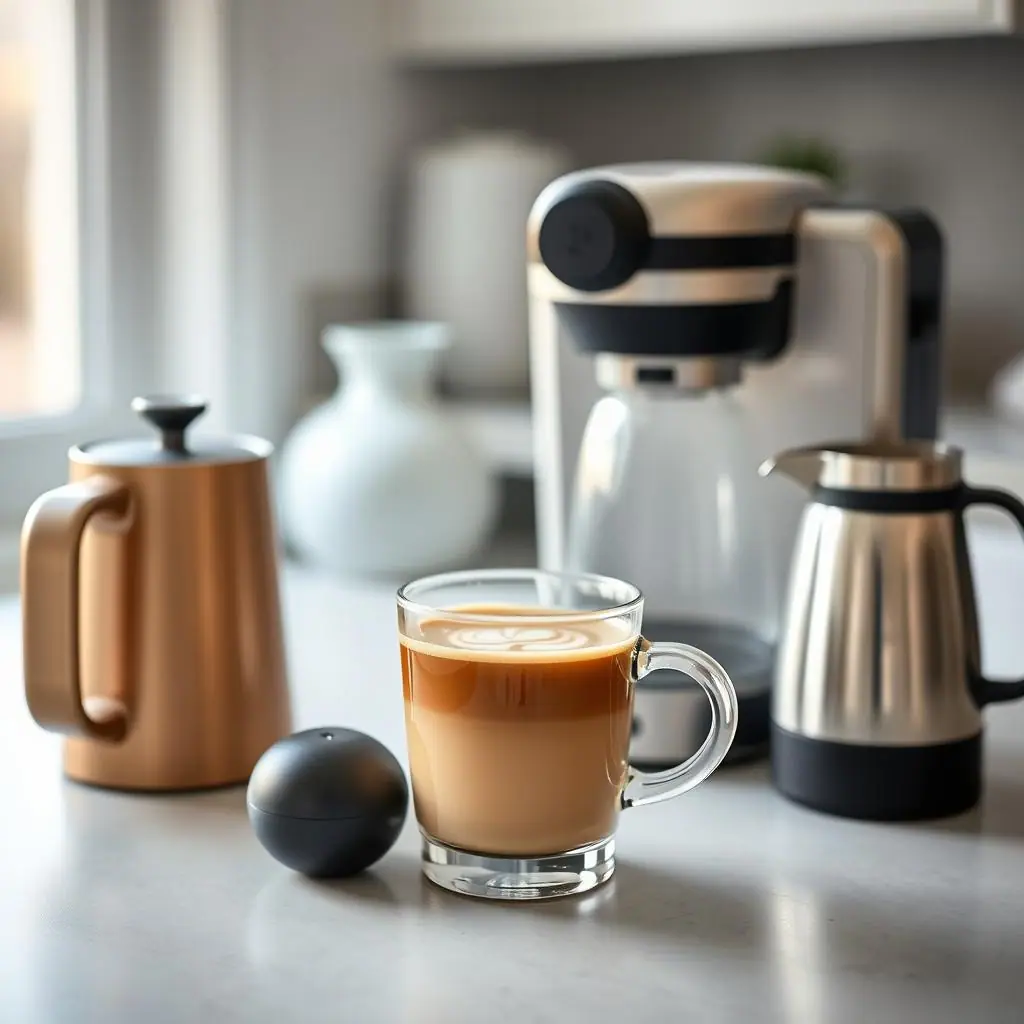
Milk frother options for simple home lattes can feel surprisingly confusing at first. Some tools are tiny and cheap. Some heat the milk for you. Some live on the counter like a small appliance. The useful question is not which frother looks most impressive, but which one makes your daily cup easier to repeat.
A home latte does not need to copy a cafe machine. For most beginners, the goal is warm milk, a pleasant texture, and a routine that does not leave the counter covered in parts. If the frother is annoying to clean or hard to store, it will probably become another gadget in the back of a cabinet.
This guide compares the common choices in plain language: handheld wand frothers, manual pump frothers, automatic electric frothers, steam wand options, and simple jar methods. By the end, you can pick the next practical step for your coffee nook without overbuying.
Why Milk Frother Options Matter at Home
Milk texture changes how a coffee drink feels. A little foam can make strong coffee feel softer, add body to a small cup, and make a morning routine feel more finished. But foam is only helpful if the tool fits the way you actually make coffee.
The Specialty Coffee Association is a useful reference point because it supports coffee education, standards, research, and professional training across the specialty coffee industry. Its overview of Specialty Coffee Association resources is a good place to verify coffee terminology or standards before turning casual advice into a hard rule.
For a beginner kitchen, keep the decision smaller: choose a frother based on milk volume, cleanup, counter space, and whether you want hot milk, cold foam, or both. The best milk frother for home coffee is the one you will use on a normal weekday.
Start With the Drink You Actually Make
Before comparing tools, name your usual drink. A small morning latte, an iced coffee with cold foam, and a weekend cappuccino-style cup all ask slightly different things from a frother.
If you already have a simple coffee station, think about where the frother would live. A tool that fits near your mugs, filters, and beans is more likely to become part of the routine. If your counter is tight, it may help to revisit your coffee station essentials and decide whether the frother needs a permanent spot or can live in a drawer.
Also be honest about cleanup. Milk dries quickly and can smell stale if parts are not rinsed soon after use. A frother that makes beautiful foam but has awkward seams, hidden tubes, or a fussy lid may not be the easiest beginner choice.
Hot latte-style drinks
For warm drinks, you need a way to heat milk safely and a way to add air. Some automatic frothers do both. A handheld wand only adds air, so you still need to warm the milk separately in a microwave-safe cup or small pan.
Iced coffee and cold foam
For iced drinks, cold foam matters more than heating. A handheld wand, manual pump frother, or some automatic models can work well, depending on the milk and the texture you like. Cold milk usually takes more patience than warm milk, so do not judge a tool from one quick attempt.
What to Check First for Milk Frother Options
Use a few practical checks before buying. This keeps the choice grounded in your kitchen instead of product-page promises.
- Milk volume: one small drink needs less capacity than two large mugs. Oversized frothers can feel wasteful for one-person routines.
- Heating needs: decide whether the frother must heat milk or whether you are comfortable warming milk separately.
- Storage: handheld wands fit in a drawer; automatic frothers need counter or cabinet space.
- Cleanup: check whether parts are easy to rinse, whether the whisk detaches, and whether the manual mentions dishwasher-safe components.
- Milk type: dairy milk and plant-based milks foam differently. Barista-style plant milks often foam better than very thin alternatives.
- Noise and speed: a fast motor is convenient, but a quiet, controllable tool may feel better in a shared kitchen.
- Budget: spend enough for a tool you can clean and hold comfortably, but do not pay for presets you will not use.
If you are still building the rest of your setup, compare the frother with your other daily tools. A simple coffee scale at home may improve repeatability more than foam if your coffee strength changes every morning.
Common Milk Frother Options Compared
Most beginners can narrow the choice to four realistic paths. None is perfect for every kitchen, so match the tool to the habit you want to repeat.
Handheld wand frother
A handheld wand is the smallest and usually the easiest entry point. It is a battery-powered or rechargeable whisk that spins in the milk. It does not heat milk, but it can add foam quickly and stores easily in a drawer.
This option works best if you make one cup, want a low-cost test, or mostly drink iced coffee with foam. It can be messy if the cup is too full, so use a taller container and start with the whisk below the surface before lifting slightly.
Manual pump frother
A manual pump frother looks like a small pitcher with a plunger lid. You move the plunger up and down to add air. It requires more effort, but it does not need batteries or a plug.
This option suits people who like simple tools and do not mind a little hand motion. Check the material and heat guidance carefully. Some manual frothers can be used with warmed milk, while others should not go on direct heat.
Automatic electric frother
An automatic frother is a small appliance that can heat and froth milk in one container. Many models have settings for warm foam, hot milk, or cold foam. This is the most convenient option if you make milk drinks often.
The tradeoff is space and cleaning. Automatic frothers usually have minimum and maximum fill lines, and overfilling can cause spills. They are best for someone who wants a repeatable button-press routine and has room for another small appliance.
Steam wand or espresso-machine frothing
A steam wand can create excellent milk texture, but it belongs to a different decision. If you already own an espresso machine, learning its steam wand may be worth the time. If you do not, buying a machine just for frothing is usually too much for a beginner home latte routine.
Steam also adds cleaning responsibility. The wand needs to be wiped and purged after use according to the machine manual. If you want the simplest path, start with a separate frother before upgrading the whole espresso setup.
How to Choose a Frother Step by Step
Use this short decision path before clicking buy. It keeps the purchase connected to a real cup of coffee.
- Pick one drink: choose the drink you want to make most often, such as a warm latte-style mug or iced coffee with cold foam.
- Decide if heating matters: if you want one tool to warm and foam milk, look at automatic frothers. If you can warm milk separately, a wand or manual frother may be enough.
- Check your storage: measure the counter or drawer space before buying. A frother that has no home will slow the routine down.
- Read the cleaning instructions: look for removable whisks, easy rinsing, and clear warnings about electrical bases or non-dishwasher parts.
- Start with small batches: use less milk than you think at first. Foam expands, and overfilled cups make beginners blame the tool.
- Test one variable at a time: change milk temperature, milk type, or frothing time separately so you know what helped.
If your drinks taste flat even with better foam, look beyond the milk. Beans, grind, and water still shape the base cup. Our guide to coffee flavor variables is a useful next read once the frothing routine feels settled.
Pros and Cons
Makes simple coffee feel more finished
A little milk texture can turn strong coffee into a softer, more satisfying latte-style drink without a full espresso setup.
Entry options are compact
Handheld wands and manual frothers are small enough for renters, apartments, and coffee corners with limited counter space.
Easy to test before upgrading
You can learn whether milk drinks belong in your routine before buying a larger appliance or espresso machine.
Cleanup cannot be skipped
Milk residue dries quickly, so every frother needs prompt rinsing and regular cleaning to avoid stale smells.
Foam depends on the milk
The same frother can behave differently with whole milk, skim milk, oat milk, almond milk, or barista-style alternatives.
A Simple Frother Checklist
- Do I need hot milk? If yes, choose automatic heating or plan a separate warming step.
- Do I make one drink or two? Match capacity to your real serving size.
- Will I clean it immediately? If not, choose the simplest tool with the fewest parts.
- Where will it live? Decide drawer, cabinet, or counter space before buying.
- Can I use my preferred milk? Expect texture to vary and test small amounts first.
- Am I upgrading the right problem? If the coffee base tastes weak or bitter, fix that before chasing foam.
Common Frother Mistakes to Avoid
The first mistake is filling the cup too high. Milk expands as air is added, and a full mug leaves no room for foam. Start with less milk in a taller container, then pour it into the coffee after frothing.
The second mistake is expecting every milk to foam the same way. Protein, fat, stabilizers, and temperature all affect texture. If your favorite plant milk does not foam well, try a barista-style version before replacing the frother.
The third mistake is ignoring the manual. Automatic frothers have fill lines, base warnings, and cleaning limits. Manual frothers can also have material-specific instructions. When heat, electricity, and milk are involved, do not guess.
When to Get Extra Help
Check the product manual or manufacturer page before using a frother with hot milk, putting parts in the dishwasher, charging a wand near water, or using any container on the stove. These details vary by model, so broad online advice should not replace the instructions for the tool in your kitchen.
If you have dietary or health questions about dairy, plant-based milk, caffeine, or sugar, treat that as a personal health topic and ask a qualified professional. DailyBrewNook can help with routine and gear decisions, but it cannot decide what drink is right for your body.
Frequently Asked Questions
What is the easiest milk frother for home coffee beginners?
A handheld wand is usually the easiest low-commitment start because it is small, affordable, and simple to store. You still need to warm milk separately for hot drinks.
Is an automatic milk frother worth it?
It can be worth it if you make warm milk drinks several times a week and want one appliance to heat and froth. If you only make occasional foam, a smaller tool may be enough.
Can I froth oat milk or almond milk?
Yes, but results vary. Barista-style plant milks often foam better than thinner versions. Test a small amount first so you do not waste milk while learning.
How often should I clean a milk frother?
Rinse milk-contact parts after every use and follow the manual for deeper cleaning. Milk residue can dry quickly, so waiting until later usually makes cleanup harder.
Final Thoughts
Milk frother options for simple home lattes are easier to compare when you start with the cup you actually want. A wand is compact and flexible. A manual frother is simple and unplugged. An automatic frother is convenient if warm milk drinks are part of your week. A steam wand is powerful, but usually only makes sense if you already own the machine.
Choose the smallest tool that solves your real problem. If your goal is one calmer latte-style drink at home, the right frother should be easy to reach, easy to rinse, and easy to repeat tomorrow.