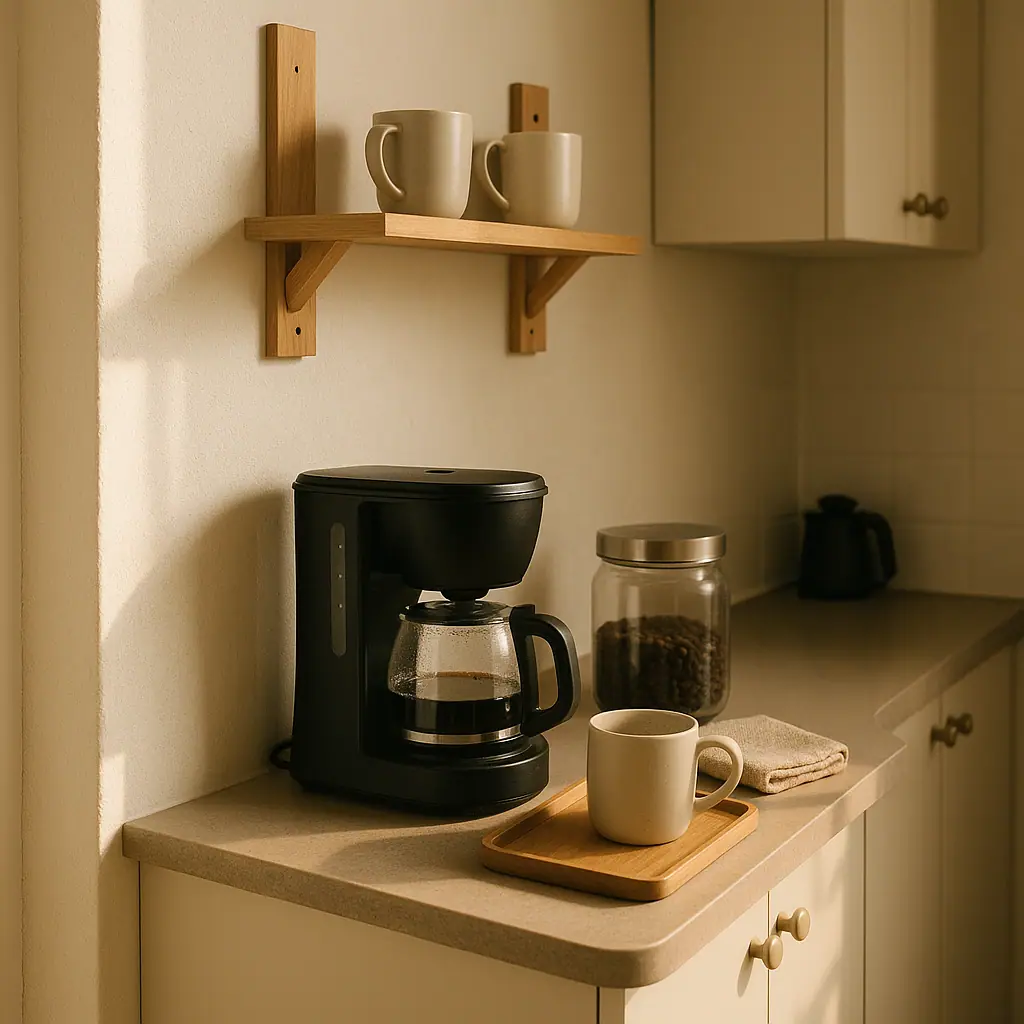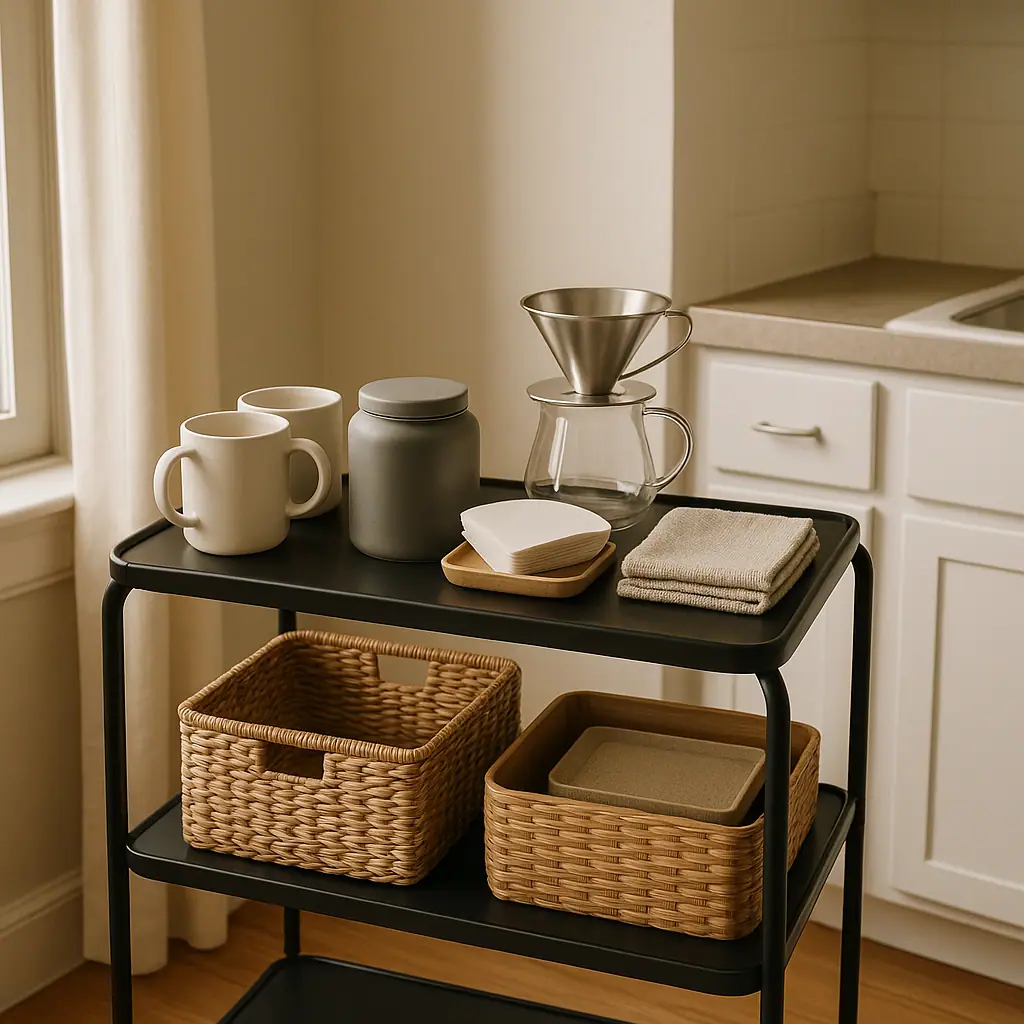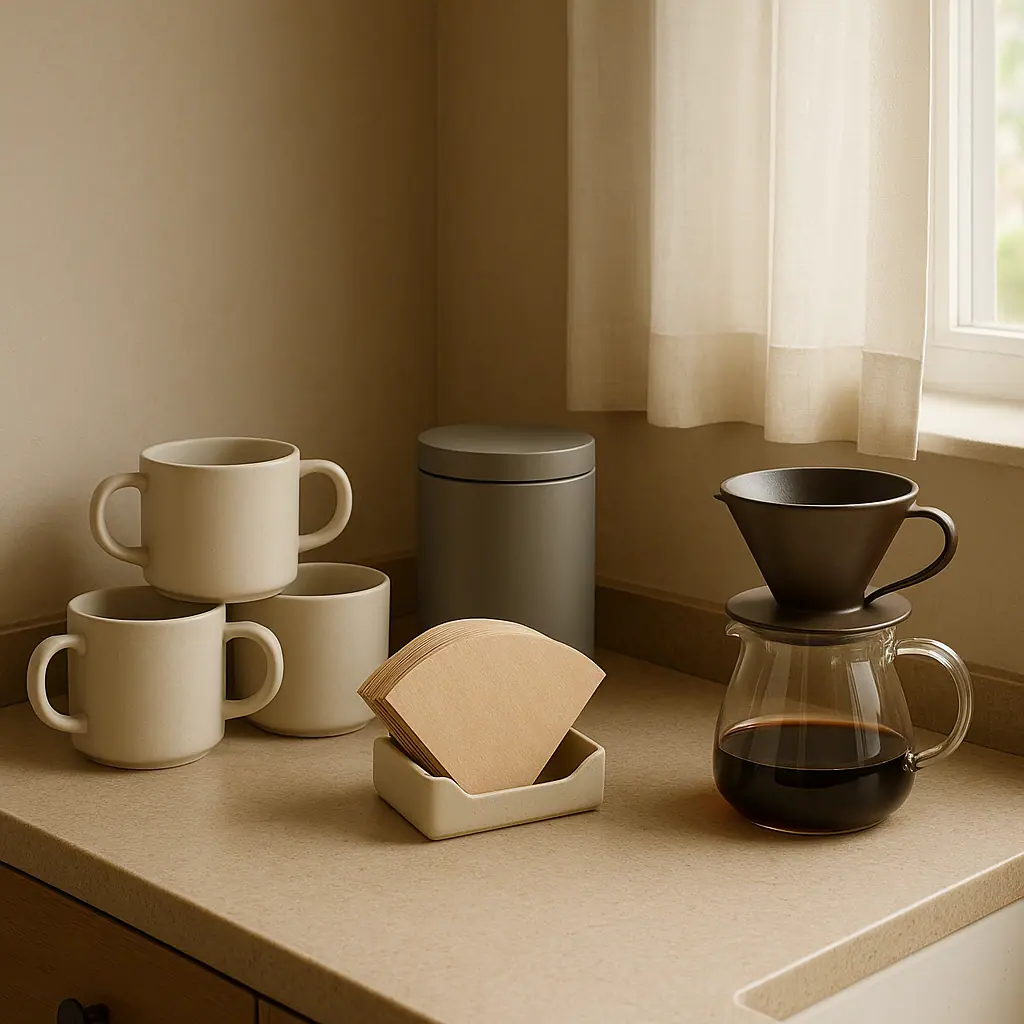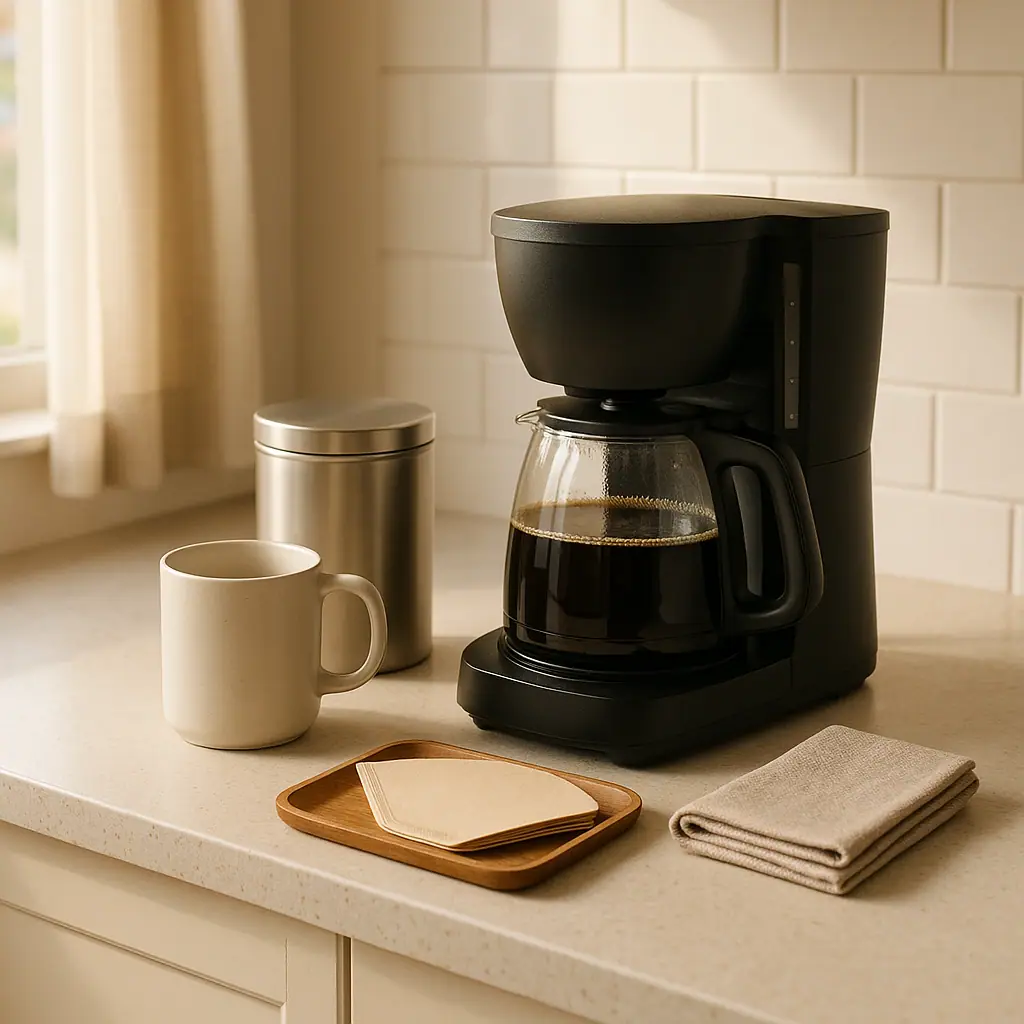
Coffee station essentials for a simple daily routine should make the first cup easier, not turn your counter into a hobby shop. A useful setup gives every daily item a clear place: brewer, coffee, filter or basket, measuring tool, mug, and one easy cleanup step.
The best coffee station is honest about your real morning. If you brew before work, while packing lunch, or between school drop-offs, the essentials need to be visible enough to use and simple enough to reset. Anything that only looks nice but slows you down is not essential yet.
This guide keeps the list practical for home coffee beginners. You will choose the core tools, set a small boundary, store extras nearby, and build a repeatable reset so the station is ready again tomorrow.
Why Coffee Station Essentials Matter
A coffee station is less about decor and more about reducing friction. When filters are across the kitchen, beans are near sunlight, mugs are stacked behind dishes, and the cleaning cloth is missing, the routine becomes scattered. Small annoyances can also make you skip measuring, leave grounds out, or postpone cleaning.
Specialty coffee can get technical, but beginners do not need to master every variable at once. The Specialty Coffee Association explains that coffee standards define shared requirements and vocabulary for the industry. For a home station, that is a helpful reminder: keep the physical routine simple enough that you can notice the brewing choices that affect taste. The SCA overview of coffee standards is a useful reference if you want to see how the coffee world talks about method and consistency.
Start With the Daily Brew Path
Before buying organizers, write the routine in plain order: get mug, measure coffee, add water, brew, discard grounds, rinse or wipe, return tools. That path tells you what belongs in the active zone.
If you are still building the overall counter setup, DailyBrewNook's guide to small coffee bar ideas can help you choose a footprint before you choose more gear.
Keep the active zone narrow
The active zone is the part of the station touched every morning. It should hold only the items used during the current routine. Backup filters, extra mugs, unopened beans, seasonal syrups, and spare parts can live close by, but they do not need to crowd the daily surface.
Match the station to one brewer
A drip machine needs a water path, filter supply, and carafe landing spot. A pour-over setup needs a kettle, dripper, filters, and somewhere for the wet dripper to rest. A French press station needs a scoop or scale, a timer if you use one, and a way to empty grounds without making a mess.
What to Check First for Coffee Station Essentials
The right essentials depend on space, outlet location, cleaning style, and how much precision you want. Use these checks before shopping.
- Brewer fit: the main brewer should sit where you can fill, use, and clean it without dragging it forward every morning.
- Water path: keep the reservoir, kettle, or carafe close enough that filling it does not cross clutter.
- Coffee storage: keep daily coffee sealed, away from heat, and easy to open with one hand if mornings are rushed.
- Measuring habit: use a scoop for simple consistency or a scale if you want a more repeatable recipe.
- Filter access: store paper filters, reusable filters, or basket parts where they stay dry and flat.
- Mug landing spot: keep one or two daily mugs nearby instead of using the station as a full mug display.
- Cleanup path: give grounds, wet tools, and drips a clear destination before they spread.
If beans are part of your station, freshness matters more than matching containers. For a calmer storage habit, review how to store coffee beans at home and choose a container that supports the routine instead of fighting it.
How to Build the Station Step by Step
Use this sequence to build a simple station without overbuying.
- Clear the space completely: remove mugs, jars, tools, papers, and decor so you can see the real counter, outlet, cabinet height, and cleaning access.
- Return the brewer first: place the machine, dripper, press, or moka pot where it naturally fits the water and heat path.
- Add the coffee supply: put the current bag, canister, or small daily portion near the brewer, but away from direct sun and heat.
- Choose one measuring tool: pick either a scoop, spoon, or scale. Do not keep three tools out if one is the daily habit.
- Place filters or brew parts: store them close enough to grab without opening multiple drawers.
- Create a wet-tool landing spot: use a small tray, saucer, or washable mat for spoons, drippers, and quick rinses.
- Move extras nearby: backup coffee, spare filters, travel mugs, frothing tools, and syrups can sit in a drawer, bin, or shelf outside the active zone.
- Test three mornings: brew normally before judging. Fix the first repeated annoyance, not every possible issue at once.
Essentials Worth Keeping Within Reach
These items earn their place in most beginner stations because they support the routine directly.
Brewer and measuring tool
The brewer is obvious, but the measuring tool is what keeps a cup from changing wildly day to day. A basic scoop is enough if you use it consistently. A small digital scale helps when you want to repeat a favorite ratio, but it should be easy to store and wipe clean.
Coffee, filters, and one daily mug
Keep the current coffee close, not every coffee you own. Keep filters dry and protected. Keep one or two daily mugs at the station if they make the routine easier; move sentimental or guest mugs elsewhere.
Cleanup cloth and grounds plan
A station without cleanup supplies becomes messy fast. Keep a small cloth, brush, or towel nearby and decide where used grounds go. If the trash or compost is far away, a lidded scrap bowl during brewing can help, as long as it is emptied promptly.
Common Coffee Station Mistakes to Avoid
The first mistake is treating every accessory as essential. Frothers, syrups, decorative jars, multiple mugs, spare filters, and backup beans can all be useful, but they do not all need to live in the daily zone.
The second mistake is ignoring cleanup. Coffee grounds, water spots, milk residue, and stale smells are part of the routine. A five-minute reset once a week helps, but the station also needs a thirty-second reset after each brew.
The third mistake is hiding the item you use most. If you brew every day but have to move a blender, toaster, and cutting board before reaching the coffee, the station is in the wrong place or holding too much.
Pros and Cons
Makes mornings more repeatable
Keeping the same tools in the same place helps your coffee taste more consistent without needing complicated technique.
Reduces counter clutter
A clear essential list prevents backups, extras, and decorative pieces from taking over the active brewing space.
Improves cleanup
When towels, trays, and grounds disposal are planned, the station is easier to reset after brewing.
Requires editing
You may need to move attractive but rarely used items out of the daily zone.
Needs a real reset habit
Even a simple station gets stale if grounds, drips, and tools are left for later every day.
A Simple Coffee Station Checklist
- Can you start brewing in under one minute? If not, remove a barrier from the active zone.
- Can you measure the same way each day? Keep one scoop or scale easy to reach.
- Are filters or brew parts dry and close? Avoid storing paper filters near steam, sink spray, or damp tools.
- Is coffee sealed after use? The station should make closing the bag or canister automatic.
- Is there a spot for wet tools? A small tray prevents drips from becoming a whole-counter problem.
- Can you reset the station quickly? A daily routine should end with the surface ready for the next cup.
When to Get Extra Help
Check manufacturer instructions when placing electric coffee makers, grinders, kettles, or frothers under cabinets, inside tight corners, or near water. Clearance, cleaning, heat, and cord guidance can vary by product.
Ask for help if you are unsure about outlets, unstable carts, wall-mounted shelves, or anything that mixes heat, water, and electricity. A simple coffee station should feel stable and boring in the best way: easy to use, easy to clean, and unlikely to surprise you.
Frequently Asked Questions
What are the most basic coffee station essentials?
Start with the brewer you use most, your current coffee, filters if needed, one measuring tool, one or two mugs, and a cleanup cloth or tray. Add extras only when they solve a repeated problem.
Do I need a coffee scale at a beginner station?
No, but it can help if you want repeatable cups. A scoop is fine for a relaxed routine as long as you use it consistently and adjust slowly when taste changes.
How often should I reset my coffee station?
Do a quick reset after each brew: close coffee, toss grounds, rinse wet tools, and wipe drips. Once a week, empty the tray or shelf and clean under the brewer.
Should coffee mugs stay on the counter?
Only the mugs you use daily need to stay close. If a mug display makes the counter crowded, keep one or two favorites out and move the rest to a cabinet.
Final Thoughts
Coffee station essentials for a simple daily routine are the items that help you brew and reset without extra decisions. Start with one brewer, one coffee supply, one measuring habit, and one cleanup path.
Once those pieces work for three ordinary mornings, improve the station slowly. The goal is not a perfect coffee corner. The goal is a calm daily nook that makes better cups easier to repeat.