Small coffee bar ideas for apartments and tight counters work best when they begin with one honest question: what do you actually reach for every morning? A good setup is not the one with the most accessories. It is the one that lets you brew, clean, and reset without moving half the kitchen.
If your counter is narrow, shared, or already crowded, the goal is not to create a showpiece. The goal is a small coffee zone that protects your daily routine. That might be one tray beside the outlet, one shelf above the mugs, or one drawer that stops filters and scoops from drifting around.
This guide keeps the ideas practical for renters, small kitchens, studio apartments, and anyone who wants better coffee without turning the counter into a gear display. You will choose a zone, limit what stays out, store the rest close by, and build a reset habit that keeps the nook usable tomorrow.
Why Small Coffee Bar Ideas Matter in Apartments
A small apartment coffee bar has to earn its space. Every inch of counter competes with food prep, dishes, keys, groceries, and other routines. When the coffee setup spreads too wide, it can make mornings feel more crowded instead of calmer.
The useful version is compact and repeatable. Your brewer, beans, filters, mug, and cleaning cloth should have a clear path. The tools you use daily can stay visible. The extras should live nearby but not in the way.
Coffee brewing itself is full of variables, from grind size to water amount. The Specialty Coffee Association notes that coffee standards can define technical requirements, vocabulary, and shared language for the industry. For a beginner at home, that is a reminder to keep your physical setup simple enough that you can notice the brewing choices that matter. You can read the SCA overview of coffee standards if you want a reliable reference for how seriously the coffee world treats method and terminology.
Start With One Real Coffee Habit
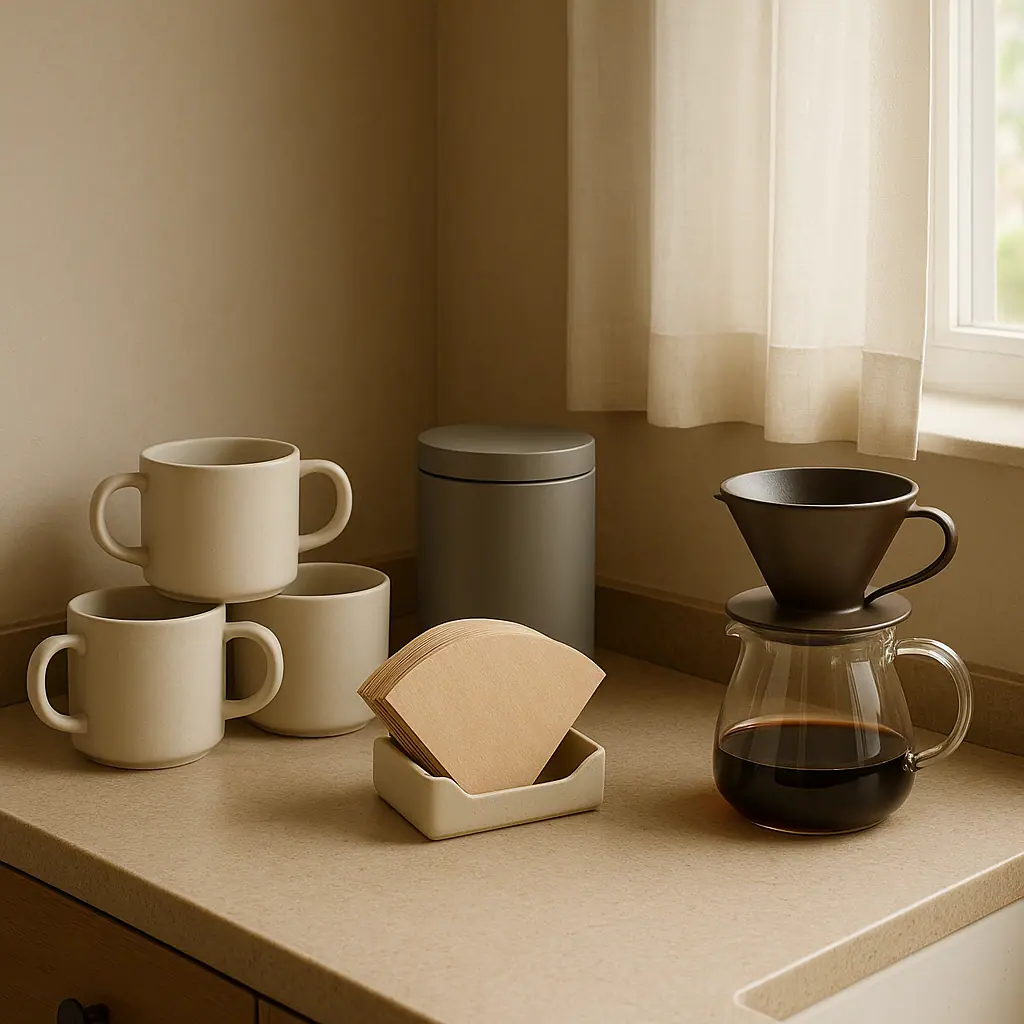
Before buying shelves, carts, bins, or jars, choose the brewing habit that the space must support. A pour-over corner needs a kettle path, filter storage, and somewhere to set the dripper after rinsing. A drip machine zone needs water access, a mug landing spot, and an easy way to dump grounds. A moka pot setup needs stovetop access and a cooling spot after brewing.
Map the morning reach
Stand where you usually brew and move through the routine slowly. Notice what you reach for first, what gets knocked aside, and where wet tools land. This small walk-through tells you more than a pretty photo because it shows the friction in your kitchen.
Choose the smallest useful footprint
A compact coffee bar can be as simple as a tray, a narrow counter section, a shelf above the brewer, or one drawer directly below the machine. If you are still deciding what gear deserves space, start with DailyBrewNook's guide to home coffee bar setup for beginners and keep only the items that match your actual brew method.
What to Check First for Tight Counters
Tight counters reward limits. The more clearly you define the zone, the easier it is to keep the setup calm. Think in terms of reach, clearance, heat, water, and cleanup.
- Outlet location: place electric gear where cords do not cross the sink, stove, or food prep path.
- Water path: make sure filling the kettle, reservoir, or carafe does not require carrying water across clutter.
- Heat clearance: keep hot kettles, moka pots, and machines away from paper towels, curtains, plastic bags, and low cabinets when needed.
- Daily items: keep only the brewer, beans or grounds, filters, scoop or scale, and one or two mugs in the active zone.
- Cleanup landing spot: give wet tools a saucer, small tray, or drying mat so drips do not spread across the counter.
- Visual quiet: use plain containers or closed storage when the kitchen already feels busy.
If beans are part of the visible setup, storage matters more than matching jars. A beautiful container that leaks air or sits in sun will not help the cup. For the freshness side of the routine, use the practical notes in how to store coffee beans at home before choosing a display jar.
How to Build a Small Coffee Bar Step by Step
Use this process before shopping. It keeps the setup based on your kitchen instead of someone else's counter.
- Pick one zone: choose the smallest counter, cart, shelf, or drawer area that can support your main brew method.
- Remove everything first: clear the area completely so you can see the real space, outlet, wall height, and cleaning needs.
- Return only daily items: put back the brewer, main coffee, filter supply, measuring tool, and one mug or cup stack.
- Create one vertical layer: add a narrow shelf, riser, mug rail, wall-mounted basket, or cabinet shelf only if it solves a specific reach problem.
- Move extras off the counter: backup filters, seasonal syrups, spare mugs, travel lids, and extra beans can live in a bin or drawer nearby.
- Add a wet-tool spot: use a small tray, washable mat, or saucer for spoons, drippers, and used measuring tools.
- Test it for three mornings: do not judge the setup by how it looks empty. Judge it after normal use, cleanup, and a rushed morning.
After three mornings, adjust one thing. Maybe the mugs need to move lower. Maybe the filters should sit beside the brewer instead of above it. Maybe the grinder is too loud or too large for the active counter and belongs in a cabinet between uses.
Small Coffee Bar Ideas That Actually Fit
The best idea depends on the shape of the kitchen, not the size of the coffee habit. Here are compact layouts that work well in apartments and tight counters.
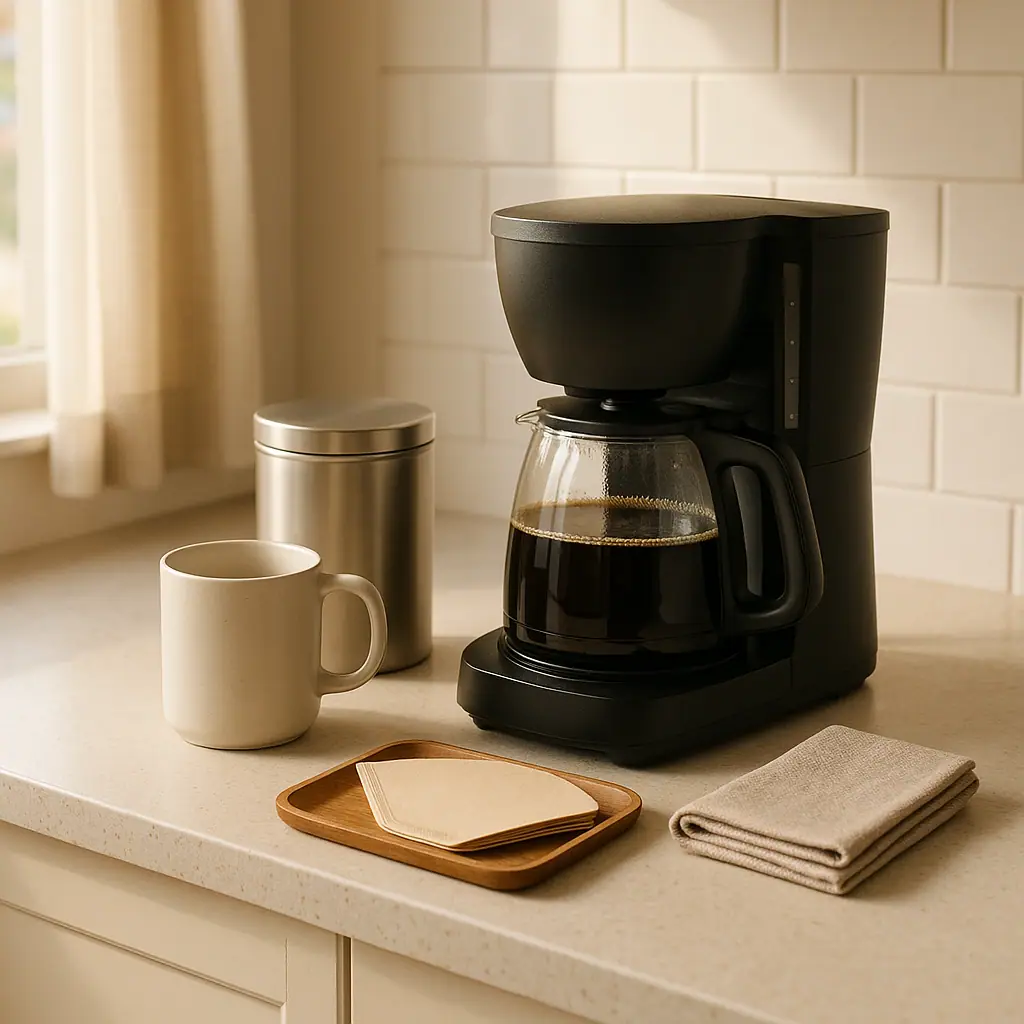
The tray-only coffee nook
A tray gives the setup a boundary. Use it for a brewer, beans, scoop, and one mug. When items spill beyond the tray, that is a sign something belongs in a drawer. Choose a tray you can lift for wiping the counter underneath.
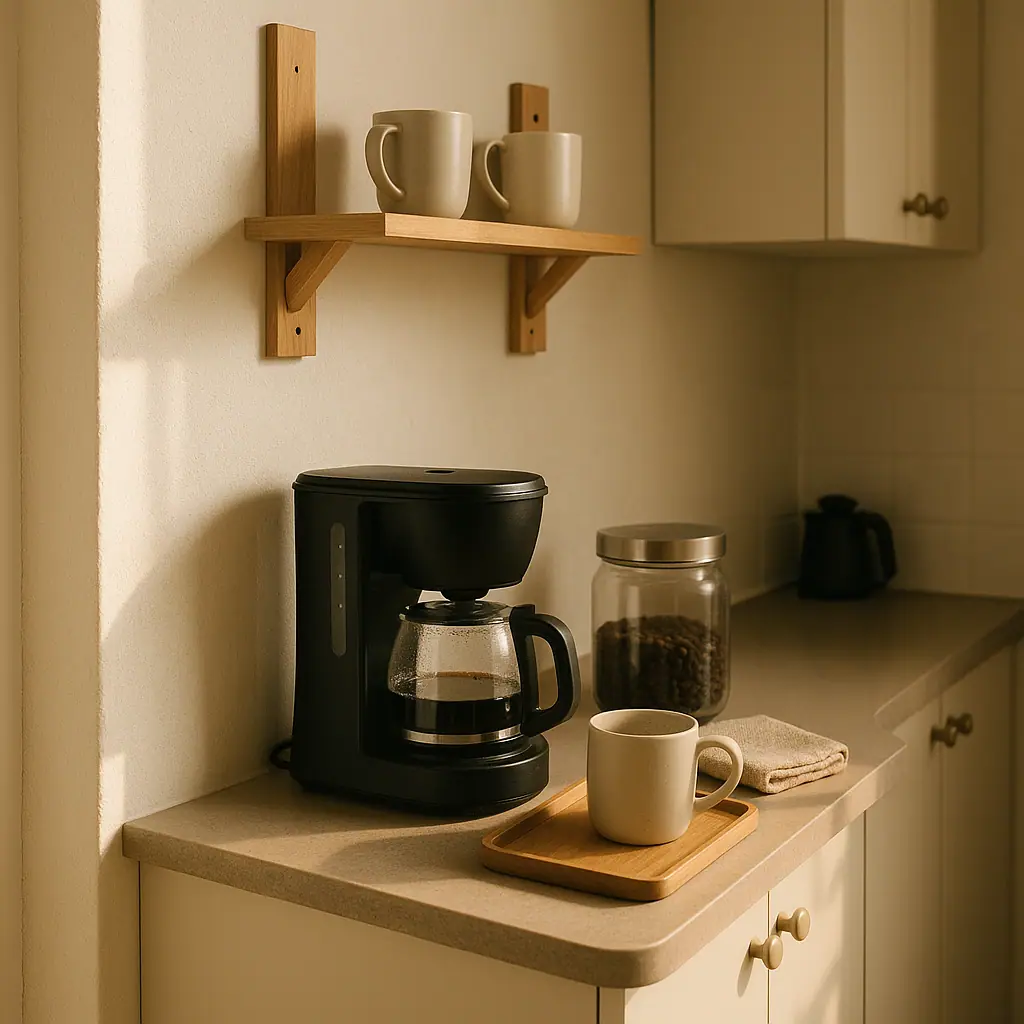
The vertical shelf setup
If counter width is the problem, a narrow shelf or riser can hold mugs, filters, or a small canister above the brewer. Keep heavy items low and avoid stacking anything you need to reach while handling hot water.
The cabinet-door routine
Inside-cabinet organizers can hold filters, measuring spoons, or cleaning cloths. This works best when the cabinet is directly above or beside the brew zone. If you have to cross the kitchen, the system will feel annoying fast.
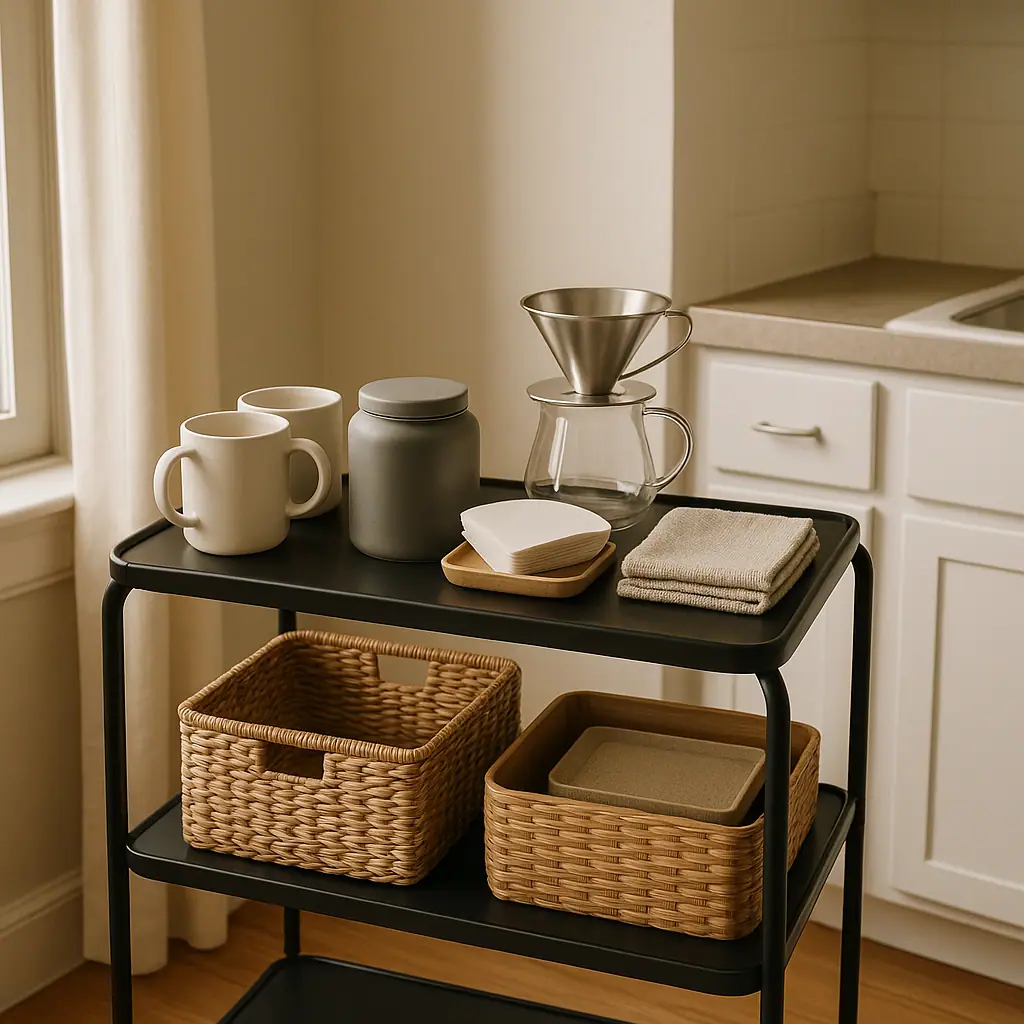
The cart for renters
A small cart can help when the counter is truly full, but it should still be close to an outlet or water path. Use the top for brewing only if the cart is stable. Otherwise, use it as nearby storage while the brewer stays on a fixed counter.
Common Small Coffee Bar Mistakes to Avoid
The first mistake is copying a large coffee station into a small kitchen. Rows of mugs, syrups, jars, signs, and tools can look pleasant online but feel crowded in daily use. Start with the routine, not the display.
The second mistake is storing too many backups in the active zone. Extra filters, unopened beans, spare cups, and seasonal accessories do not need prime counter space. Put them close enough to restock, but not where they interrupt brewing.
The third mistake is forgetting the messy part of coffee. Grounds, drips, wet filters, milk splashes, and spoons need somewhere to land. A small reset plan matters more than one more decorative container.
Pros and Cons
Makes mornings smoother
A compact zone keeps the tools you actually use within reach, so brewing feels less scattered.
Protects limited counter space
Boundaries like trays, shelves, and drawers stop coffee gear from spreading across the kitchen.
Works without expensive gear
Most improvements come from placement, storage, and cleanup habits rather than buying a full new setup.
Requires honest editing
Some mugs, accessories, or backup items may need to leave the counter even if you like seeing them.
Can expose workflow problems
A small setup quickly shows when the brewer, water source, trash, or storage is in the wrong place.
A Simple Small Coffee Bar Checklist
- Can you brew without moving unrelated items? If not, the zone is too crowded.
- Is the water path short and safe? Avoid carrying hot or full containers across clutter.
- Do daily items have a clear home? Brewer, coffee, filters, mug, and measuring tool should be easy to return.
- Are occasional items off the counter? Store backups nearby but out of the active zone.
- Is there a wet-tool landing spot? A small tray or mat keeps cleanup contained.
- Can you reset it in one minute? If the reset takes too long, simplify the setup.
When to Get Extra Help
Ask for help if the setup involves drilling, electrical changes, heavy wall-mounted storage, or anything near heat and water that you are not sure about. A small coffee bar should feel stable and low-risk, especially in a rental.
For product-specific gear, check the manual before placing a machine under a low cabinet, enclosing it tightly, or using it on an unstable cart. Coffee makers, kettles, grinders, and frothers can have their own clearance, cleaning, and operating instructions.
Frequently Asked Questions
What should I put in a small apartment coffee bar first?
Start with the brewer you use most, your coffee, filters if needed, one measuring tool, and one or two mugs. Add storage only after those basics have a clear place.
How often should I review the setup?
Review it after three normal mornings, then again whenever your brew method changes. If you keep moving the same item, it probably needs a better home.
Can a coffee cart replace counter space?
Sometimes. A cart is better for storage than for active brewing unless it is stable, close to power, and easy to clean. Hot water and wobbly carts do not mix well.
How do I make a coffee bar look tidy without buying more decor?
Use fewer visible items, group them on one tray, and move backups into a cabinet or drawer. A calm setup usually comes from editing, not adding more objects.
Final Thoughts
Small coffee bar ideas for apartments and tight counters should make brewing easier, not busier. Choose one real coffee habit, give it a clear footprint, store extras nearby, and build a fast reset after brewing.
The best small coffee nook is the one you can use on a rushed morning and still clean up without thinking. Start with one tray, one shelf, or one drawer. Then let the next improvement come from what your routine actually needs.