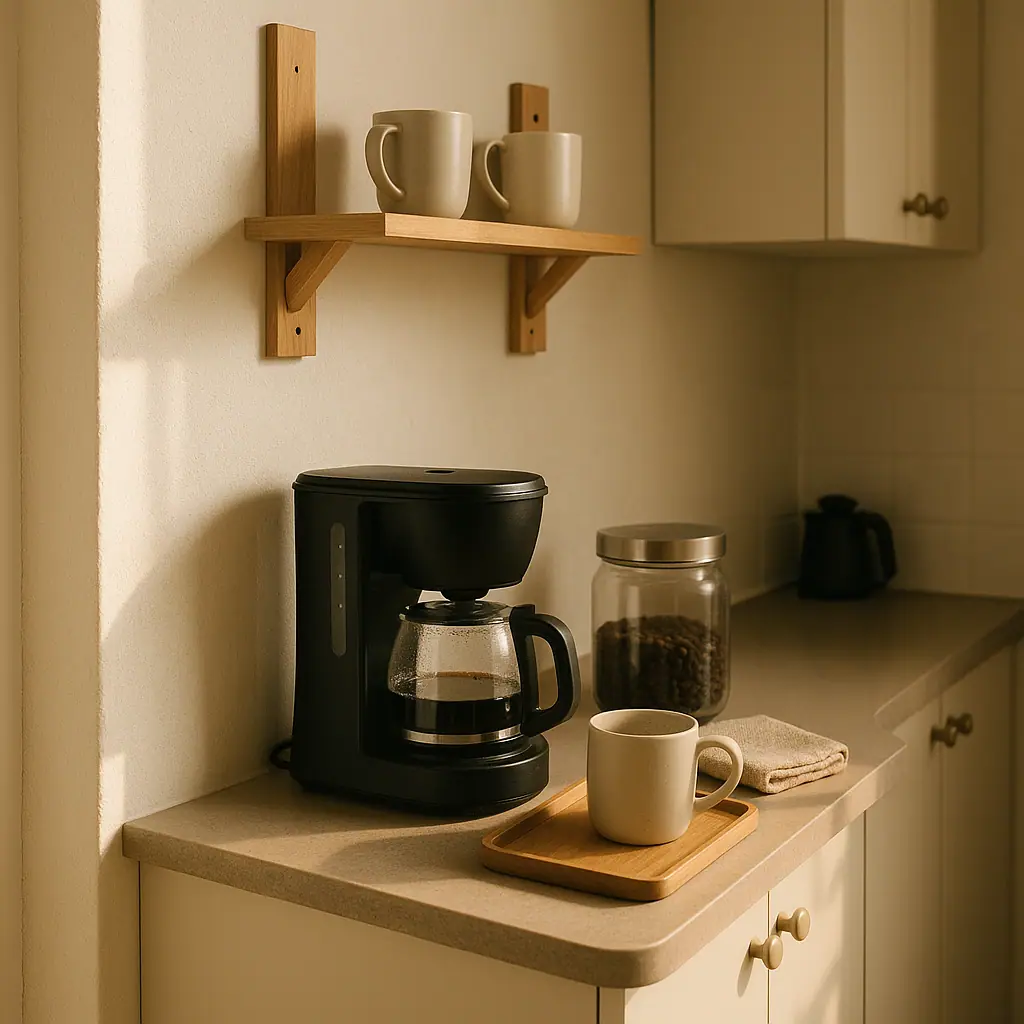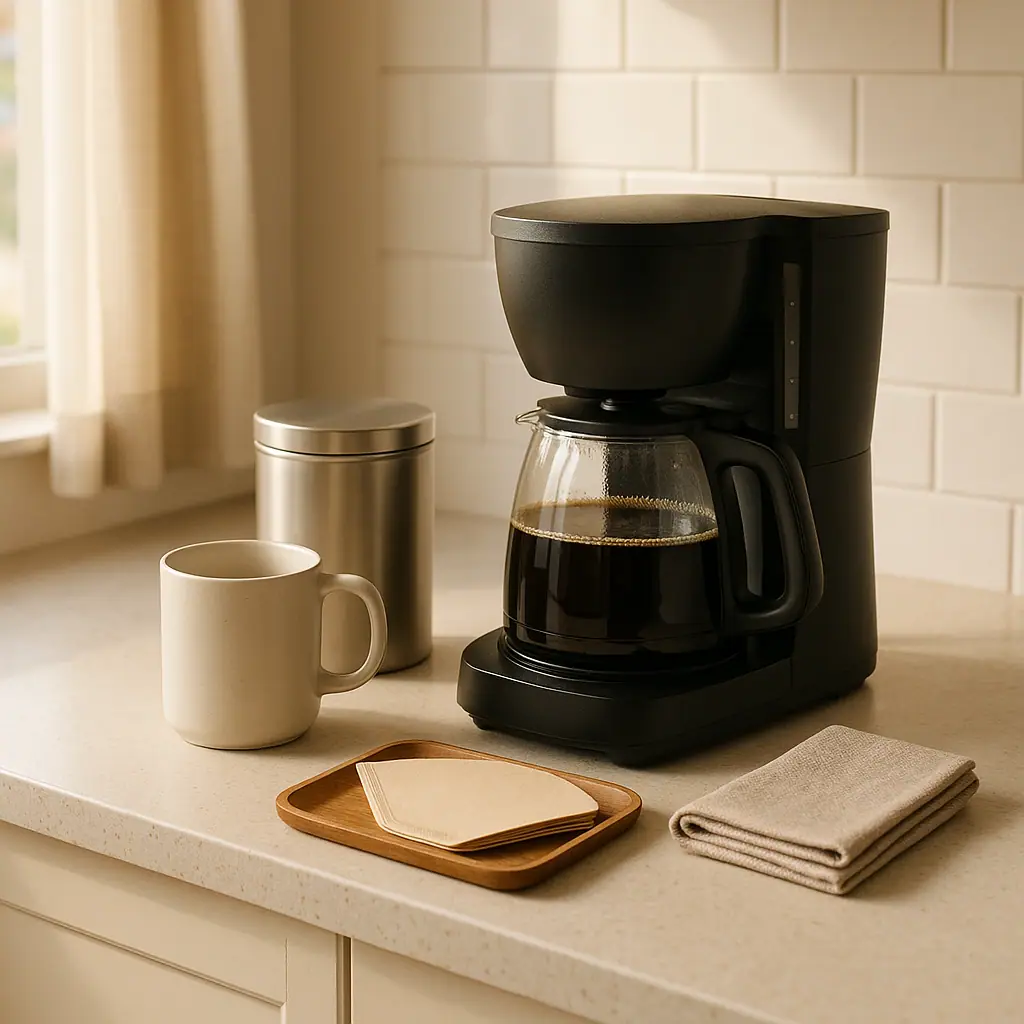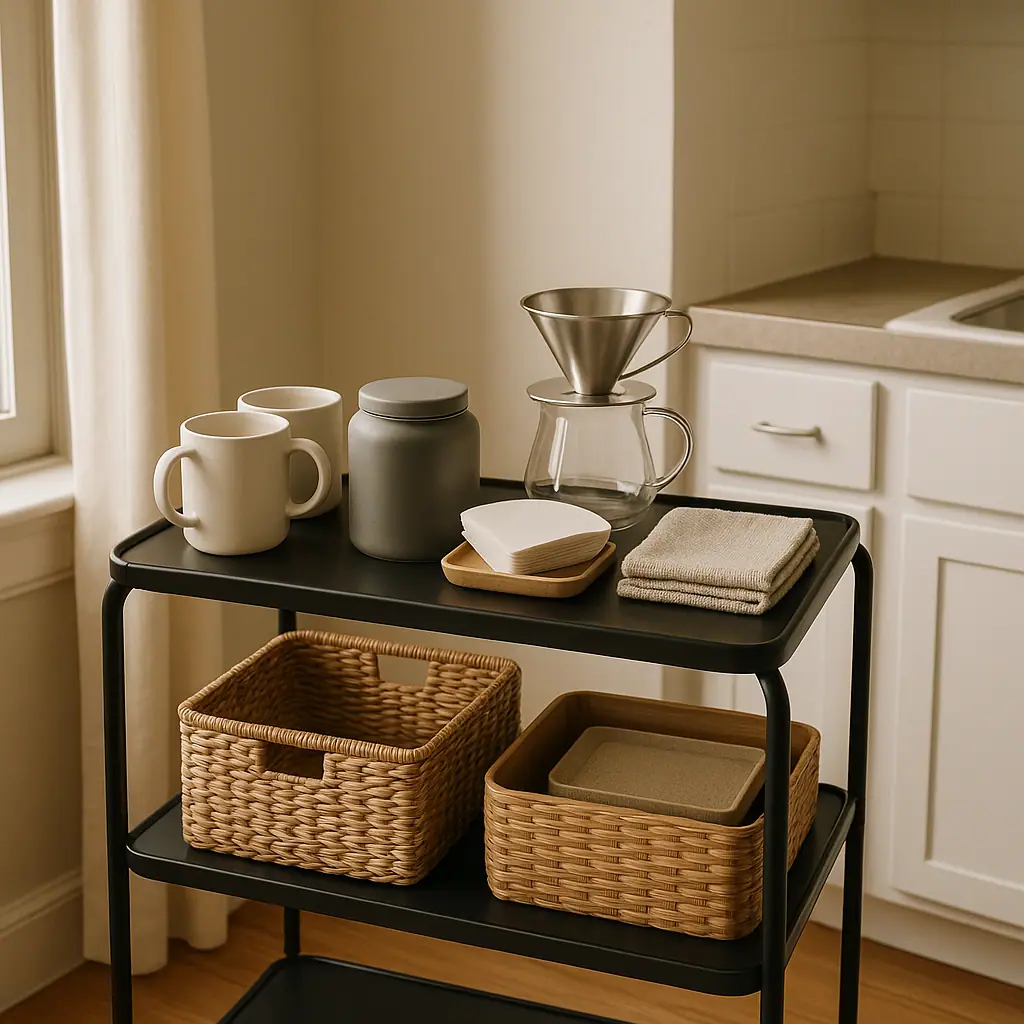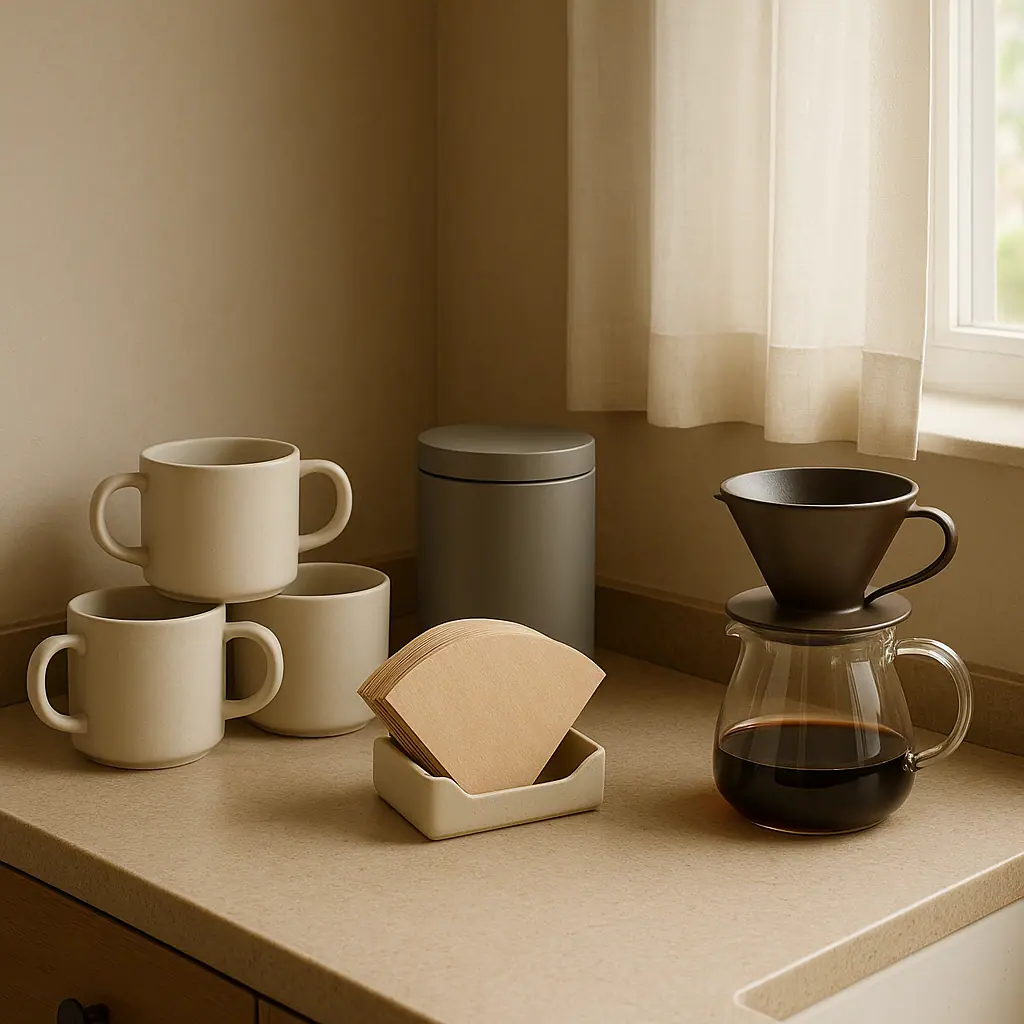
Learning how to organize coffee mugs, filters, and beans is less about making a picture-perfect coffee bar and more about making your first cup easier to repeat. When mugs are hard to reach, filters get bent, and beans sit open near heat or light, the routine starts with small friction before brewing even begins.
A calm coffee nook gives each item a clear job and a clear home. Daily mugs stay close to the brewer. Filters stay dry and flat. Beans stay sealed, away from heat, and easy to close after scooping. The result is a counter or cart that supports the habit you actually use, instead of collecting every coffee accessory you own.
This guide walks through a practical setup for mugs, filters, and beans in a small home coffee area. You will sort the daily items from the backups, choose simple storage zones, protect coffee freshness, and build a reset habit that keeps the nook ready for tomorrow.
Why Coffee Bar Organization Matters
Coffee bar organization matters because the first cup usually happens when you are not in the mood to search for supplies. If the daily mug is behind guest mugs, the filters are in a different drawer, and the open coffee bag is folded loosely beside the toaster, the routine becomes slower and less consistent.
Good organization also protects the supplies. Paper filters can absorb smells or moisture if they sit near a sink or damp towel. Mugs can chip when they are stacked too high. Beans lose freshness faster when exposed to air, moisture, heat, and light, so storage should make sealing the coffee automatic.
The Specialty Coffee Association explains that coffee standards help define shared requirements and language across the coffee industry. For home use, you do not need to memorize technical standards, but the idea of repeatability is useful: a setup should help you make the same basic choices each morning. The SCA overview of coffee standards is helpful background if you want to understand how professionals talk about consistency.
Start With the Daily Brew Path
Before buying bins or jars, watch one normal morning. Notice the order: grab mug, open coffee, get filter, measure or scoop, brew, discard grounds, wipe the counter, close the coffee, and return the tools. That path tells you which items deserve the easiest spots.
If your coffee setup still feels too broad, the guide to coffee station essentials can help you decide what belongs in the active zone before you organize the smaller pieces.
Separate daily items from occasional items
Daily items should be visible or one easy reach away. Occasional items can sit higher, lower, or farther back. This usually means one or two daily mugs near the brewer, current filters in a dry holder, and the open coffee close enough to use and seal quickly.
Give backups a different home
Backup filters, unopened coffee bags, seasonal mugs, extra scoops, and spare travel lids do not need to share the same surface as the morning routine. Put backups in a bin, cabinet shelf, drawer, or lower cart shelf so the daily zone stays calm.
What to Check First for Mugs, Filters, and Beans
Use these checks before moving everything around. They keep the setup practical instead of decorative.
- Mug count: keep only the mugs you use every day in the active zone. Guest mugs, sentimental mugs, and oversized mugs can live elsewhere.
- Filter type: store cone filters, basket filters, or reusable filters where they stay dry, flat, and easy to grab without crushing.
- Bean storage: keep the current coffee sealed in its bag or in an airtight container, away from heat, sunlight, steam, and sink spray.
- Brewer location: place supplies close to the brewer you use most, not near the brewer you wish you used more often.
- Cleanup path: make room for a towel, tray, brush, or grounds destination so organization survives after brewing.
- Counter boundary: decide how much space the coffee zone gets, then keep everything else outside that boundary.
For bean freshness, the National Coffee Association's coffee information site advises storing coffee in a cool, dark location and using a truly airtight container if refrigerating or freezing. Its guide to storage and shelf life is a useful source for conservative storage habits.
How to Organize Coffee Mugs Step by Step
Mug storage is usually the most visible part of a coffee nook, so it is easy to overdo. Start with function first, then make it pleasant.
- Pull out every mug: include cabinet mugs, travel mugs, seasonal mugs, and any mugs living on the counter.
- Choose the daily set: keep one to four mugs near the coffee area, depending on how many people brew each morning.
- Move rarely used mugs away: guest mugs and seasonal mugs can live on a higher shelf, in a closed cabinet, or with other serving pieces.
- Avoid tall unstable stacks: stack only mugs that nest securely. If they wobble, use a shelf, rail, or separate cabinet space instead.
- Keep handles easy to grab: mugs should not require lifting three other mugs before your first cup.
- Review after one week: if you never touched a mug during the week, it probably does not need a prime spot.
If you are working with a cart instead of a fixed counter, compare the mug plan with coffee cart setup ideas for renters so heavy or breakable pieces do not make the cart top-heavy.
How to Store Filters So They Stay Easy to Use
Filters work best when they are dry, clean, and shaped correctly. The storage goal is simple: make one filter easy to grab without bending the whole stack.
Paper filters
Keep paper filters in a small upright holder, shallow bin, original sleeve, or covered drawer. Avoid storing them beside wet towels, sink spray, or strong-smelling cleaning products. If filters sit near steam every morning, move them a little farther from the brewer.
Reusable filters
Reusable filters need airflow after rinsing. Do not seal a damp metal, cloth, or mesh filter inside a closed container. Let it dry fully before storing it with other supplies, and keep any cleaning brush nearby so residue does not build up quietly.
How to Store Beans Without Overthinking It
Beans deserve a storage spot that is boring in the best way: sealed, cool, dark, dry, and easy to close. A complicated container that you avoid using is worse than the original bag folded and clipped carefully inside a cabinet.
If the coffee bag has a good resealable closure and one-way valve, you can often keep using the bag. If the bag is flimsy or hard to close, transfer only the current coffee to a clean airtight container. Opaque containers are helpful on open shelves; clear jars should sit in a dark cabinet.
DailyBrewNook's guide on how to store coffee beans at home goes deeper into freshness decisions. For this organization project, the key is to make the best storage habit the easiest habit.
Common Coffee Organization Mistakes to Avoid
The first mistake is displaying everything. A full mug wall, several jars, backup filters, syrups, tools, and unopened coffee can look abundant but make the daily routine harder. Display the items that truly help the morning, then store the rest quietly.
The second mistake is storing coffee near heat because the spot is convenient. Cabinets beside ovens, sunny shelves, and areas close to steam can work against freshness. Convenience matters, but not if it encourages poor storage every day.
The third mistake is ignoring cleanup. If grounds, drips, and used filters do not have a destination, the coffee nook will feel messy no matter how nice the containers are.
Pros and Cons
Makes mornings faster
Daily mugs, filters, and beans are easy to find because they follow the order of the brew routine.
Protects coffee supplies
Dry filter storage and sealed bean storage reduce avoidable problems like bent filters, stale aromas, and open bags.
Reduces visual clutter
Separating daily supplies from backups keeps a small coffee bar useful without turning it into a storage catchall.
Requires honest editing
You may need to move attractive mugs, duplicate tools, or extra containers away from the most visible spot.
Needs a reset habit
The system only stays calm if coffee gets sealed, filters return to their holder, and mugs do not pile up after brewing.
A Simple Coffee Bar Organization Checklist
- Are only daily mugs in the prime spot? Move occasional mugs away from the active zone.
- Can one filter be grabbed cleanly? If the stack bends or gets damp, change the holder or location.
- Is the current coffee easy to seal? Choose a bag clip, airtight canister, or cabinet spot that makes closing automatic.
- Are beans away from heat and light? Avoid sunny counters, oven-adjacent cabinets, and steamy corners.
- Do backups have a separate bin? Keep extra filters, unopened coffee, and seasonal mugs nearby but not in the way.
- Can the nook reset in one minute? Return mugs, close coffee, toss grounds, and wipe the surface before the routine ends.
When to Get Extra Help
Check product instructions when organizing around electric brewers, grinders, kettles, or wall-mounted storage. Heat clearance, cord placement, weight limits, and cleaning guidance can vary by product.
If you are unsure about drilling shelves, hanging heavy mug racks, placing appliances near water, or storing glass containers above a busy counter, ask a qualified person or your property manager before making changes. A beginner coffee nook should feel steady, reversible, and easy to maintain.
Frequently Asked Questions
What should I organize first in a coffee bar?
Start with the items touched every morning: one or two mugs, the current coffee, filters, and a cleanup cloth or tray. Once those work, organize backups and occasional accessories.
How many mugs should stay near the coffee maker?
Keep only the mugs used in a normal day. For many homes, that means one to four mugs. Extra mugs can stay in a cabinet so the coffee zone does not become crowded.
Should coffee filters be stored in a closed container?
They do not always need a sealed container, but they should stay dry, flat, and away from strong odors. A holder, sleeve, drawer, or small bin can all work if the filters stay clean.
Can I change the setup later?
Yes. Review the setup after one week of normal brewing. Move one item at a time so you can tell whether the change actually makes mornings easier.
Final Thoughts
How to organize coffee mugs, filters, and beans comes down to one calm question: what makes the daily cup easier to start, brew, and reset? Keep those items close, dry, sealed, and easy to return.
Start with a small edit today. Choose the daily mugs, protect the filters, seal the beans, and give backups a different home. A better coffee nook does not need more gear; it needs a routine that is simple enough to repeat.