How often should you clean a coffee grinder? For most home coffee beginners, the useful answer is simple: brush out loose grounds often, wipe the parts you can safely reach when they look dusty or oily, and do a deeper clean about once a month if you grind coffee most days. If you use very oily dark roasts, flavored beans, or the grinder starts smelling stale, clean it sooner.
A coffee grinder does not need a complicated maintenance calendar to make better coffee. It needs a small habit that prevents old grounds and coffee oils from sitting in the burr chamber, chute, catch cup, or blade cup. Those leftovers can make fresh beans taste flat, muddy, or oddly bitter even when your recipe has not changed.
The safest starting point is always your own grinder manual. Different grinders open in different ways, and some parts are removable while others should never be washed or forced loose. Think of this guide as a calm routine for what to check, how often to check it, and when to slow down before cleaning more deeply.
Why Grinder Cleaning Matters
Fresh coffee grounds carry oils and tiny particles. Some of that material stays behind after grinding. Over time, it can collect in corners, cling to burrs, or pack into the exit chute. The grinder may still run, but the old residue can mix with tomorrow's beans.
Cleaning also protects your routine. If grounds build up in the chute, the grinder may retain more coffee than expected. If a burr grinder has old fines stuck inside, small grind changes can feel less predictable. If a blade grinder has oily dust in the cup, the next batch can pick up stale smells quickly.
For model-specific cautions, manufacturer guidance matters more than general advice. Baratza's grinder cleaning guidance notes that dark roasts tend to need cleaning more often because of the oils they leave behind; its overview of grinder cleaning essentials is a helpful reference for burr grinder owners.
Start With the Kind of Grinder You Own
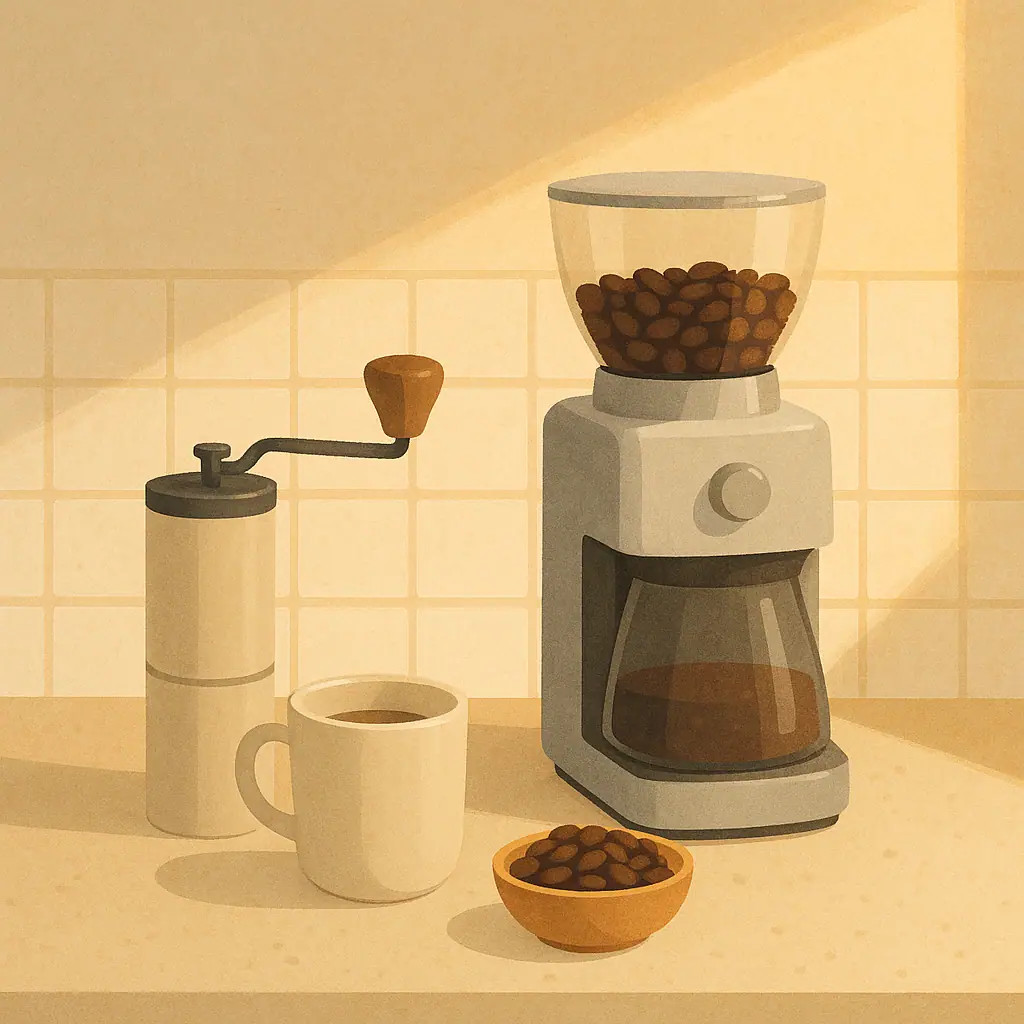
The right cleaning cadence depends on whether you use a burr grinder or a blade grinder. Both need attention, but they hold residue in different places.
Burr grinders
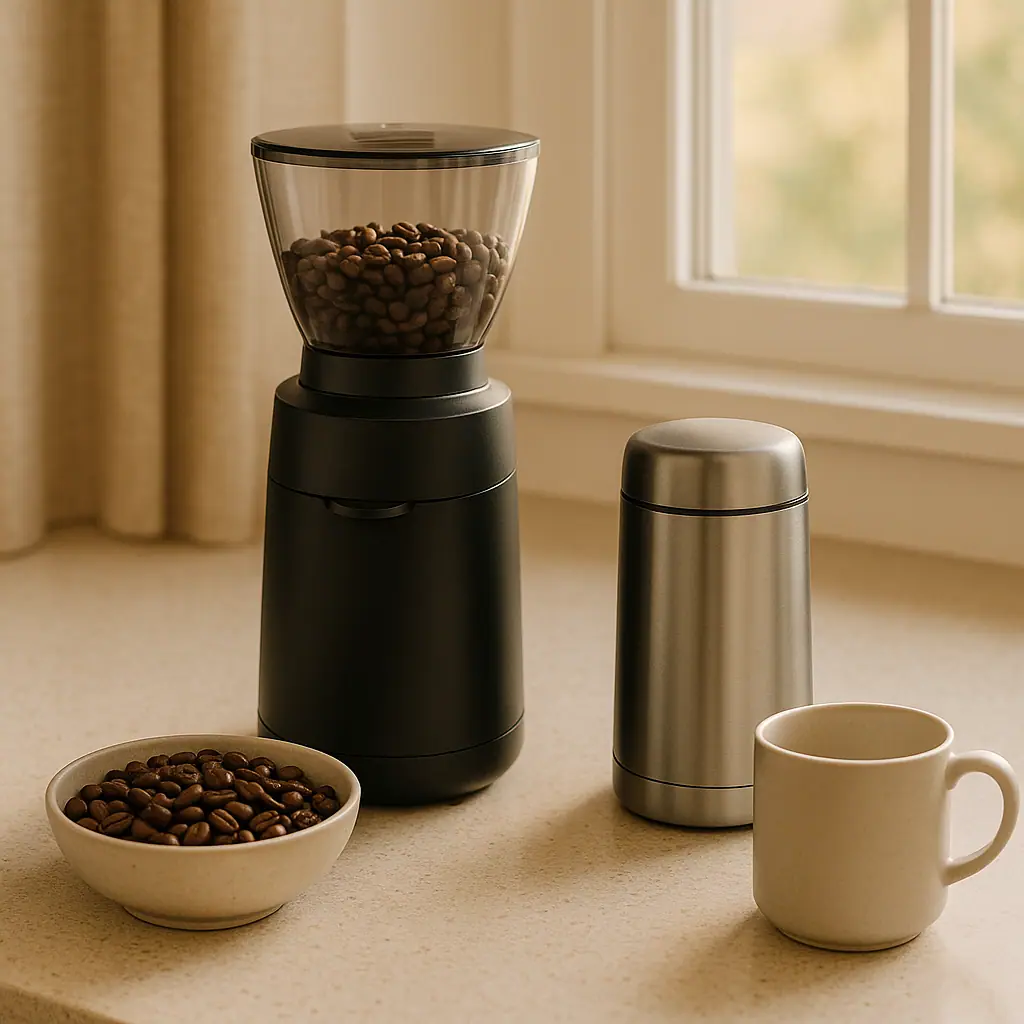
A burr grinder crushes beans between two burrs and usually has a hopper, grind chamber, chute, and catch bin. Loose grounds can sit near the burrs or collect where ground coffee exits. A quick brush and emptying routine helps, while a deeper clean may involve removing the top burr if the manual says that is safe.
Blade grinders
A blade grinder chops beans in a cup with a spinning blade. It usually has fewer removable parts, but the cup can hold fine dust and oils. Because many blade grinder cups are connected to electrical parts, you should avoid soaking the whole unit unless the manual clearly says a part is removable and washable.
What to Check First Before You Clean
Before you take anything apart, pause for a basic safety check. Unplug an electric grinder. Empty all beans from the hopper or cup. Look for removable parts, locking tabs, arrows, or cleaning instructions printed in the manual. If the grinder resists, do not force it open.
- Look for old grounds: check the catch bin, chute, burr area, lid rim, and any seams where dust collects.
- Smell the grinder: stale, rancid, smoky, or flavored-bean smells are signs that oils are lingering.
- Notice taste changes: if coffee tastes dull even with fresh beans, old grinder residue may be one cause.
- Check roast style: darker, shinier beans usually leave more oil than lighter roasts.
- Read the manual: confirm which parts can be removed, brushed, wiped, or washed.
If your grinder has warning language about water, cleaning tablets, or burr removal, follow that first. General coffee advice should never override the maker's care instructions.
How Often Should You Clean a Coffee Grinder?
Use frequency as a habit, not a strict rule. A person grinding one small dose every morning needs a different schedule than someone grinding several batches a day or switching between oily flavored beans and lighter roasts.
After each use or every few uses
Empty the catch cup, tap out loose grounds, and brush visible dust from the area you can reach. This takes less than a minute and prevents yesterday's grounds from becoming part of today's cup. If your grinder is very low-retention and your beans are not oily, every few uses may be enough.
Weekly for daily coffee drinkers
If you grind most mornings, do a slightly more deliberate wipe and brush once a week. Clean the hopper if it has oily film. Brush around the chute and catch bin. For a blade grinder, wipe the cup carefully with a barely damp cloth, then dry it fully before use.
Monthly for a deeper routine
For many daily home users, a monthly deeper clean is a good default. On a burr grinder, that may mean removing the upper burr if the manual allows it, brushing loose grounds from the chamber, and using grinder cleaning tablets only if the manufacturer says they are suitable. On a blade grinder, it may simply mean a more careful wipe and inspection.
Sooner for oily or flavored beans
Clean sooner if beans look shiny, the hopper feels greasy, or the grinder smells like a previous coffee. Flavored beans can leave strong aromas behind, so they deserve a faster cleanup if you want your next bag to taste clean.
A Step-by-Step Cleaning Routine
This routine keeps the process simple and avoids the common beginner mistake of taking apart more than necessary.
- Unplug the grinder: treat this as the first step every time for electric models.
- Empty beans and grounds: remove beans from the hopper or cup and clear the catch bin.
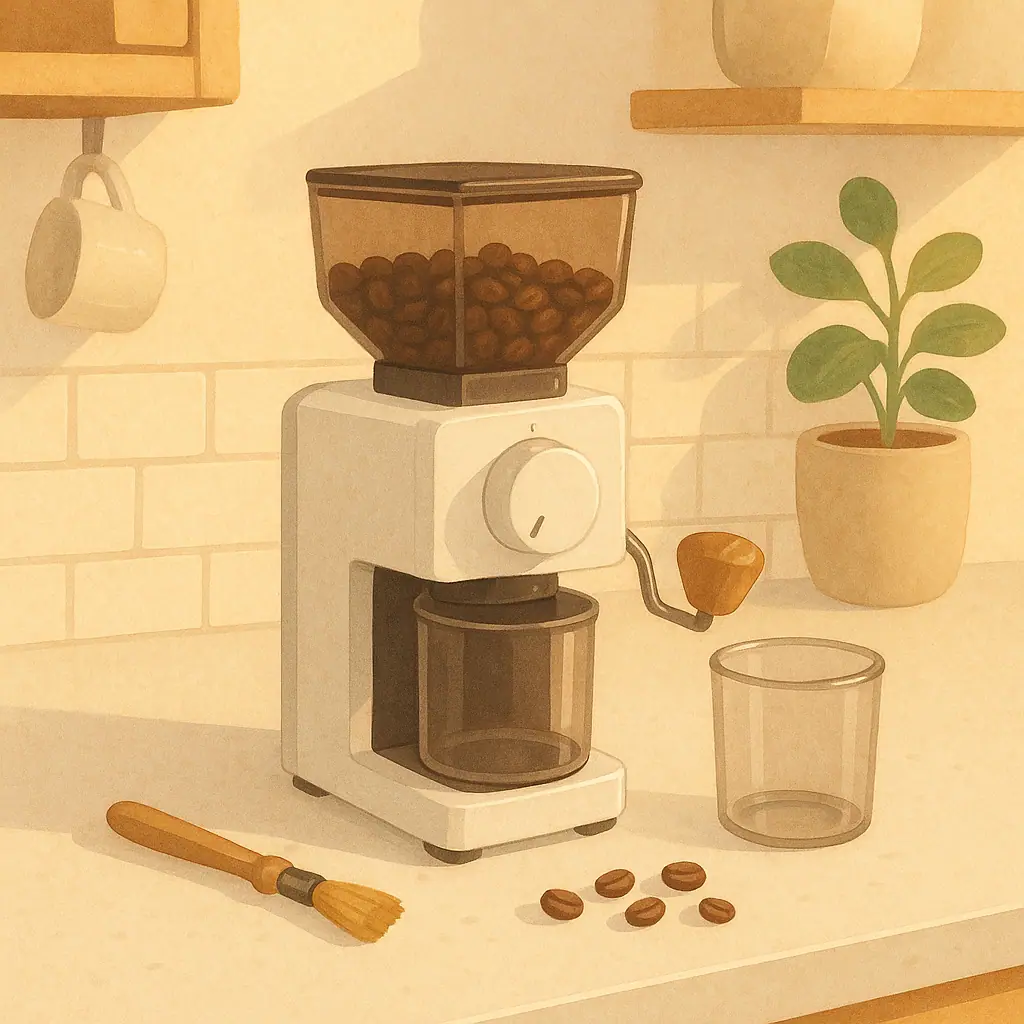
- Brush loose coffee dust: use the grinder brush or a clean, dry, soft brush around accessible burrs, corners, and the chute.
- Wipe removable dry surfaces: use a dry cloth first. If the manual allows a damp cloth on certain parts, use very little water and dry fully.
- Check the chute: gently clear packed grounds where coffee exits, without poking hard into hidden mechanisms.
- Reassemble carefully: make sure burrs, lids, bins, and hoppers are locked back in place before plugging in.
- Run a small purge if needed: after cleaning tablets or a deeper burr clean, follow the maker's instructions for discarding the first small amount of grounds.
Common Grinder Cleaning Mistakes to Avoid
The biggest mistake is cleaning too aggressively. A grinder is a small appliance with alignment, burr spacing, electrical parts, and plastic tabs that can break if forced. If you are unsure how a part comes out, stop and check the manual or the maker's support page.
Another mistake is using rice as a universal cleaning trick. Some people mention it online, but it is not a safe default for every grinder. Rice can be hard, dusty, and outside the manufacturer's recommendations. Use a brush, cloth, and approved grinder cleaning tablets only when your grinder's instructions allow them.
A third mistake is forgetting the hopper and catch bin. Beginners often focus on the burrs but leave oily film in the bean hopper or old dust in the grounds container. Those parts touch every batch too.
Pros and Cons
Cleaner flavor
Removing old grounds keeps stale coffee from mixing into fresh beans, especially when you switch bags or roast styles.
More repeatable brewing
A grinder with less packed residue is easier to dose, adjust, and trust from one morning to the next.
Less counter mess
A quick brush-and-empty habit keeps fines from spreading across the coffee nook.
Deep cleaning can be model-specific
Some grinders are easy to open, while others require careful manual checks before removing parts.
Overcleaning can create risk
Too much water, force, or disassembly can damage a grinder faster than ordinary coffee dust.
A Simple Grinder Cleaning Checklist
- Every use or few uses: empty the catch bin and brush away visible loose grounds.
- Weekly: wipe the hopper, lid, catch bin, and accessible dry surfaces if you grind daily.
- Monthly: do a deeper burr-area clean if your manual allows it.
- Sooner: clean after oily dark roasts, flavored beans, stale smells, or visible buildup.
- Never guess: check the manual before using water, tablets, or removing burrs.
Frequently Asked Questions
What should I check first before cleaning a coffee grinder?
Check whether it is unplugged, empty, and safe to open according to the manual. Then look for loose grounds, oily film, and stale smells.
How often should I deep clean a coffee grinder?
For daily home use, about once a month is a practical starting point. Clean sooner if you use oily beans, flavored coffee, or notice stale smells.
Can I wash grinder parts with water?
Only wash parts that your manual says are washable. Keep water away from the motor body, electrical base, and any burr chamber that the maker says should stay dry.
Should I use grinder cleaning tablets?
Use them only if they are suitable for your grinder type and the manufacturer allows them. They can help some burr grinders, but they are not a substitute for reading the manual.
Final Thoughts
How often should you clean a coffee grinder? Start with a quick brush-and-empty habit, add a weekly wipe if you grind daily, and plan a deeper clean about once a month. Then adjust based on your beans, your grinder, and what your coffee tastes like.
The goal is not to make grinder care feel fussy. The goal is to keep old coffee from sneaking into fresh cups. Once cleaning becomes a small repeatable step, your coffee nook feels easier to maintain and your morning brew becomes more predictable.