Learning how to clean a French press without leaving grit behind is mostly about timing, gentle handling, and a repeatable sink routine. The goal is not to scrub harder every morning. It is to remove the loose grounds, rinse the mesh well, and keep coffee oils from building up where the filter meets the plunger.
A French press is forgiving, but it has more little hiding places than a drip basket. Grounds can settle under the mesh, around the cross plate, and in the lower corners of the carafe. If you pour the last sip into your mug, press the plunger hard, or dump the grounds straight into the sink, the cleanup usually feels messier than it needs to be.
This guide keeps the routine simple: empty the press without clogging the drain, rinse the parts in the right order, and do a quick weekly deep clean so tomorrow's cup tastes fresh instead of muddy.
Why This Matters for a Cleaner French Press
Grit in a French press cup usually comes from fine coffee particles that slip through the metal filter or stay trapped in the brewer after the last use. Cleaning matters because leftover grounds and coffee oils can make the next brew taste stale, bitter, or heavier than intended.
The Specialty Coffee Association standards program is a useful reminder that coffee quality depends on repeatable practices, not just better gear. At home, that repeatability starts with clean equipment and a grind that is not too fine for the mesh filter.
Start With the Right Cleanup Setup
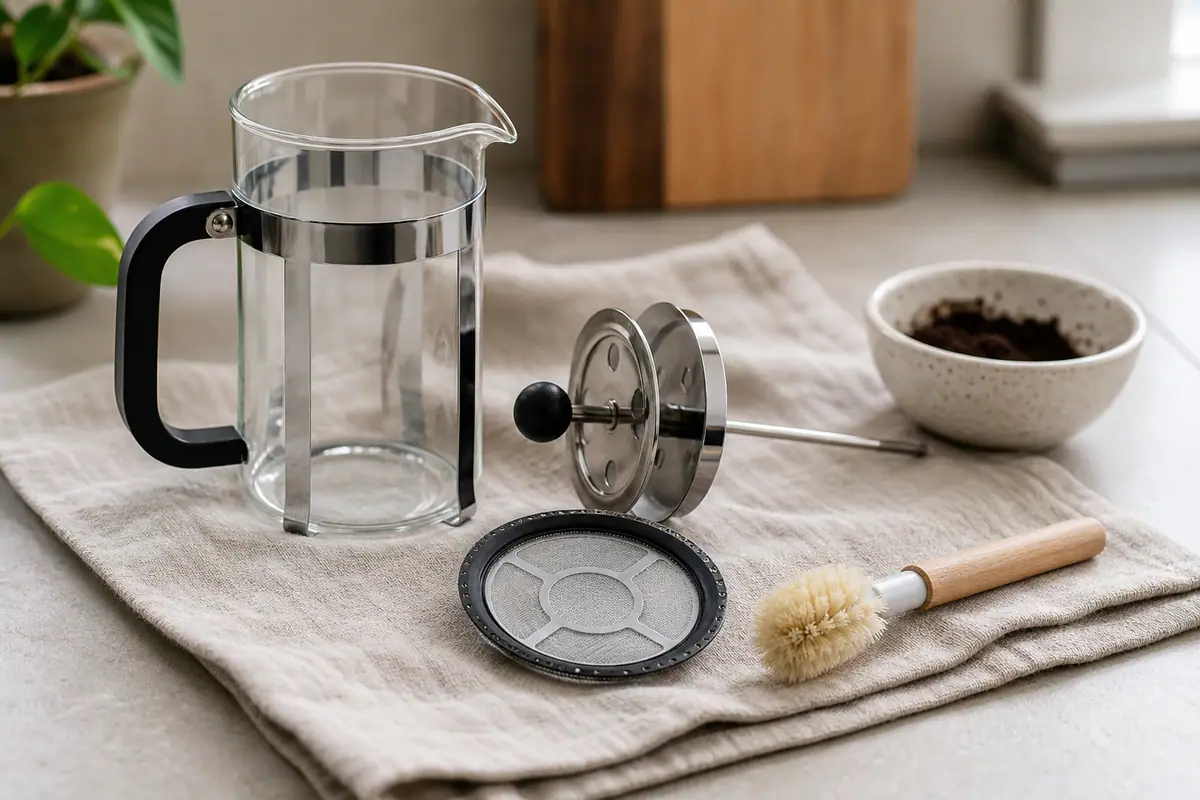
Before taking the press apart, let it cool enough to handle safely. You only need a small spatula or spoon, a fine sink strainer or compost container, warm water, mild dish soap, and a soft brush or sponge. Avoid abrasive pads on glass or polished stainless steel because they can scratch surfaces and make coffee residue cling more easily over time.
Empty the grounds before adding lots of water
Scoop the thick layer of used grounds into compost or the trash first. A splash of water can loosen the puck, but turning the whole carafe into a muddy slurry makes it harder to control. If your kitchen sink has a strainer, use it as a backup rather than as the main disposal plan.
Separate the plunger parts only when needed
For daily cleaning, many presses only need the plunger rinsed from both sides. For weekly cleaning, unscrew the filter stack if your model allows it, keeping the parts in order on a towel. If your brewer has a specific manufacturer manual, follow that first, especially for insulated or double-wall models.
What to Check First for Less Grit
If the press looks clean but the cup still feels silty, inspect the mesh. Hold it up to the light and look for bent edges, trapped grounds, or a loose fit around the rod. A warped filter can let more sediment pass no matter how carefully you clean.
The National Coffee Association's French press guide notes that this brew method generally uses a coarse grind and that equipment should be cleaned after each use. Their cleanup section is worth checking if you want a plain-language reference beyond your brewer manual: French press coffee from the NCA.
Between those two checks, focus on what you can control every morning: a coarse grind, a slow pour, and a filter that sits flat. Cleaning removes old grit, but grind size and pouring habits decide how much new sediment reaches the cup.
How to Clean a French Press Without Leaving Grit Behind Step by Step
Use this as a calm after-brew routine rather than a full kitchen project.
- Pour the coffee gently: Stop before the very last cloudy sip if grit bothers you. Do not press the plunger hard against the grounds.
- Scoop out the grounds: Use a spoon or silicone spatula to move most grounds into compost or trash. Keep them out of the drain when possible.
- Rinse the carafe with warm water: Swirl a small amount of water, then pour it through a sink strainer. Repeat until the water looks mostly clear.
- Rinse the plunger from both sides: Run warm water through the mesh from the top and bottom. Rotate the filter so hidden grounds are pushed out instead of packed deeper.
- Wash with mild soap: Clean the glass, lid, rod, and filter using a soft brush or sponge. Pay attention to the rim where the mesh meets the frame.
- Air dry fully: Leave the plunger separated from the carafe until dry. Trapped moisture can make the press smell stale even when it looks clean.
Common French Press Cleaning Mistakes to Avoid
- Dumping all grounds into the sink: Coffee grounds can collect in plumbing. Scoop first, then rinse what remains.
- Using too fine a grind: Fine particles pass through the mesh more easily and make cleanup feel endless.
- Pressing too aggressively: A hard plunge can push sediment through the filter and pack grounds into the screen.
- Skipping the underside of the mesh: Grounds often cling below the filter, where a quick top rinse will not reach.
- Reassembling while wet: A damp filter stack can hold stale smells until the next brew.
Pros and Cons of a Simple Cleaning Routine
Less grit in tomorrow's cup
Removing trapped grounds from the mesh keeps old sediment from returning to the next brew.
Better everyday flavor
Washing away coffee oils helps the press taste fresh instead of stale or bitter.
No special cleaner required
Warm water, mild dish soap, and a soft brush are enough for most daily routines.
Takes one extra minute
Scooping grounds before rinsing is slower than dumping everything at once, but it is cleaner.
Some sediment is normal
A metal filter will never taste as paper-clean as pour-over, even with good cleanup.
A Simple Checklist
- After brewing: Pour gently and leave the cloudiest final sip in the carafe.
- Before rinsing: Scoop grounds into compost or trash.
- During rinsing: Flush both sides of the mesh filter.
- After washing: Let all parts dry before reassembling.
- Once a week: Take apart the filter stack if your model allows it.
Frequently Asked Questions
Should I clean a French press after every use?
Yes. A quick wash after each brew keeps grounds and coffee oils from drying onto the mesh and carafe. The deeper filter-stack cleaning can usually wait for a weekly reset unless the press smells stale sooner.
Can French press grounds go down the garbage disposal?
It is better to scoop most grounds into compost or trash. Small rinsed particles are hard to avoid, but sending the full puck down the drain can create buildup over time.
Why does my French press still leave grit after cleaning?
Check the grind size and the filter fit. A very fine grind or bent mesh screen can cause grit even when the brewer is clean.
Do I need vinegar or baking soda for routine cleaning?
Usually no. Mild dish soap and warm water are enough for daily cleaning. Save stronger cleaning steps for stubborn odors, and check your brewer manual before using them on special finishes.
Final Thoughts
A cleaner French press routine is not about perfection. It is about removing the grounds before they spread, rinsing the mesh from both directions, and letting the parts dry fully. Once that rhythm is automatic, the press feels easier to use and your morning cup has less leftover grit.
Start with the next brew: pour a little more gently, scoop before rinsing, and inspect the mesh while it is still wet. Those small habits do most of the work.