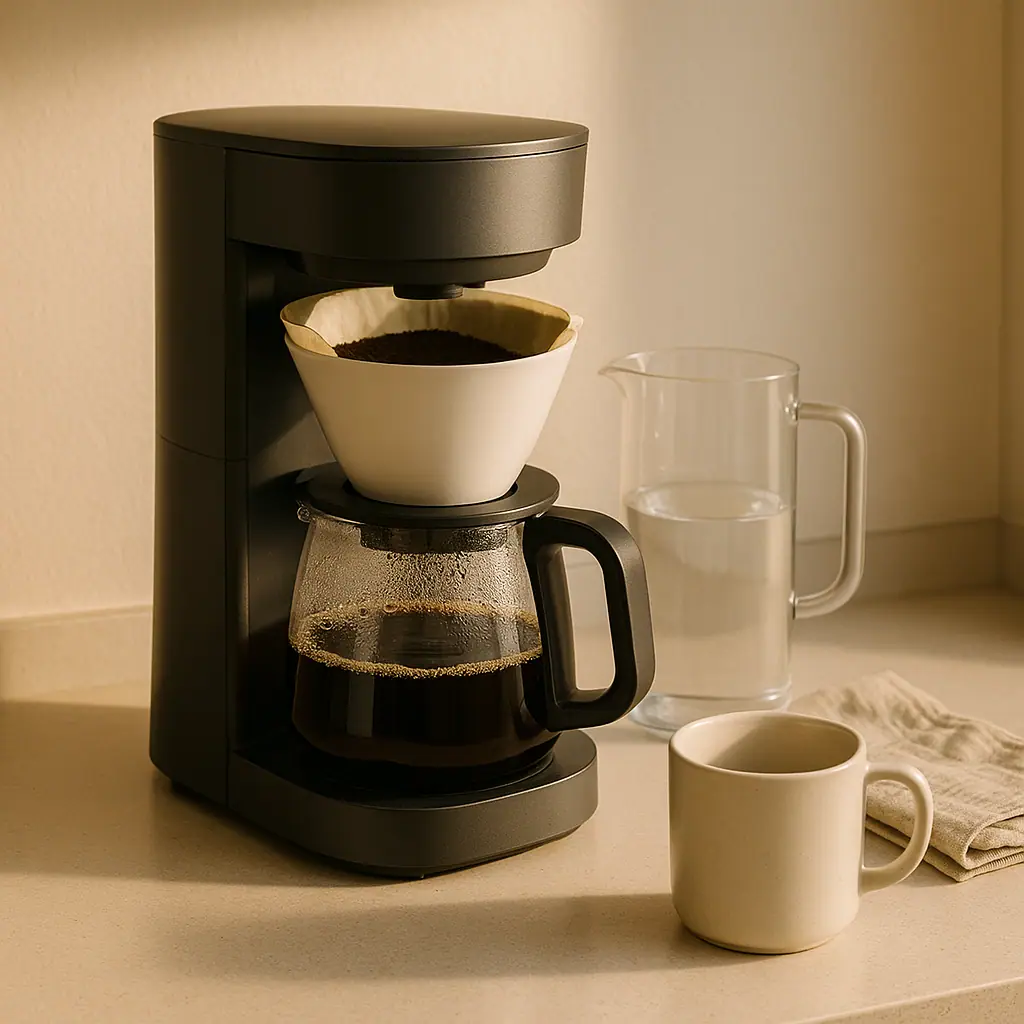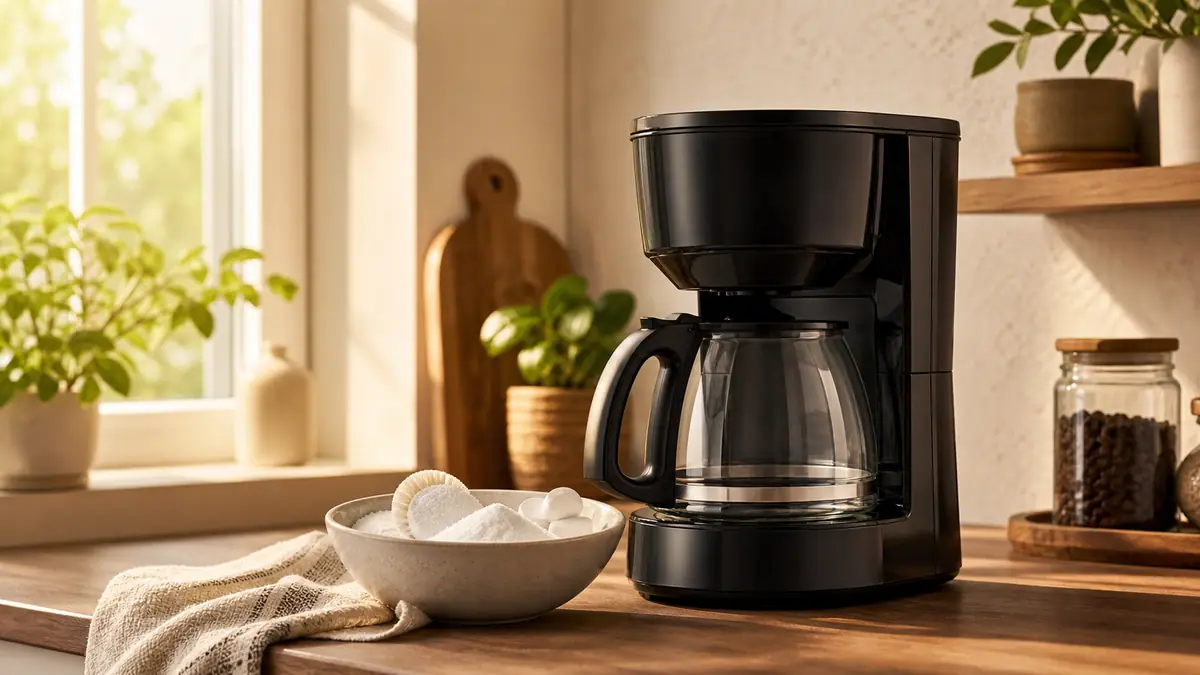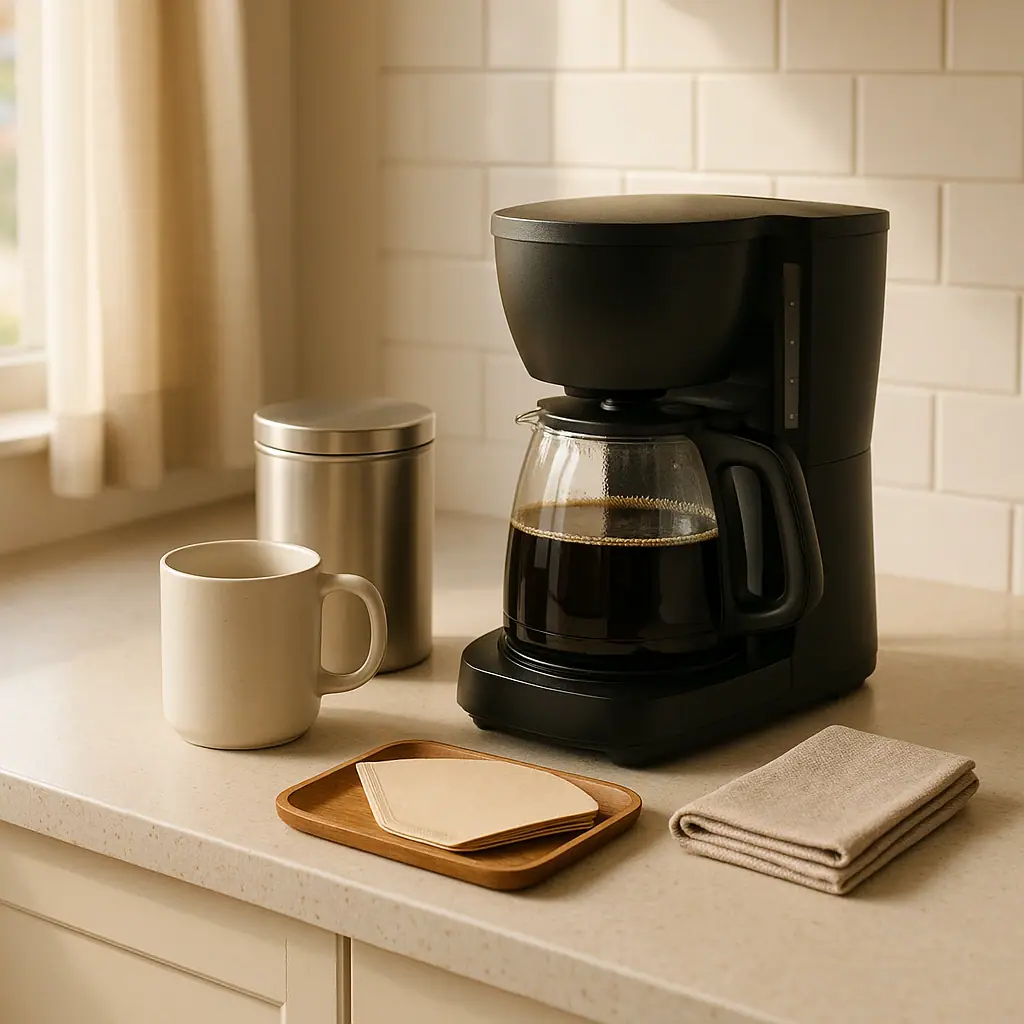
A coffee station reset routine is the small habit that keeps tomorrow's cup from starting in yesterday's mess. It does not need to be a deep clean, a full counter makeover, or a long list of chores. The useful version happens right after brewing, while the tools are still out and the sink is still part of the routine.
Five minutes is enough to clear wet filters, close the coffee bag, rinse the most important tools, wipe the spill zone, and set up the next brew. That short reset protects the calm feeling of a home coffee corner without turning coffee into another housekeeping project.
This guide gives you a repeatable after-brewing routine for a small coffee station, whether you use a drip maker, pour-over cone, French press, moka pot, grinder, kettle, or a simple mug-and-filter setup.
Why a Coffee Station Reset Routine Matters
Coffee gear gets messy in quiet ways. A few grounds cling near the grinder. A wet filter waits in the dripper. A spoon dries with coffee on it. A bag stays half open. None of those details looks dramatic, but together they make the next brew feel slower and less fresh.
The reset also supports consistency. The Specialty Coffee Association standards resource is a useful reminder that repeatable coffee depends on shared practices and clear definitions, not just nicer equipment. At home, your version of repeatability starts with tools that are clean, dry, and easy to find.
Start With the Smallest Reset Zone
Do not try to reset the whole kitchen. Draw an imaginary rectangle around the coffee work area: brewer, grinder, filters, current coffee, kettle, spoon, towel, mug space, and the nearest sink path. That is your reset zone.
If your station already feels crowded, review your daily setup before adding more containers. DailyBrewNook's guide to coffee station essentials can help separate truly daily tools from backup gear and decorative extras.
Keep one landing spot clear
A reset routine works best when there is one clear landing spot for wet tools. This can be a small tray, a folded towel, or the edge of a drying rack. If every tool needs a different home while wet, the reset will feel longer than five minutes.
Choose a weekly deep-clean time
The daily reset is for speed and freshness. It is not the moment to descale a machine, reorganize mugs, or wash every storage jar. Put those tasks into a weekly or monthly slot so the five-minute habit stays easy enough to repeat.
What to Check First After Brewing
Start with anything wet, warm, open, or full of grounds. Those four categories cause most coffee station clutter. If you handle them first, the rest of the reset becomes simple.
- Wet: drippers, carafes, frothing wands, spoons, reusable filters, and towels need a rinse or drying spot.
- Warm: kettles, hot plates, moka pots, and glass brewers may need cooling time before you move or wash them.
- Open: coffee bags, canisters, filters, and milk containers should be closed and returned to their normal place.
- Grounds: loose grounds should be wiped up before they spread to drawers, floors, or damp towels.
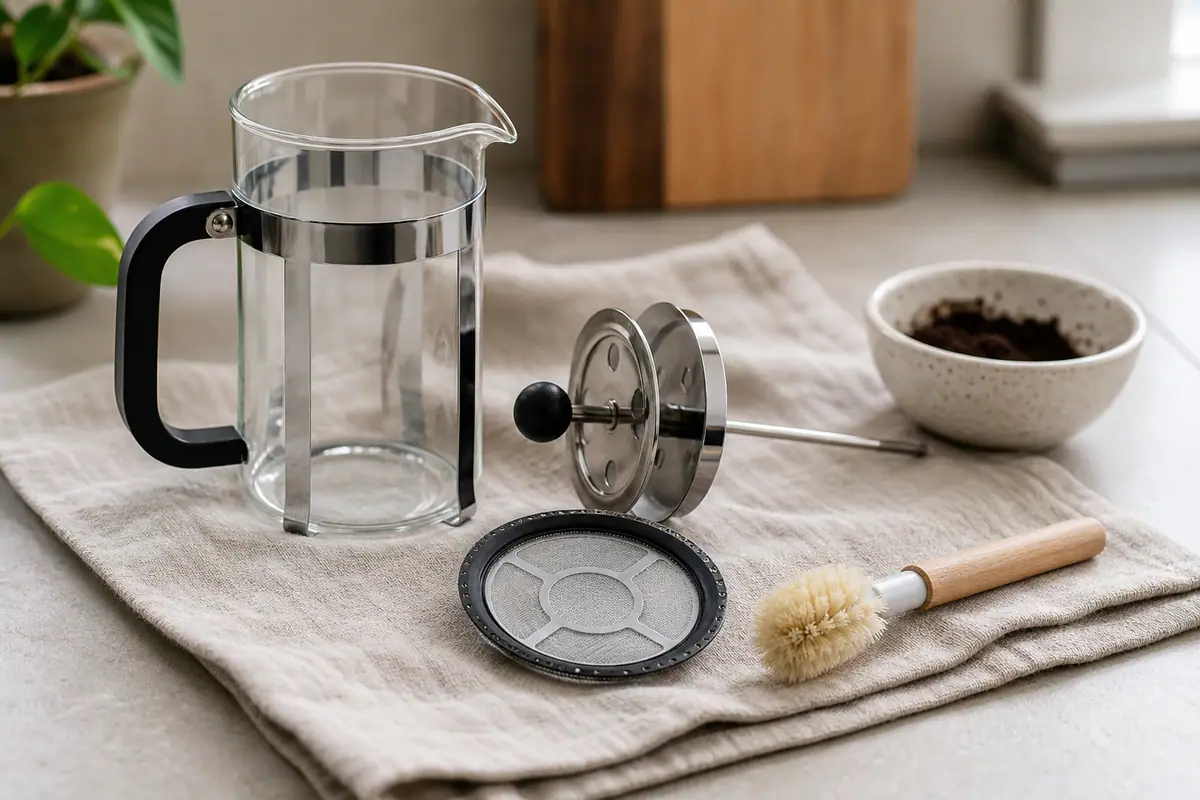
If your main cleanup problem is a French press, use the more specific routine in how to clean a French press without leaving grit behind. A press has more sediment and filter parts than many other brewers, so it deserves its own rhythm.
How to Reset Your Coffee Station in Five Minutes
Use this sequence after the cup is poured and the brewing is done. The order matters because it moves from messy and wet to dry and ready.
- Discard grounds or filters: Move used paper filters, pods, or grounds to compost or trash. If you use a reusable filter, empty it before rinsing so grounds do not spread through the sink.
- Rinse the main brewer parts: Rinse the dripper, carafe, French press, brew basket, or moka pot parts that touched coffee. Use mild dish soap when coffee oils are visible or the part feels slick.
- Set wet tools to dry: Place rinsed pieces on a tray, towel, or rack with enough air around them. Do not close lids or stack parts while they are still wet.
- Close coffee storage: Reseal the bag or canister, move beans away from heat and steam, and return the scoop or scale to its normal home.
- Wipe the work surface: Use a damp cloth for grounds and splashes, then a dry pass if the counter stays wet. Check under the grinder and brewer edge.
- Reset tomorrow's path: Put one clean filter, mug, spoon, or kettle position back where it belongs if that helps your morning start calmly.
Common Reset Mistakes to Avoid
The first mistake is waiting until later. Coffee residue dries quickly, and a small wipe becomes a sticky scrub. If you cannot wash everything immediately, at least empty grounds, rinse the main part, and leave it open to dry.
The second mistake is hiding wet pieces. A damp lid on a carafe, closed travel mug, or nested filter holder can trap stale smells. Air drying is not decorative; it is part of keeping the station pleasant.
The third mistake is confusing reset with restocking. Refilling filters, checking beans, washing towels, and reorganizing mugs are useful, but they can stretch the habit until it stops happening. Keep the daily routine narrow and give supply checks their own time.
Pros and Cons of a Five-Minute Coffee Station Reset
Keeps mornings calmer
The next brew starts with clean tools, closed coffee, and a clear work surface instead of a pile of small decisions.
Protects everyday flavor
Rinsing coffee oils and grounds promptly helps prevent stale smells from building up on brewers and small tools.
Works in small kitchens
The routine focuses only on the active coffee zone, so it fits apartments, carts, shelves, and narrow counters.
Requires immediate follow-through
The habit works best right after brewing, when delaying feels tempting because the coffee is ready.
Does not replace deep cleaning
Grinders, drip machines, kettles, and storage containers still need occasional deeper maintenance.
A Simple Coffee Station Reset Checklist
- Grounds gone: used filters, pucks, pods, or loose grounds are out of the active area.
- Wet tools rinsed: brewer parts, spoons, filters, and carafes are rinsed or washed.
- Drying path open: lids are loose, parts are not nested tightly, and air can move around wet pieces.
- Coffee closed: beans or grounds are sealed and moved away from heat, steam, and splashes.
- Counter wiped: grounds under the grinder, brewer, and mug area are cleared.
- Tomorrow visible: the next filter, mug, or tool is easy to reach if that supports your morning routine.
When to Do More Than a Reset
Do a deeper clean when coffee smells stale, the brewer feels oily after washing, the grinder shows visible buildup, or the machine manual calls for scheduled maintenance. If you use a drip machine, the cleaning cadence in how often to clean a coffee maker at home is a better guide than trying to solve everything in the daily reset.
Check the manufacturer instructions before using vinegar, descaling products, abrasive pads, or dishwasher cycles. Different brewers use different finishes, seals, and removable parts. The calm choice is to verify before forcing a cleaning method that may not fit your equipment.
Frequently Asked Questions
What should I clean first after brewing coffee?
Start with used grounds or filters, then rinse the parts that touched coffee. Grounds spread quickly, and coffee oils are easier to remove before they dry.
Do I need to wash every coffee tool after every cup?
No. Wash or rinse the pieces that touched coffee, milk, or wet grounds. Storage bins, backup mugs, and sealed supplies can wait for a weekly reset.
How do I make the reset faster?
Keep a small towel, sink strainer, and drying spot near the coffee station. The routine gets faster when every wet item has an obvious place to go.
Can I skip the reset if I am in a hurry?
If you are truly rushed, do the shortest version: discard grounds, rinse the main brewer part, leave it open to dry, and close the coffee. Finish the counter wipe later.
Final Thoughts
A coffee station reset routine is not about making the counter look perfect. It is about protecting the next cup from stale smells, wet tools, open bags, and small bits of mess that make brewing feel harder than it is.
Try the five-minute version after your next brew: grounds out, tools rinsed, coffee closed, counter wiped, tomorrow's path clear. Once that sequence feels automatic, your coffee nook will stay easier to use without needing a big cleanup session every morning.