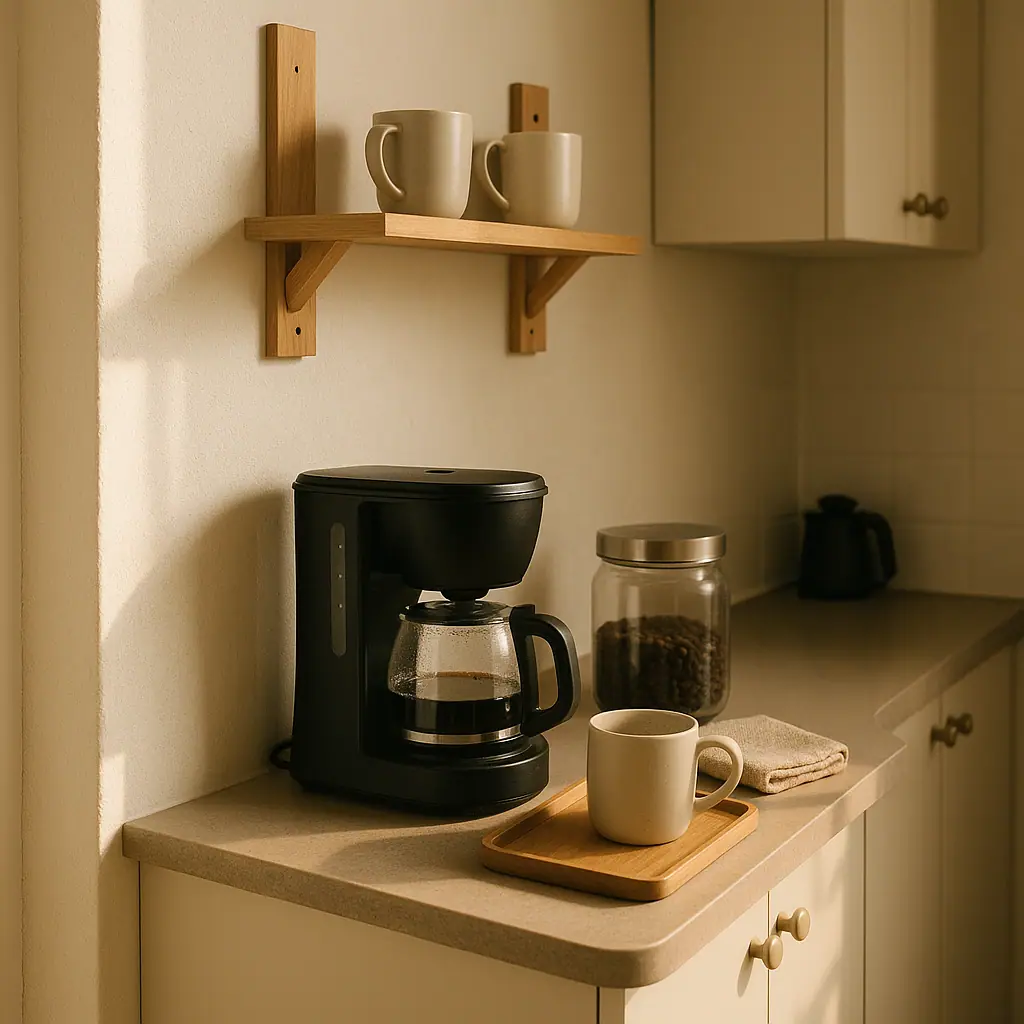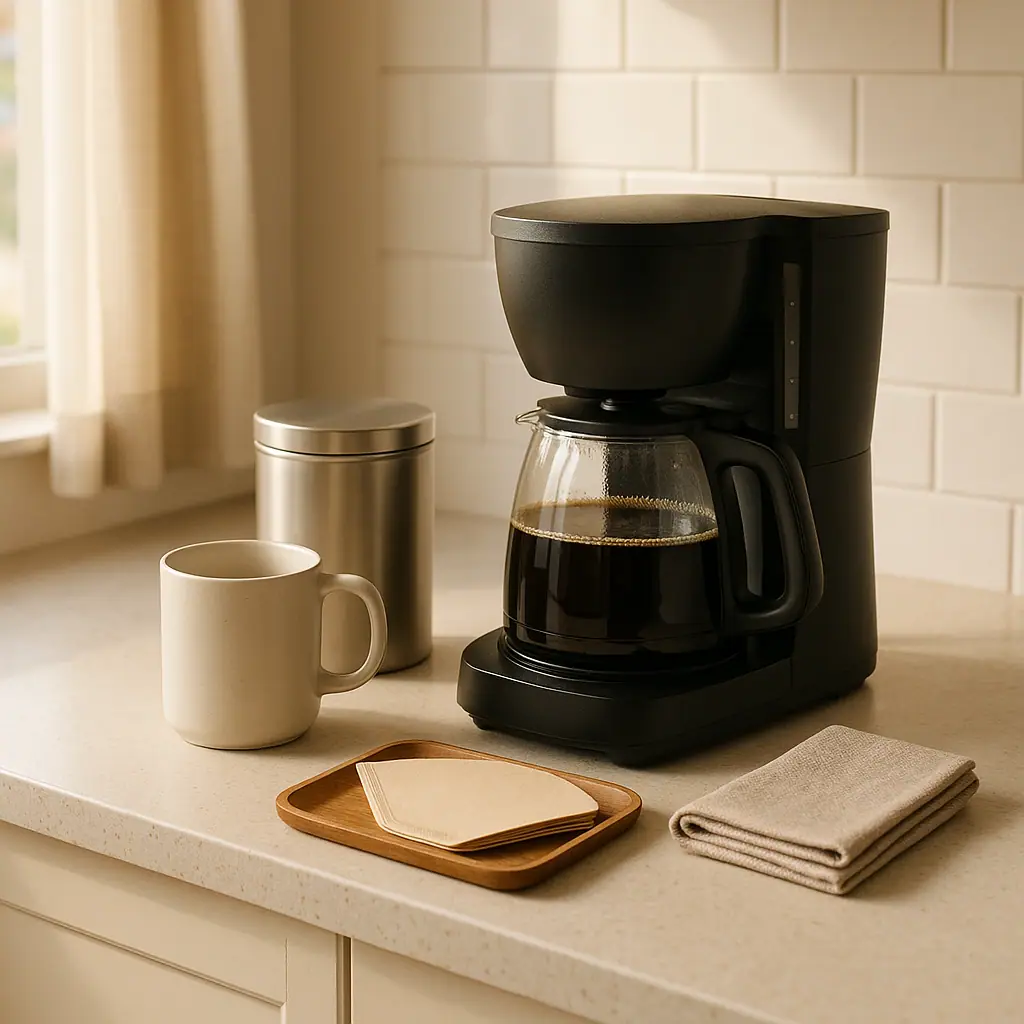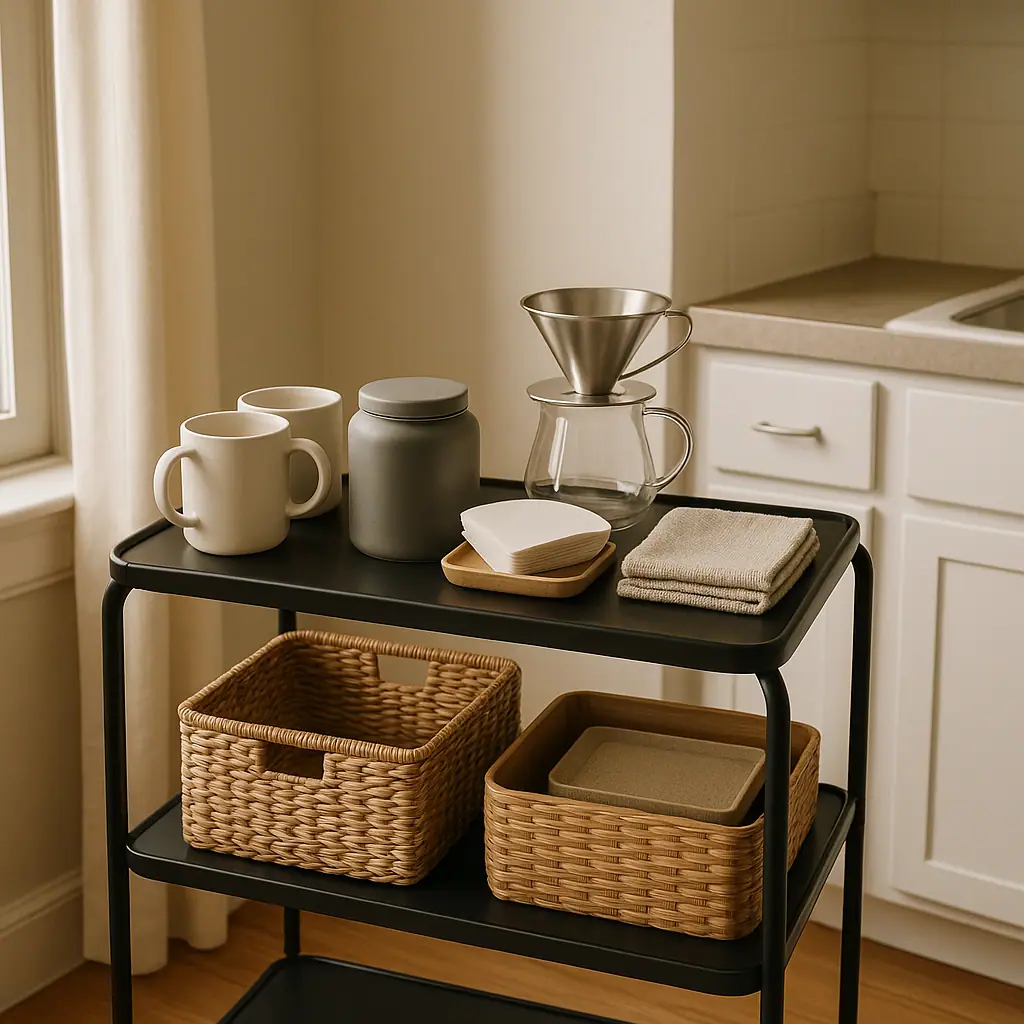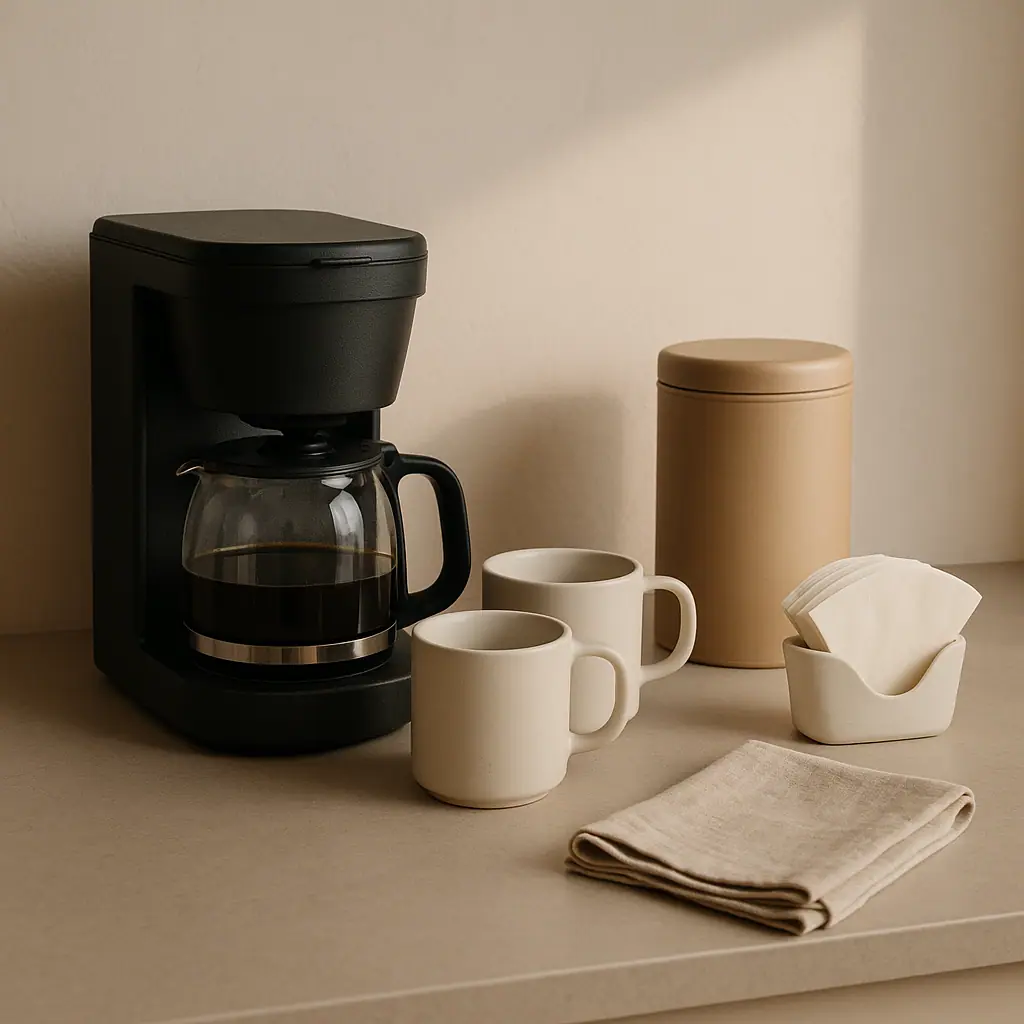
A minimalist coffee station setup for one or two people works best when it supports the cup you actually make most mornings. It does not need a large cart, a wall of mugs, or every popular tool. It needs a calm place for the brewer, coffee, filters, mugs, measuring habit, and cleanup step.
For a small household, the goal is repeatability. One person may want a quick drip routine before work. Two people may share the same beans but use different mugs, milk, or brew strength. A simple station keeps those needs visible without letting the counter become a display shelf for rarely used gear.
This guide keeps the setup practical: choose the active zone, keep daily items close, move backups away, and build one reset routine that takes less than five minutes after brewing.
Why a Minimalist Coffee Station Setup for One or Two People Matters
A coffee station can get crowded because coffee supplies are small. Scoops, filters, clips, mugs, grinders, canisters, towels, and sweeteners all seem harmless until they fill the only open counter near the brewer. Minimalism helps by asking each item to earn its place in the daily routine.
The Specialty Coffee Association explains that coffee standards can define shared requirements, vocabulary, and technical details for products, equipment, venues, and professional skills. At home, the useful lesson is simpler: consistent coffee comes from repeatable choices. The SCA overview of coffee standards is a helpful reminder that coffee routines improve when the important variables are clear.
Start With One Daily Coffee Habit
Before arranging the station, decide what the station is for. A minimalist nook for one pour-over is different from a shared drip machine routine. A station for two people should still serve one main brewing method first, then make room for small personal preferences.
Choose the anchor brewer
The anchor brewer is the tool that stays out because it gets used most. It might be a drip machine, French press, pour-over cone, moka pot, or compact single-cup brewer. Keep the station honest by giving that brewer the best position and storing less-used methods elsewhere.
Define the daily reach zone
The daily reach zone should hold only what your hands need while making coffee: coffee, filters or reusable filter, scoop or scale, mug, kettle or water access, and a towel. Backups, extra mugs, seasonal syrups, and guest supplies can live in a cabinet, bin, or pantry shelf.
What to Check First for Minimalist Coffee Station Setup for One or Two People
Use the space you already have before buying organizers. A compact setup can work on a counter corner, a small tray, one cabinet shelf, or the top of a sturdy cart, but it should not block cooking, dishwashing, outlets, or safe appliance use.
- Brewer footprint: measure the brewer with enough room to open lids, remove baskets, pour water, and lift the carafe or mug.
- Outlet and cord path: keep cords away from water, hot surfaces, drawer pulls, and places where they can be snagged.
- Heat and steam: avoid storing beans, filters, or paper goods directly above steam or beside a hot appliance.
- Two-person flow: keep mugs, spoons, and add-ins easy to reach without making both people stand in the same tight corner.
- Cleanup path: decide where used grounds, wet filters, drips, and spoons go immediately after brewing.
If you are still building the baseline, the guide to coffee station essentials can help you separate daily tools from optional extras before you arrange the minimalist version.
How to Build the Setup Step by Step
Work in a small sequence so the station feels useful on the first morning instead of becoming another weekend project.
- Clear the surface: remove everything from the chosen zone and wipe it down before deciding what comes back.
- Place the brewer first: give the main brewer a stable spot with safe access to water, power, and the mug path.
- Add coffee and measuring: keep the active bag or canister beside the scoop or scale so the measuring habit is easy to repeat.
- Keep one or two mugs nearby: store daily mugs within reach and move the rest to a cabinet so the station does not become mug storage.
- Choose one filter home: use a drawer, covered holder, sleeve, or small bin that keeps filters dry and flat.
- Add a reset item: place a towel, small brush, or washable mat where drips and grounds usually appear.
- Test it for seven mornings: remove anything untouched and move anything you keep reaching for from another cabinet.
For very tight counters, compare your choices with small coffee bar ideas so the station supports the kitchen instead of taking it over.
Common Minimalist Coffee Station Mistakes to Avoid
The first mistake is confusing minimalist with empty. A good station still holds the things that make brewing easier. It simply removes the extras that slow the routine down.
The second mistake is keeping too many mugs in the active zone. One or two daily mugs are enough for most small households. Guest mugs, travel mugs, and sentimental mugs can live elsewhere until needed.
The third mistake is hiding the cleanup step. If the station looks calm before brewing but leaves grounds, drips, and spoons scattered afterward, it is incomplete. Minimalist coffee station setup for one or two people should include the reset, not just the display.
Pros and Cons
Keeps mornings focused
Daily tools stay close to the brewer, so the first cup needs fewer decisions and fewer cabinet searches.
Works for small kitchens
A narrow tray, one cabinet shelf, or a compact counter corner can support a full routine when backups are stored elsewhere.
Makes cleanup visible
Including a towel, brush, or mat keeps the reset part of the station instead of treating it as an afterthought.
Needs honest editing
Extra mugs, syrups, tools, and sample bags may need to move out of the active zone for the setup to feel calm.
Can feel too narrow at first
If you are used to keeping every coffee item on display, a smaller station may take a week of testing before it feels natural.
A Simple Minimalist Coffee Station Checklist
- Can I make the main drink without opening three cabinets? If not, move one daily item closer.
- Are backups out of the active zone? Store extra beans, filters, pods, mugs, and syrups away from the main counter.
- Does the brewer have safe clearance? Check lids, steam, water filling, hot parts, and the cord path.
- Can two people use the station without crowding? Put shared items in the middle and personal add-ins to one side.
- Is cleanup part of the design? Keep the towel, brush, or mat where the mess actually happens.
- Can I reset it in five minutes? If not, remove more visual clutter or simplify the storage.
When to Get Extra Help
Get extra help before adding shelves, mounting mug racks, using adhesive hooks above breakable items, or changing anything near water and electricity. Product instructions, lease rules, appliance manuals, and a qualified person matter more than a clean inspiration photo.
Also pause if the station needs to hold heavy glass jars, a grinder, a kettle, or a machine on a small cart. Stability matters. A minimalist setup should feel steady when someone reaches for a mug, opens a drawer, or bumps the counter during a busy morning.
Frequently Asked Questions
What should I check first in a minimalist coffee station setup?
Check the drink you make most often. Put the brewer, coffee, measuring tool, mug, filters, and cleanup item in the active zone before adding anything decorative.
How often should I review the station?
Review it after the first week, then monthly. Remove untouched items, wipe the tray or counter, and restock only the supplies you use in normal mornings.
What if one person wants more coffee items than the other?
Keep shared brewing items in the main zone and give personal extras a small side bin or cabinet spot. The active station should still serve the shared routine first.
Can I undo this setup later?
Yes. A good minimalist station is easy to adjust. Test one layout for a week, then move tools closer or farther away based on what you actually used.
Final Thoughts
Minimalist coffee station setup for one or two people is not about owning the fewest things. It is about making the everyday cup easier to start, easier to brew, and easier to clean up.
Begin with the brewer you use most, one small group of daily tools, and one reset habit. If the station still feels calm after seven mornings, you have enough. Add only when a real routine asks for it.