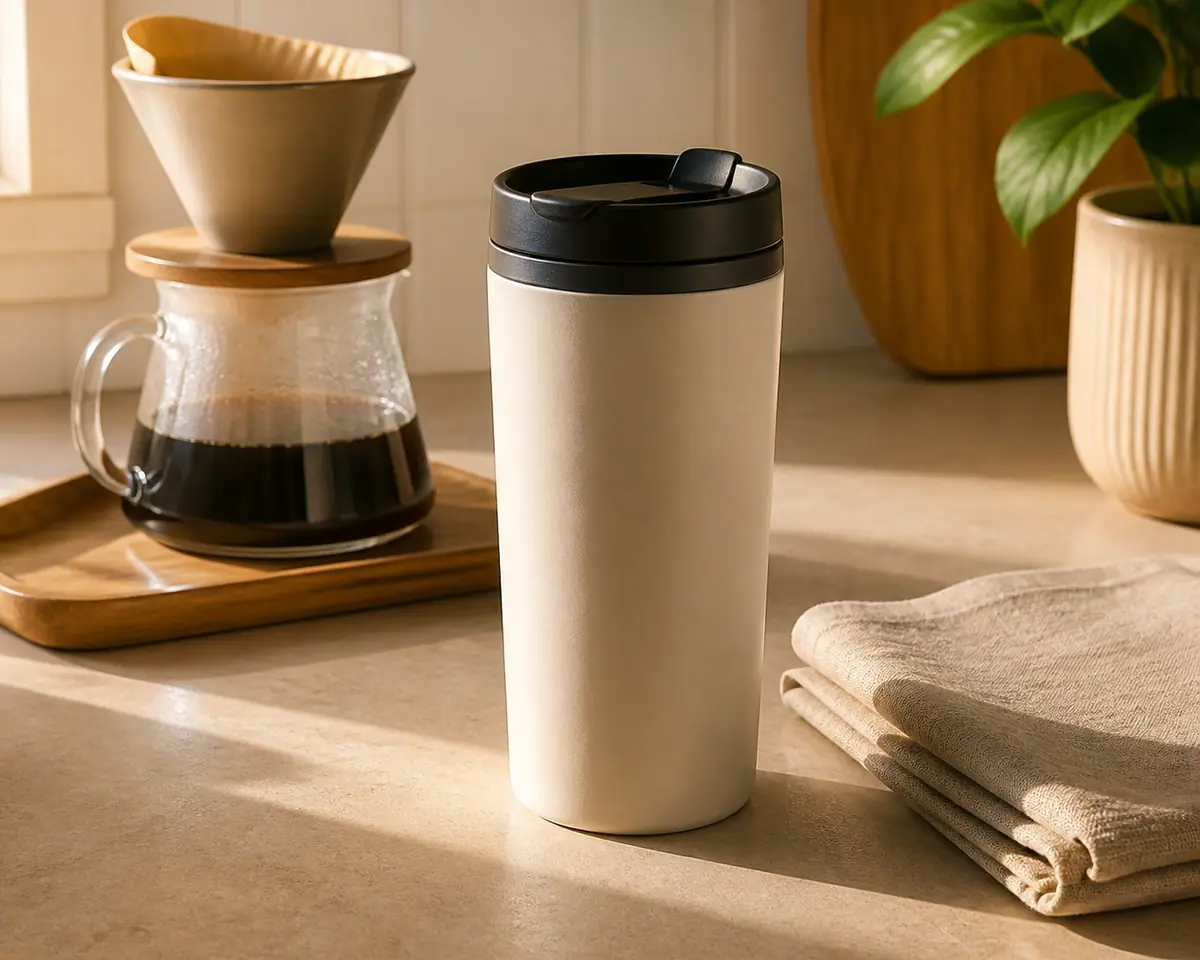
A travel mug for coffee sounds like a simple purchase until you live with the wrong one. A lid that drips in the car, a cup that does not fit your holder, or a shape that is annoying to clean can make home-brewed coffee feel less calm than it should. The best mug is not just the one that keeps coffee hot the longest. It is the one that fits your morning route, your cleaning habits, and the kind of coffee you actually drink.
If you brew at home and carry coffee to work, school, errands, or a walk, a travel mug becomes part of the routine. It should protect the drink, feel steady in your hand, and come apart enough that you can wash it before stale coffee smell builds up. This guide explains the travel mug features worth checking before you buy or replace one.
Why Travel Mug Features Matter
Most travel mug problems are small, repeated frustrations. A lid that is hard to align may leak once a week. A deep cap with hidden parts may hold old coffee oils. A mug that is too wide for your car cup holder may sit on the passenger seat, where one sudden stop can ruin the morning.
For coffee beginners, the goal is simple: carry a good cup without turning the mug into another chore. That means checking practical details before color, brand, or clever marketing. A plain mug with a dependable lid and easy cleaning can be more useful than a premium-looking mug with fussy parts.
Material safety also matters because a travel mug touches hot beverages again and again. The U.S. Food and Drug Administration explains how it regulates food packaging and food contact substances. For a home buyer, the practical takeaway is to choose mugs from reputable makers, follow the manufacturer's use instructions, and avoid using damaged, cracked, or mystery materials for hot coffee.
For broader coffee education, the Specialty Coffee Association keeps public coffee resources that can help beginners understand why brewing habits, serving temperature, and clean gear all shape the cup. A travel mug is only one part of that routine, but it should not work against those basics.
Start With Your Coffee Routine
A travel mug for coffee should match the way you leave the kitchen. Someone who sips during a short commute needs different features than someone who fills a mug at 7 a.m. and drinks slowly through late morning. Your brew method matters too. A small pour-over, drip coffee, moka pot cup, or latte-style drink may need a different capacity and lid style.
Start with the amount you normally drink. If you usually brew 10 to 12 ounces, a huge mug may leave too much empty headspace and feel bulky. If you add milk, foam, or ice, you may need more room. If you drink black coffee and care about aroma, a wide opening may feel nicer than a tiny sip port.
Short carry vs long hold
For a 20-minute carry, comfort and leak resistance may matter more than extreme insulation. For a long desk morning, insulation and lid design matter more. A mug that keeps coffee very hot can also keep it too hot to drink comfortably at first, so think about when you actually want to sip.
One-hand use vs calm sipping
If you drink in a car, one-hand opening can be helpful, but only if it locks securely. If you drink at a desk, a simpler lid may be easier to clean and nicer to sip from. Do not choose a complicated lid unless it solves a real problem in your day.
What to Check First for a Travel Mug for Coffee
Use these checks before choosing a mug. They keep the decision grounded in daily use instead of letting one impressive feature take over.
- Lid security: turn the closed mug gently over a sink before trusting it in a bag. If the maker does not call it leakproof, treat it as spill-resistant at best.
- Cleaning access: lids with sliding parts, valves, and seals should come apart or be easy to scrub. Hidden coffee residue is what creates stale smells.
- Capacity: match the mug to your normal brew volume, plus room for milk or ice if you use them.
- Cup-holder fit: measure the base if you drive. A comfortable mug at home is less useful if it cannot ride safely.
- Heat retention: choose enough insulation for your routine, not the biggest number on the box.
- Mouth feel: sip ports vary. Some feel smooth, some feel awkward, and some mute aroma more than you expect.
- Grip and weight: a full mug should feel steady with one hand, especially if you walk stairs or carry other items.
These checks also help you decide whether your current mug is worth keeping. If it only fails one small detail, a cleaning reset or replacement gasket may solve the problem. If it leaks, smells stale, and does not fit your carry route, replacing it may make mornings easier.
Materials and Lids: The Everyday Tradeoffs
Most home coffee drinkers choose between stainless steel, ceramic-lined mugs, plastic components, and glass or ceramic tumblers. Each can make sense when used as intended, but the tradeoffs are different.
Stainless steel is common because it is durable, often well insulated, and less fragile than glass or ceramic. It can sometimes hold aroma if not washed well, especially around the lid and gasket. If you drink milk coffee, clean it promptly.
Ceramic-lined mugs can feel pleasant for coffee flavor because the drinking surface is not bare metal. They may be heavier or more delicate, so check care instructions before treating them like a rugged commuter mug.
Plastic lids and parts are common even on metal mugs. Look for clear maker guidance about hot beverage use, dishwasher safety, and replacement seals. If parts crack, warp, or smell stale after cleaning, it is time to replace the part or the mug.
Glass and ceramic travel cups can be nice for calm desk sipping, but they are less forgiving in a crowded bag or car. Use them where breakage and spills are less likely.
How to Choose a Travel Mug Step by Step
A simple process prevents overbuying. Instead of asking which mug is best, ask which mug fits your exact daily use.
- Write down your usual drink size: note whether you brew 8, 10, 12, or 16 ounces and whether you add milk or ice.
- Decide where the mug travels: car, backpack, tote bag, stroller, walking route, or desk. A bag needs stronger leak protection than a desk.
- Check the lid before the color: look for a lock, a reliable seal, and parts you can actually wash.
- Confirm hot-drink use: read the maker's care notes for hot liquids, dishwasher use, microwave limits, and lid cleaning.
- Measure the base if needed: compare it with your car cup holder or the side pocket of your bag.
- Plan the cleaning routine: if the mug is too annoying to clean, it will not stay pleasant for coffee.
This process is especially useful if you are building a small home coffee setup. A travel mug should support the routine you already repeat, not become a separate project on the counter.
Pros and Cons
Makes home coffee easier to take with you
A dependable mug lets you brew once at home and carry the drink without stopping for another cup.
Protects temperature better than an open cup
Insulated mugs slow down heat loss, which helps if you sip slowly after leaving the kitchen.
Can simplify your morning counter routine
When one mug has a clear home, size, and cleaning habit, it becomes part of the daily reset.
Some lids are difficult to clean
Sliding caps, valves, seals, and hinges can trap old coffee if they do not come apart easily.
Leak claims vary by design
Some mugs are fine upright but risky in a bag, so check the maker's wording before trusting it.
Common Travel Mug Mistakes to Avoid
The first mistake is buying for maximum heat retention only. If coffee stays too hot to drink during your actual commute, the feature may not help. Choose heat retention around your sipping window.
The second mistake is ignoring the lid. A mug body can be excellent while the lid is the weak point. Check whether the lid opens smoothly, locks clearly, and has reachable surfaces for washing.
The third mistake is using a damaged mug because it still looks mostly fine. Deep scratches, cracked plastic, warped seals, and lingering smells are signs that the mug may not be serving your coffee well anymore.
The fourth mistake is choosing a size that changes your brewing habit in a bad way. If a huge mug encourages weak coffee because you overfill it with water, a smaller mug may make better daily cups.
A Simple Checklist Before You Buy
- Will it hold my normal coffee amount? Choose the size around your real drink, not the biggest option.
- Does the lid match how I carry it? A desk mug and a bag mug need different security.
- Can I clean every coffee-touching part? If not, stale smell is likely.
- Does the maker allow hot beverages? Check instructions instead of guessing.
- Does it fit my car, bag, or shelf? Dimensions matter more than photos.
- Will I use it every morning? A travel mug should reduce friction, not add another task.
When to Replace Your Current Mug
You may not need a new travel mug if your current one seals well, cleans easily, and fits your routine. A deep wash, new gasket, or better drying habit can make a familiar mug feel useful again.
Replacement makes more sense when the mug leaks after careful closing, the lid smells stale after cleaning, plastic parts are cracked, the coating is damaged, or the size no longer matches your coffee habit. If you are not sure whether a part is replaceable, check the maker's support page before buying a whole new mug.
Frequently Asked Questions
What should I check first in a travel mug for coffee?
Start with the lid. A secure, washable lid matters more than color or branding because it controls leaking, sipping comfort, and stale coffee buildup.
How big should a travel mug be for home-brewed coffee?
Match it to your usual drink size. Many home drinkers do well with a mug that holds their normal brew plus a little room for milk, but not so much extra space that it feels bulky.
Should I choose stainless steel or ceramic-lined?
Stainless steel is durable and common for commuting. Ceramic-lined mugs can feel nicer for flavor and sipping, but they may need gentler handling. Choose based on your carry route and care habits.
How often should I clean my travel mug?
Rinse and wash it after each use, especially if you add milk or sweetener. Do a deeper lid and gasket cleaning regularly, following the manufacturer's instructions.
Final Thoughts
A travel mug for coffee is worth choosing carefully because it touches several parts of your day: brewing, carrying, sipping, cleaning, and resetting the counter. The best mug is not always the most expensive one. It is the one with a secure lid, a comfortable size, clear care instructions, and parts you can keep clean.
For the calmest next step, inspect the mug you already use. If it seals well, fits your route, and cleans easily, keep it. If it leaks, smells stale, or makes mornings harder, use this checklist to choose a replacement that fits your actual home-brewed coffee routine.