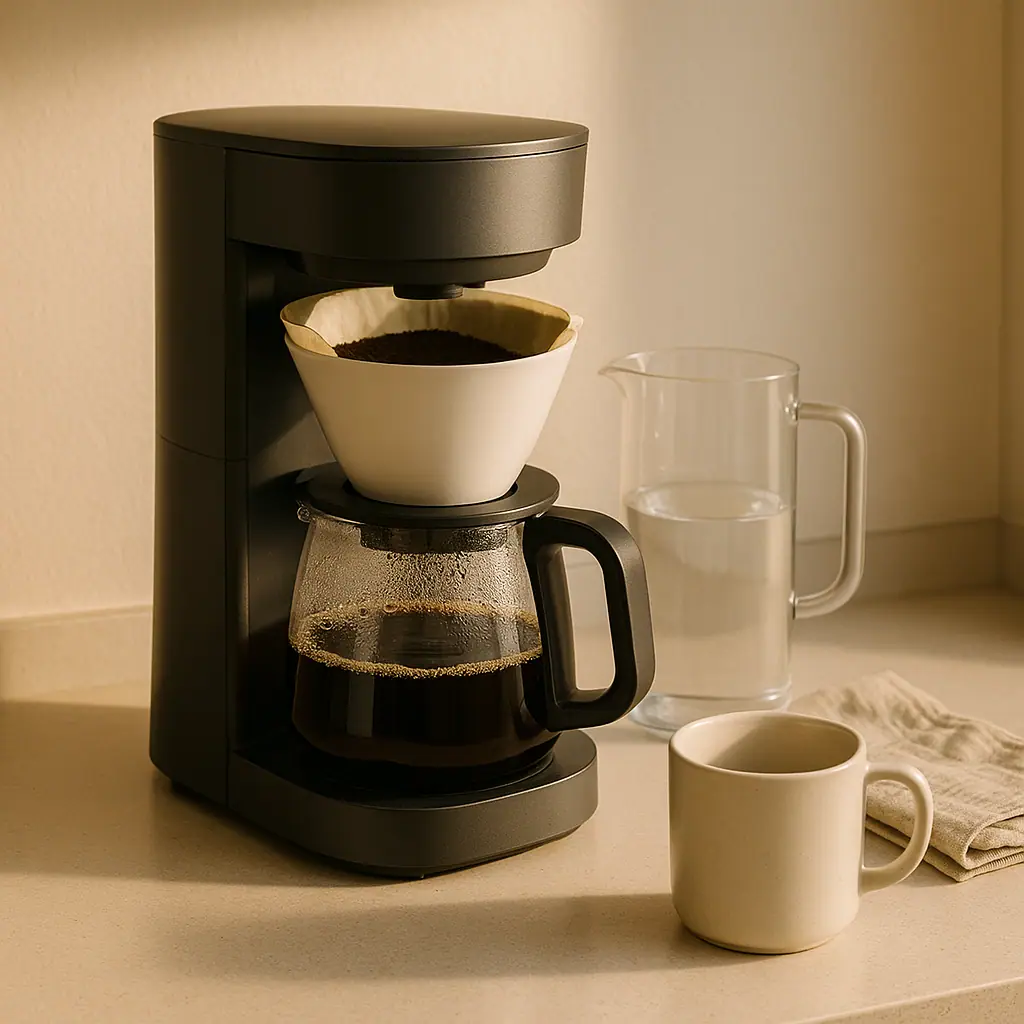
Learning how to keep coffee gear from smelling stale is mostly about removing coffee oils, wet grounds, and trapped moisture before they become part of the next brew. The smell is not a sign that you need a bigger setup or expensive tools. It usually means one part of the routine is staying damp, oily, closed, or forgotten.
A calm fix starts with the tools you already use every day: the brewer, grinder, carafe, filter basket, French press screen, travel mug, milk frother, towels, and storage canister. If those pieces are emptied, rinsed, dried, and occasionally deep cleaned, the coffee nook feels fresher and the cup tastes cleaner.
This guide keeps the routine practical. You will learn what causes stale smells, what to clean first, when to do a deeper reset, and how to prevent the odor from coming back without turning morning coffee into a full kitchen project.
Why Coffee Gear Starts Smelling Stale
Coffee leaves behind oils and fine particles. Those residues cling to metal mesh, plastic lids, silicone gaskets, grinder chutes, carafes, reusable filters, and travel mug seams. If the residue dries in place or stays damp under a lid, it can create a flat, old-coffee smell even after a quick rinse.
The Specialty Coffee Association standards resource is useful background because it treats coffee brewing as a repeatable process. At home, repeatability is not only about ratios and grind. It also depends on clean equipment that does not carry yesterday's residue into today's cup.
What to Check First for Stale Coffee Gear Smells
Before changing beans or buying cleaning products, inspect the most common odor traps. Stale smells often come from one small part, not the entire coffee station.
Look for trapped grounds
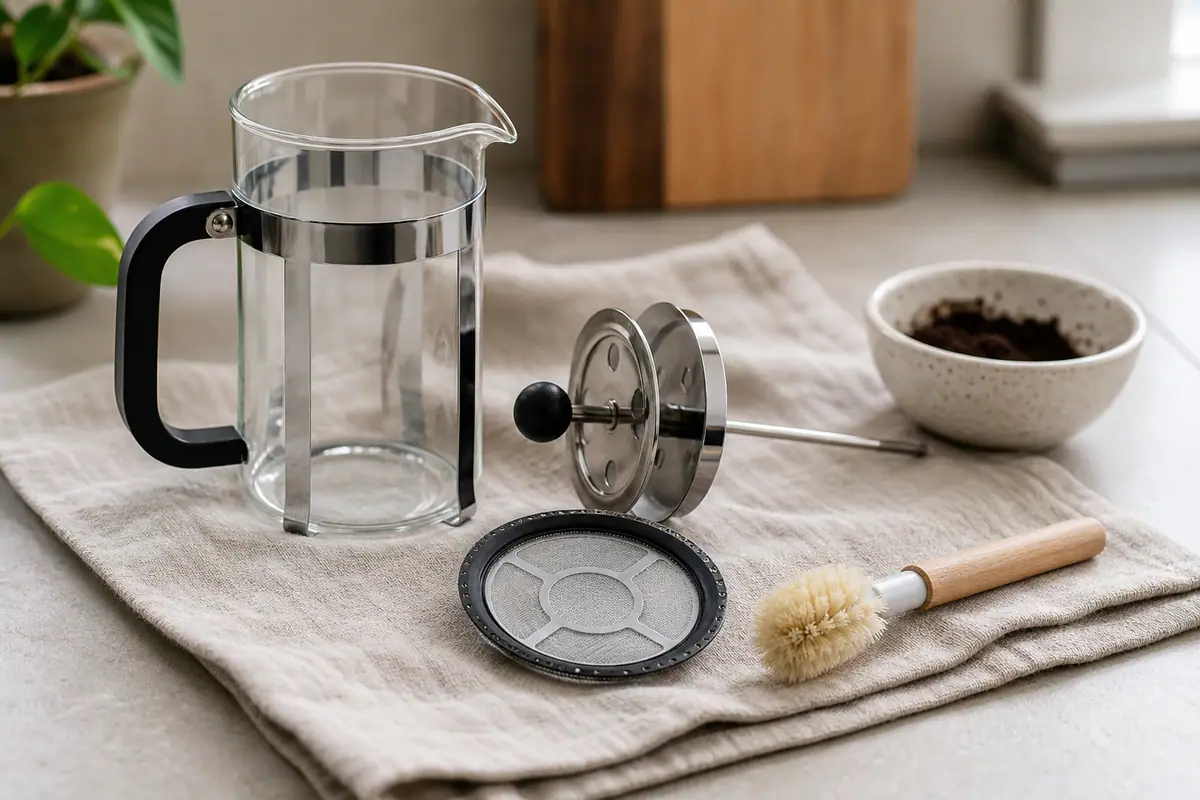
Fine grounds hide in French press screens, reusable filter seams, moka pot threads, drip machine baskets, and the area under a grinder. A few grounds left wet can smell stronger than a whole clean brewer.
Find closed damp spaces
Closed travel mugs, carafes with lids, reusable filter holders, and milk frother whisks can smell stale when they are put away before fully drying. If a piece has a lid, gasket, hinge, or straw opening, let it air dry open before storage.
If your main problem is a press, the detailed routine in how to clean a French press without leaving grit behind will help more than a general counter reset. A French press has more mesh and sediment than most beginner brewers.
How to Keep Coffee Gear from Smelling Stale Step by Step
Use this sequence after brewing, then add a deeper clean when the smell has already built up. The goal is to remove residue, open damp spaces, and create a repeatable drying path.
- Empty grounds right away: remove used filters, pucks, pods, or loose grounds before they dry onto the brewer or spread through the sink.
- Rinse the coffee-contact parts: rinse the carafe, dripper, brew basket, French press, moka pot chamber, or reusable filter that touched brewed coffee.
- Wash oily parts with mild dish soap: if a surface feels slick, a water-only rinse is not enough. Use warm water, a soft sponge, and mild dish soap, then rinse thoroughly.
- Open everything to dry: leave lids off, separate nested parts, and place screens, baskets, and small tools where air can move around them.
- Brush dry grinder areas: use a small dry brush for burrs, chutes, hoppers, and the counter under the grinder. Avoid water inside a grinder unless the manual specifically says a part is washable.
- Schedule the deeper tasks: descaling, grinder cleaning, and deep washing storage containers belong on a weekly or monthly rhythm, not in every morning reset.
A short daily routine pairs well with the five-minute approach in coffee station reset routine. That habit keeps the active coffee zone from becoming a collection of wet tools and open containers.
Common Mistakes That Keep Coffee Gear Smelling Stale
The biggest mistake is closing gear while it is still damp. A travel mug may look clean, but if the lid is snapped on while the gasket is wet, the smell can return by the next morning.
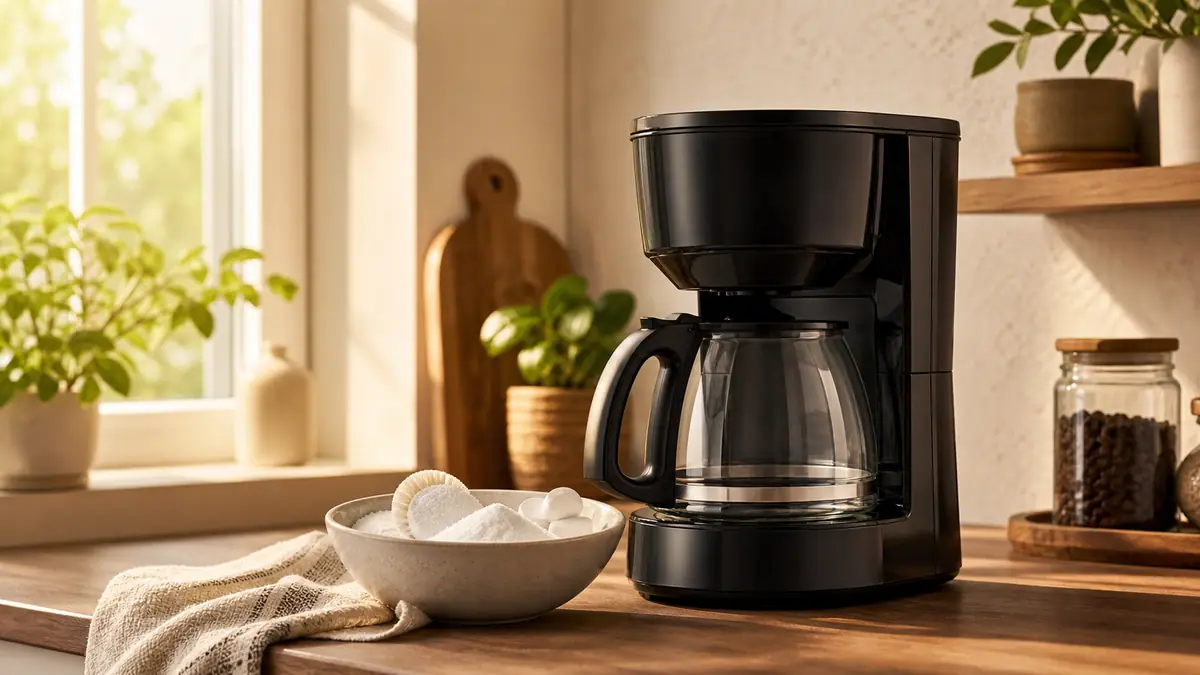
The second mistake is treating all cleaning as descaling. Descaling handles mineral buildup inside machines and kettles. Stale smells usually come from coffee oils, milk residue, old grounds, or damp parts. The cleaning method should match the problem.
Serious Eats explains this distinction in its guide to descaling and cleaning a coffee maker: mineral scale and coffee oils are different maintenance issues. That is why a brewer may need both occasional descaling and regular washing of the parts that touch brewed coffee.
The third mistake is using strong cleaners before checking the manual. Some parts are dishwasher safe, some are not. Some manufacturers recommend specific descalers, while others warn against certain acids or abrasive pads. When in doubt, verify the manual before using vinegar, tablets, powders, or a dishwasher cycle.
Pros and Cons of a Fresh-Smelling Coffee Gear Routine
Improves the next cup
Clean brewers, filters, and carafes are less likely to carry old coffee oils into a fresh brew.
Makes the nook easier to use
A clear drying path keeps small tools from piling up around the sink or disappearing into drawers while damp.
Prevents small problems from spreading
Brushing grounds and opening lids early is easier than rescuing a whole cabinet of stale-smelling cups and parts later.
Needs consistency
The routine works best when emptying, rinsing, and drying happen soon after brewing rather than hours later.
Manuals still matter
Grinders, drip makers, frothers, and thermal mugs can have parts that need special care or cannot be soaked.
A Simple Checklist to Prevent Stale Coffee Smells
- Grounds removed: no wet grounds are sitting in a filter, screen, basket, portafilter, or sink corner.
- Oily parts washed: slick carafes, press screens, reusable filters, and mug lids get mild soap instead of only a quick rinse.
- Lids left open: travel mugs, carafes, canisters, and brewer tops dry open before storage.
- Grinder brushed dry: loose grounds are cleared from the hopper, chute, burr area, and counter without adding water where it does not belong.
- Towels rotated: damp coffee towels are hung to dry or replaced before they start smelling like old brew.
- Deep clean scheduled: machine cleaning, descaling, grinder care, and storage jar washing have a realistic cadence you can repeat.
When to Do More Than a Quick Rinse
Do a deeper clean when the smell returns right after washing, when a brewer feels slick, when a grinder chute looks packed with old grounds, or when a travel mug lid smells stale even after rinsing. Those signs mean residue is hiding in a part that needs disassembly, a brush, soap, or a product approved by the manufacturer.
If the smell seems strongest in a drip machine, use a maintenance rhythm like the one in how often to clean a coffee maker at home. Machines can need both routine washing of removable pieces and occasional internal maintenance.
For milk frothers and anything that touches dairy, clean immediately after use. Milk residue behaves differently from black coffee residue and should not sit in whisks, lids, seals, or tubes. Use the appliance manual as the source of truth for removable parts and cleaning limits.
Frequently Asked Questions
What should I check first if my coffee gear smells stale?
Check wet grounds, oily screens, reusable filters, carafe lids, travel mug gaskets, and the grinder area. One hidden damp spot often causes the whole station to smell old.
How often should I deep clean coffee gear?
Rinse or wash coffee-contact parts after use. Do deeper tasks, such as grinder cleaning or machine descaling, on the cadence recommended by the manufacturer and based on how often you brew.
Can I use vinegar on every coffee maker?
No. Some manufacturers allow vinegar, while others recommend a specific descaler or warn against certain cleaners. Check the manual before using vinegar, tablets, powders, or abrasive pads.
Why does my travel mug still smell like coffee?
The lid, gasket, sip opening, or inner seam may be holding old coffee oils. Take apart the removable pieces if the manual allows it, wash with mild soap, rinse well, and let everything dry fully before closing.
Final Thoughts
Keeping coffee gear from smelling stale is not about having a perfect counter. It is about a few repeatable habits: empty grounds early, wash oily parts, brush dry grinder areas, keep lids open while drying, and save deeper maintenance for a planned time.
Start with the tool that smells strongest today. Clean that one part carefully, let it dry open, and watch whether tomorrow's brew feels fresher. Small, finished routines are what keep a coffee nook pleasant over time.