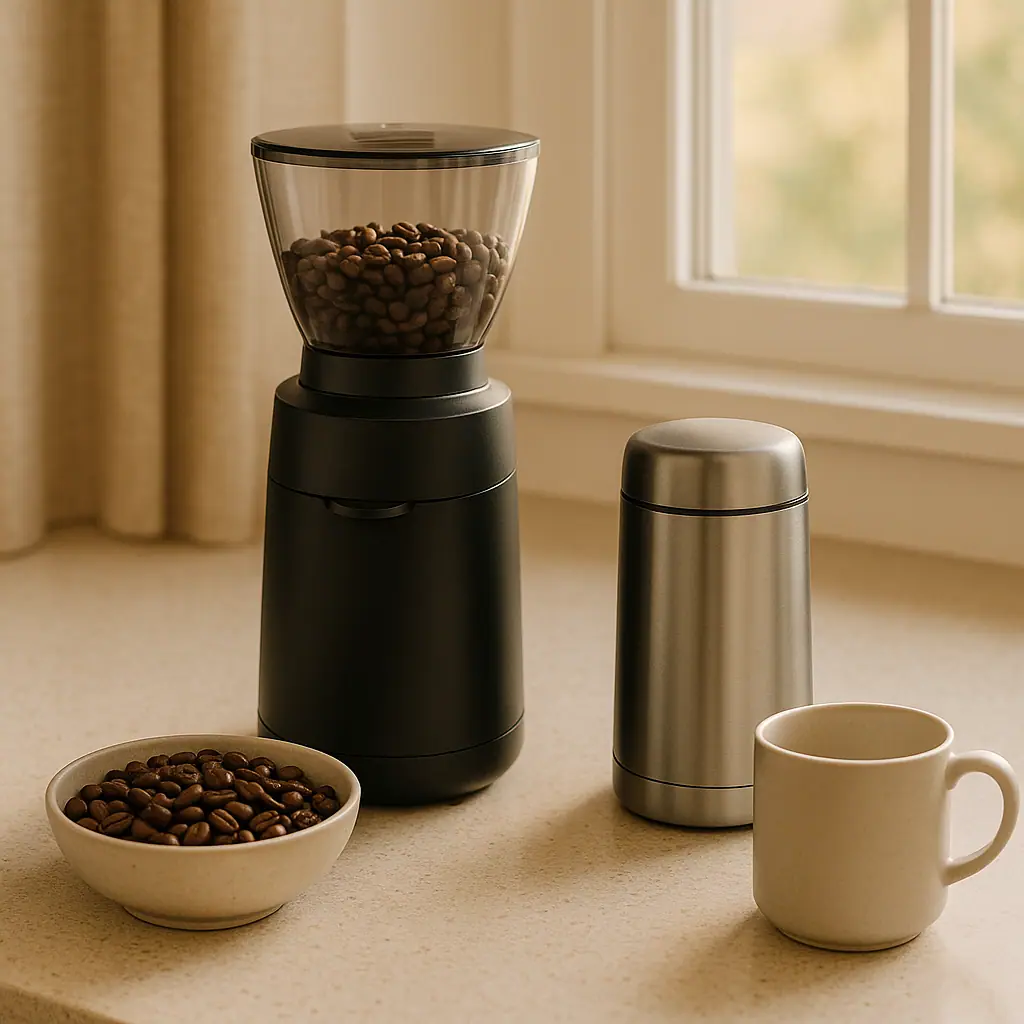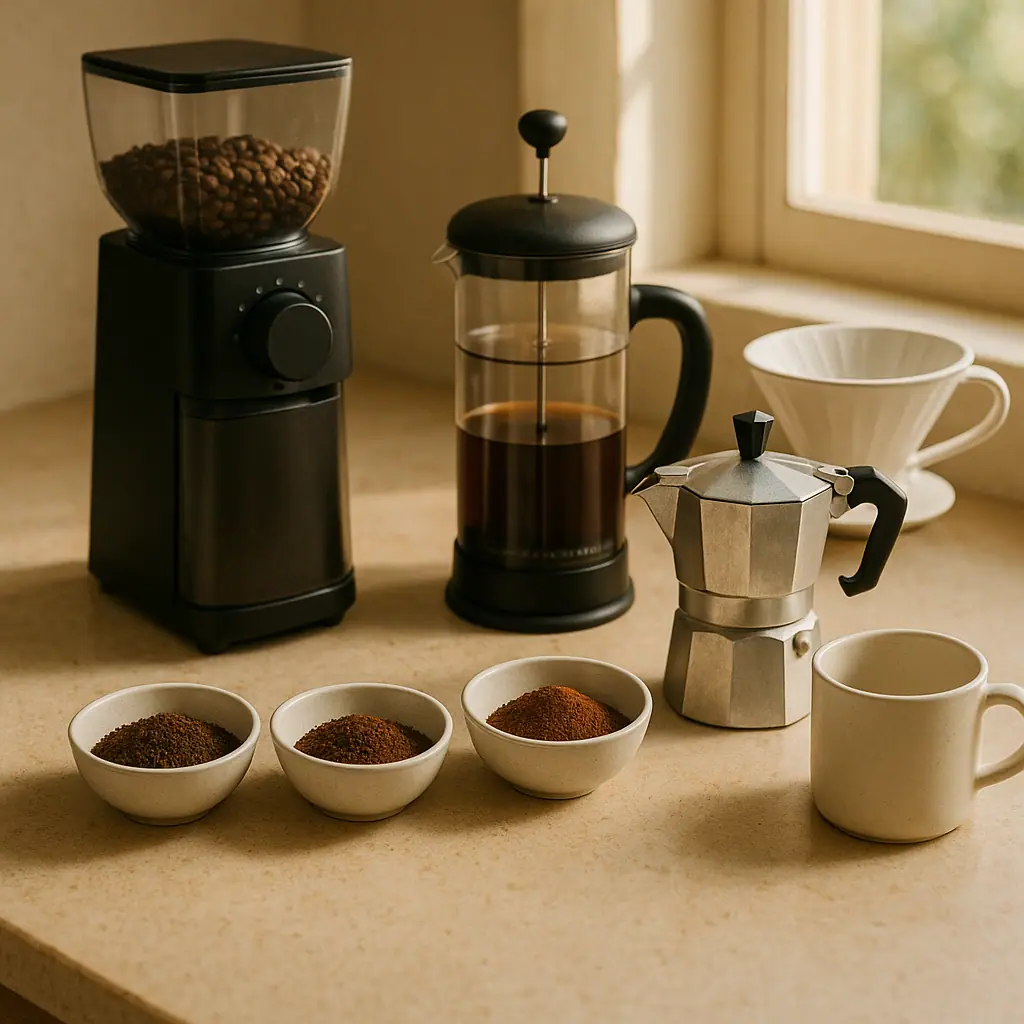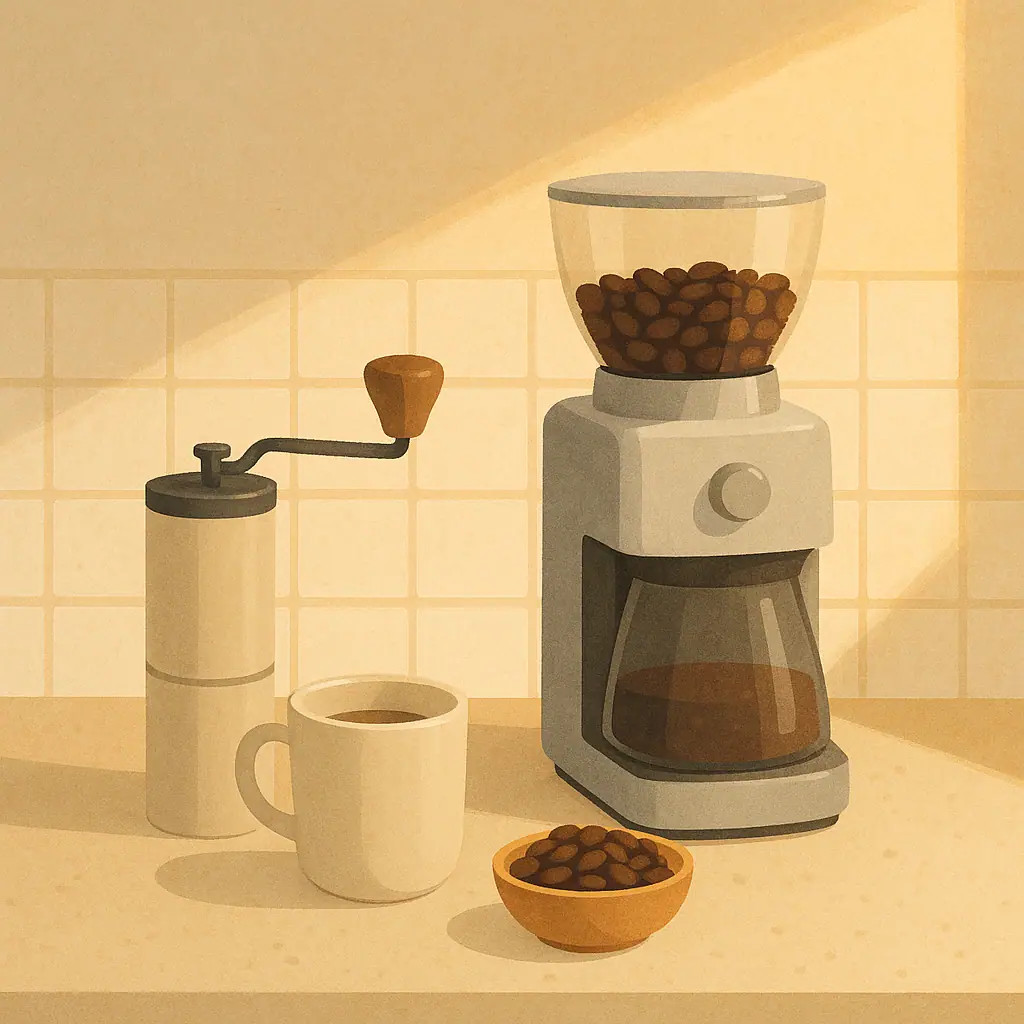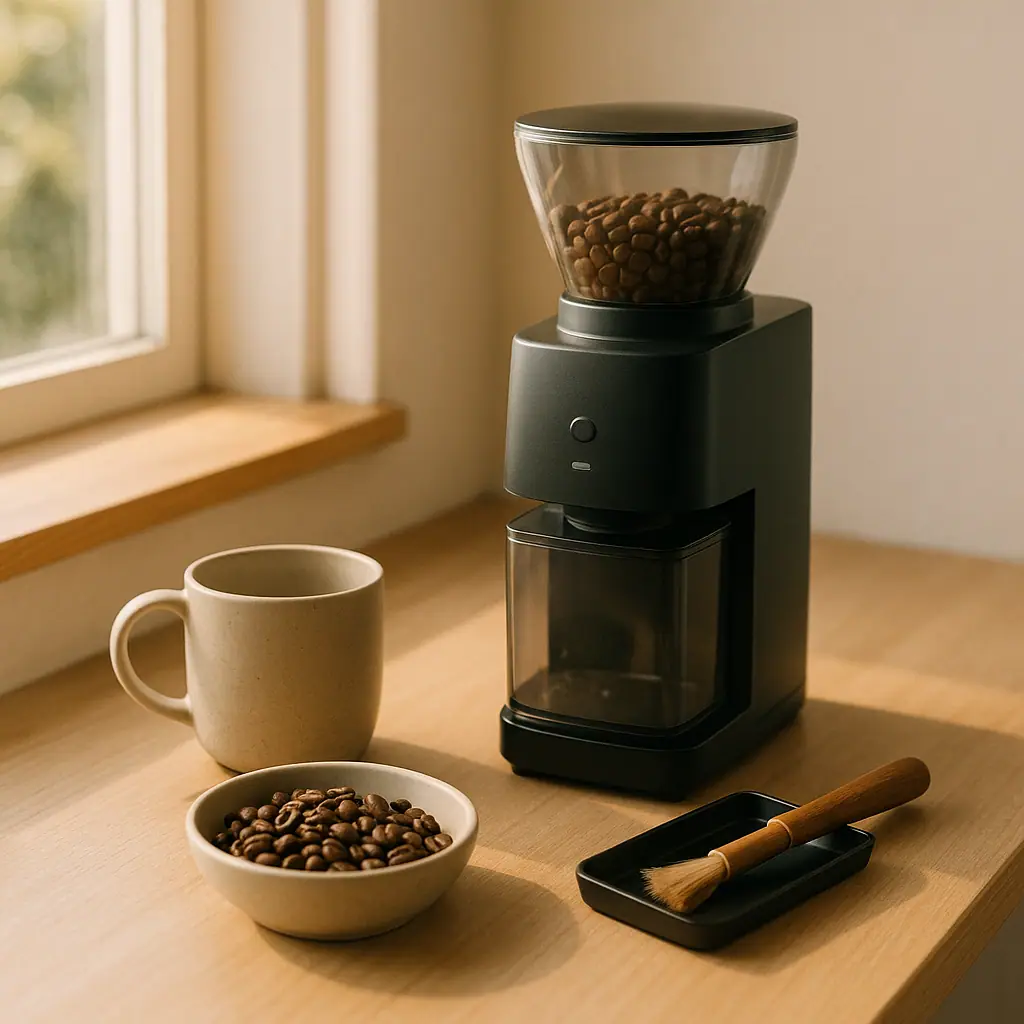
Why your coffee grinder makes coffee taste inconsistent usually comes down to one of three quiet problems: the grind is not repeatable, old grounds are still inside the grinder, or the brewing routine changes more than you realize. The frustrating part is that the grinder may sound normal and still make each cup taste different.
For a beginner home coffee routine, this is good news. You do not have to replace everything first. Start by making the grinder easier to trust from one morning to the next. A small change in grind size, dose, retained grounds, or bean freshness can make coffee taste thin one day and harsh the next.
Think of the grinder as the doorway between whole beans and your brew method. If the pieces coming through that doorway keep changing, the water extracts flavor differently each time. The goal is not cafe-level perfection. The goal is a repeatable setup that helps you notice what changed.
Why Grinder Consistency Matters
Grinding changes how much coffee surface area touches water. Finer pieces expose more surface area and usually extract faster. Coarser pieces extract more slowly. If one batch has a mix of powdery fines and chunky pieces, the cup can taste muddy, sharp, weak, or strangely bitter all at once.
The Specialty Coffee Association discusses how brewing variables interact, including grind size, extraction, brew time, and consistency. Its article on espresso extraction research is more technical than most home brewers need, but the useful beginner takeaway is simple: changing one variable can affect another.
At home, that means you want to change fewer things at the same time. If you adjust grind size, keep the same coffee amount, water amount, and brew method for a few cups. If you change beans, leave the grinder setting alone until you understand the new bag.
Start With the Grinder Type
Different grinders create different kinds of inconsistency. A burr grinder is designed to crush beans between two surfaces. A blade grinder chops beans in a spinning cup. Both can make drinkable coffee, but they behave differently when you troubleshoot flavor.
Burr grinders
A burr grinder usually gives you the better path to repeatability because the setting controls the distance between burrs. But it can still taste inconsistent if the burrs are dirty, the chute holds old grounds, the hopper feeds unevenly, or the setting moves by accident.
Blade grinders
A blade grinder has no true grind-size setting. Time, shaking, bean amount, and cup shape all affect the result. If you use one, consistency comes from repeating the same routine: same coffee amount, same pulse pattern, same total time, and the same gentle shake between pulses.
What to Check First for Inconsistent Coffee Grind
Start with the simple checks because they are the ones most people skip. You are trying to learn whether the grinder is the real issue or whether another part of the routine is moving around.
- Check the dose: use the same amount of beans each time. A small kitchen scale helps, but even a level scoop is better than guessing differently each morning.
- Check the setting: make sure the burr grinder dial has not drifted, clicked between numbers, or been changed for another brew method.
- Check retained grounds: old coffee stuck in the chute can mix with fresh grounds and make the next cup taste stale or uneven.
- Check bean age and roast: very fresh coffee, stale coffee, oily dark roasts, and mixed leftover beans can all behave differently in the grinder.
- Check the brew method: if water amount, filter position, steep time, or pouring style changes, the grinder may get blamed for a brewing problem.
If cleaning might be part of the issue, use a cautious routine rather than forcing parts open. The DailyBrewNook guide to how often to clean a coffee grinder explains a simple daily, weekly, and monthly rhythm for burr and blade models.
How to Handle Grinder Inconsistency Step by Step
Use this process for one normal week. It is slow on purpose. If you change everything in one morning, you may get a better cup but still not know why.
- Clean the accessible parts: unplug the grinder, empty old beans, brush loose grounds, and wipe only the parts your manual says are safe to wipe.
- Pick one brew method: troubleshoot with one familiar method, such as drip, French press, pour-over, or moka pot. Do not switch methods during the test.
- Use one coffee: stay with the same bag for several brews so bean age, roast level, and density are not changing every cup.
- Measure the coffee: use the same dose each time. Write it down if the morning routine is busy.
- Hold the grinder setting steady: make two or three cups before adjusting. One odd cup can come from pouring, water temperature, or a distracted setup.
- Change one notch at a time: if coffee tastes sour, thin, or fast, try slightly finer. If it tastes harsh, bitter, or slow, try slightly coarser.
- Record the best setting: keep a small note for each brew method so you are not starting over every week.
Common Grinder Mistakes to Avoid
The first mistake is chasing every bad cup with a big adjustment. A large grind change can create a new problem before you understand the old one. Move slowly and test the same setting more than once.
The second mistake is ignoring fines and boulders. If the grounds look like powder mixed with pebbles, extraction will be harder to control. With a blade grinder, shorter pulses and a consistent shake can help a little. With a burr grinder, cleaning and a steadier feed may help, but very uneven grounds can also be a sign of worn burrs or a low-quality mechanism.
The third mistake is leaving beans in the hopper for too long. Heat, light, and air can dull flavor, especially in a sunny kitchen. You do not need a complicated storage system, but keeping beans in a closed container and grinding only what you need makes the grinder easier to evaluate.
Pros and Cons
Better repeatability
A steady grinder routine makes it easier to repeat the cups you like instead of guessing every morning.
Less wasted coffee
Small adjustments help you learn from each brew before using more beans on random changes.
Clearer upgrade decisions
Once your routine is controlled, you can tell whether the grinder is truly limiting you.
Takes a few brews
You may need several cups before the pattern becomes clear, especially with a new coffee.
Some grinders have limits
A very uneven blade grinder or worn burr grinder may still need an upgrade after basic checks.
A Simple Grinder Consistency Checklist
- Same beans: use one bag while troubleshooting.
- Same dose: measure the coffee before grinding.
- Same setting: hold the grinder steady for two or three brews.
- Same brew method: avoid switching between drip, press, and pour-over during the test.
- Clean path: brush out retained grounds before blaming the recipe.
- One change: adjust only one variable at a time.
When to Get Extra Help
Check the manual or support page if the grinder makes a new sound, jams, smells hot, or seems unsafe to open. Do not force burrs, tabs, hoppers, or screws if the maker does not explain how they come apart.
If the grinder is clean and your routine is repeatable but the grounds still look extremely uneven, compare it with a freshly ground sample from a local coffee shop. You may discover that the grinder is doing the best it can, and that your next useful upgrade is a basic burr grinder rather than more accessories.
Frequently Asked Questions
What should I check first if my grinder makes coffee taste inconsistent?
Check the dose, grinder setting, and old grounds first. Those three issues are common, easy to inspect, and do not require buying new gear.
Can a dirty grinder really change coffee flavor?
Yes. Old grounds and oils can mix into fresh coffee and make a cup taste stale, bitter, dull, or muddy even when the beans are good.
Should I change grind size after every bad cup?
No. Repeat the same recipe once first. If the same problem happens again, adjust one small step and keep the other variables steady.
When should I replace my grinder?
Consider replacing it only after cleaning, measuring, and testing a steady routine. If the grounds remain very uneven or the grinder cannot hold a setting, an upgrade may help.
Final Thoughts
Why your coffee grinder makes coffee taste inconsistent is rarely one mysterious problem. It is usually a small stack of ordinary things: uneven grind, old grounds, drifting settings, changing beans, or a recipe that moves around too much.
Start with the easiest fixes. Clean what you can safely reach, measure the dose, keep one setting for a few cups, and change only one thing at a time. Once the grinder routine is calm, your coffee will be much easier to understand.