Choosing coffee cleaning tools is less about buying a large kit and more about keeping a few small helpers where you will actually use them. A tidy coffee corner needs tools that clear grounds, wipe drips, dry parts, and reach narrow spots without adding clutter to the counter.
The right set can be simple: one dry brush for grounds, one soft brush for wet parts, two or three dedicated towels, and a small tray or cup that keeps everything from wandering into a kitchen drawer. When those tools have a home, cleanup becomes part of brewing instead of a separate chore.
This guide walks through which brushes, towels, and small tools are worth considering, how to store them, and how to avoid overbuying for a beginner coffee nook.
Why Coffee Cleaning Tools Matter
Coffee leaves behind fine grounds, oils, splashes, and moisture. Those little messes are easy to ignore in the moment, but they build up around grinders, filter baskets, carafes, mugs, frothers, and storage jars. A few dedicated tools make the reset faster and more consistent.
The Specialty Coffee Association publishes coffee resources focused on quality and consistency. At home, consistency starts with the basics: clean surfaces, dry parts, and a routine you can repeat before the next cup.
Start With the Messiest Part of Your Coffee Corner
Before shopping, watch one normal brewing session. Notice where grounds land, which parts stay wet, and which tool you keep wishing you had nearby. That observation is more useful than copying a cafe-style cleaning setup.
If the grinder makes the mess
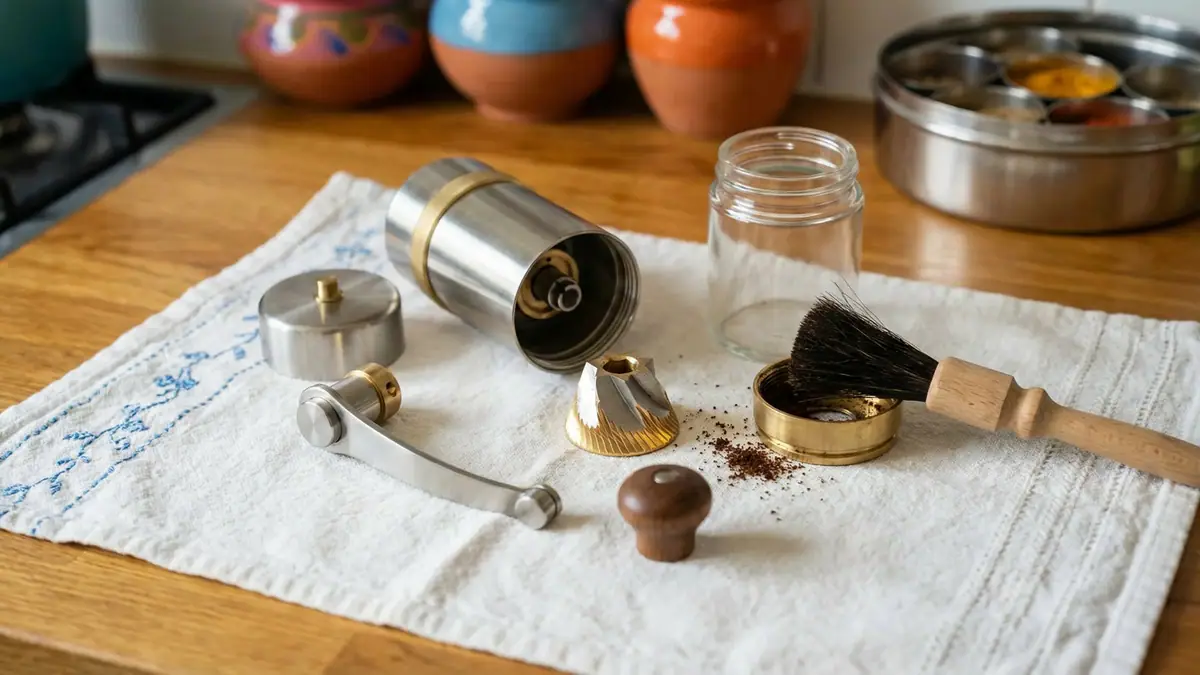
A small dry brush is usually the first tool to add. Use it for loose grounds around the grinder base, hopper lip, dosing cup, and counter. Keep this brush dry and separate from tools used with soap or water.
If the brewer stays damp
Focus on absorbent towels and airflow. A dedicated coffee towel can dry the counter, carafe exterior, dripper, and filter holder. If tools are packed away wet, even good towels will not solve the smell or clutter.
If stale odor is already the main issue, pair this buying guide with how to keep coffee gear from smelling stale. Cleaning tools work best when they support a drying routine, not when they hide damp parts in a drawer.
What to Check First for Coffee Cleaning Tools
Good coffee cleaning tools should be easy to reach, easy to wash, and gentle on the equipment. Avoid anything that feels too stiff, sheds fibers, traps grime, or makes the counter feel crowded.
- Brush stiffness: choose soft to medium bristles for most coffee gear. Very stiff brushes can scratch plastic, glass, coated metal, or grinder parts.
- Dry versus wet use: keep one brush dry for grounds and another washable brush for baskets, screens, and corners that touch water.
- Towel purpose: use one towel for clean drying and another for counter spills or grounds. Mixing both jobs makes towels smell stale faster.
- Handle size: small handles fit tight coffee corners, but they should still be comfortable enough to use daily.
- Storage spot: if a tool has no visible home, it will probably end up buried in a drawer.
How to Build a Small Coffee Cleaning Kit Step by Step
Use this sequence to build a practical kit without overbuying. You can stop after the first few items if your setup is simple.
- Add a dry grounds brush: keep it near the grinder or brewing zone. Use it only for dry grounds, not soap, sink cleanup, or sticky spills.
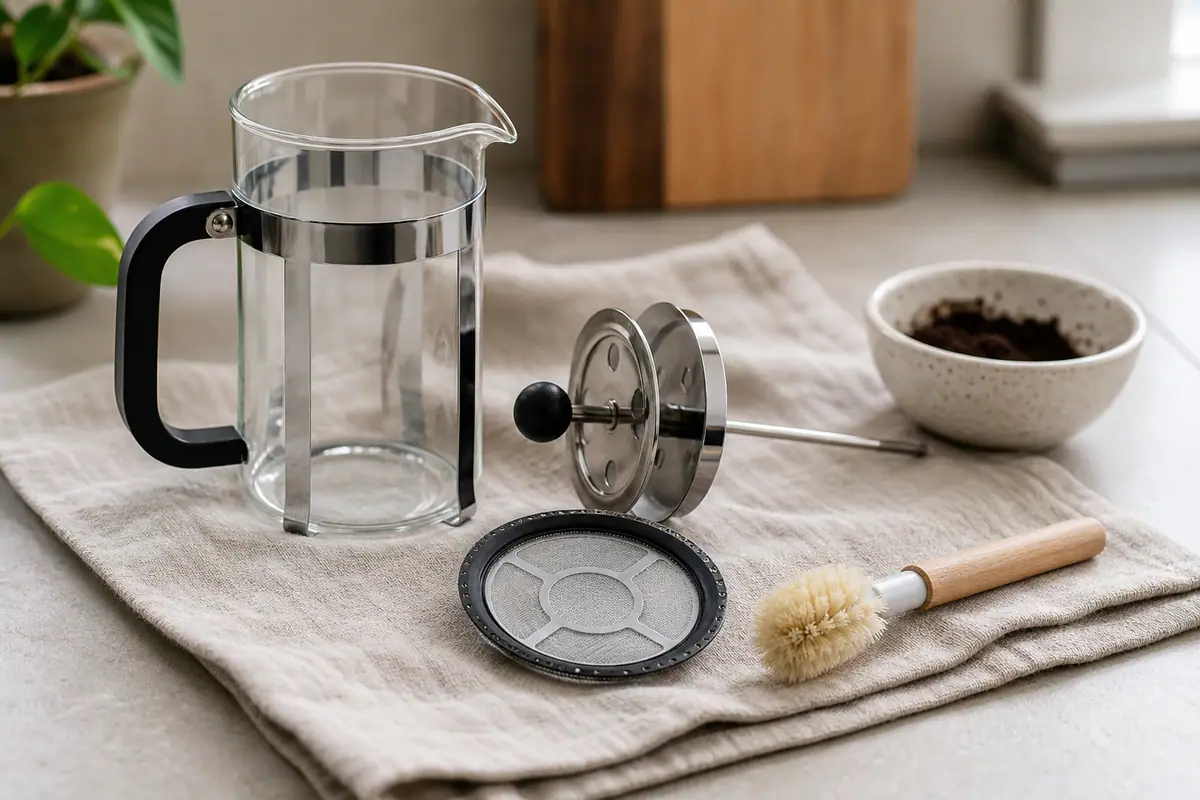
- Add a soft wet brush: use it for brew baskets, reusable filters, French press screens, dripper ridges, and mug corners after rinsing.
- Choose two coffee towels: one for drying clean parts and one for wiping the counter. Hang both so they dry fully between uses.
- Keep a small scraper or spatula nearby: a flexible silicone or plastic tool can help move wet grounds from a press or filter without scratching surfaces.
- Use a small tray or cup: store brushes upright or on a washable tray so damp tools are not pressed against wood, paper, or bags of beans.
- Review after one week: remove anything you did not use and move the useful tools closer to the brewing path.
A small kit also supports a faster reset routine. The guide to a coffee station reset routine shows how a few repeated steps can keep the whole nook from feeling messy.
Common Coffee Cleaning Tool Mistakes to Avoid
The first mistake is using one brush for every job. A brush that touches wet coffee oils should not also be the brush you use inside a dry grinder area. Keep dry and wet tools separate.
The second mistake is buying too many towels without a drying plan. More towels do not help if they sit crumpled near the sink. A small hook, rail, or open spot over a rack is more useful than a large stack.
The third mistake is using abrasive tools because coffee stains look stubborn. Avoid metal scouring pads, harsh scraping, or stiff brushes unless a manufacturer specifically allows them. For appliances, grinders, coated mugs, and carafes, the manual should guide what can be scrubbed, soaked, or placed in the dishwasher.
Pros and Cons of Keeping a Dedicated Coffee Cleaning Kit
Cleanup happens sooner
When the brush and towel are visible, it is easier to reset the counter right after brewing instead of waiting until later.
Tools stay cleaner by purpose
Separating dry grounds, wet parts, and counter spills keeps each tool from picking up the wrong kind of residue.
The coffee corner feels calmer
A small tray or cup keeps brushes and towels from becoming loose clutter around beans, mugs, and filters.
It can become another pile
If every tool is left on the counter without a home, the kit becomes clutter instead of a routine helper.
Some tools need replacing
Towels wear out, brushes can hold odors, and small tools should be washed or replaced when they no longer feel clean.
A Simple Coffee Cleaning Tools Checklist
Use this checklist when setting up or trimming down your coffee corner.
- Dry brush: one small brush reserved for grinder dust and loose grounds.
- Wet brush: one washable brush for baskets, screens, corners, and reusable filters.
- Clean drying towel: one towel for washed coffee parts only.
- Counter towel: one towel for drips, grounds, and quick surface wipes.
- Small scraper: one gentle tool for removing wet grounds without scratching equipment.
- Storage cup or tray: one washable place where tools can dry and stay visible.
When to Get Extra Help or Check the Manual
Check the manual before using brushes inside grinders, automatic machines, milk systems, or anything with electrical parts. Some components are removable and washable; others should only be brushed or wiped dry. If the tool touches a burr, gasket, coating, heating area, or built-in milk tube, do not guess.
You should also check product instructions for reusable filters, thermal mug lids, milk frother whisks, and insulated carafes. Dishwasher-safe labels, gasket removal steps, and cleaning product limits vary by manufacturer.
Frequently Asked Questions
What coffee cleaning tool should I buy first?
Start with the mess you see most often. For most home coffee corners, that means a small dry brush for grounds near the grinder or brewer.
How often should I wash coffee towels?
Wash them whenever they smell stale, feel oily, or stay damp too long. For daily brewing, rotating towels every few days is a realistic starting point.
Can I use the same brush for my grinder and brewer?
It is better to keep them separate. Use a dry brush for grinder grounds and a washable brush for wet baskets, screens, and coffee-contact parts.
Do I need special cafe cleaning tools at home?
No. Most beginners need a small brush, a soft wet brush, dedicated towels, and a simple storage spot. Add specialty tools only when your equipment requires them.
Final Thoughts
Cleaning brushes, towels, and small tools for coffee corners should make daily brewing easier, not more complicated. Start with the one mess that interrupts your routine, then add only the tool that solves it.
A dry brush near the grinder, a washable brush near the sink, two towels with a drying spot, and a small tray can do a lot. Keep the kit small, visible, and easy to clean, and your coffee nook will stay calmer after every brew.