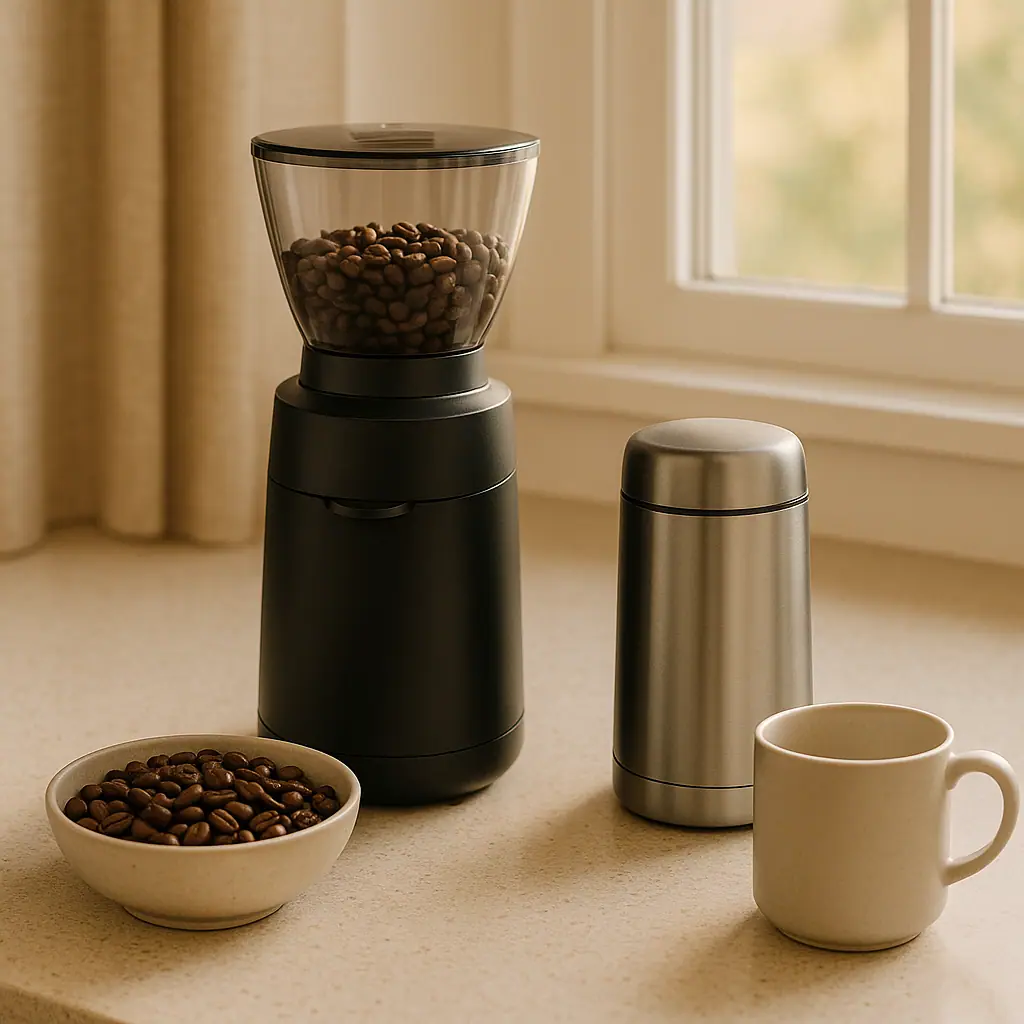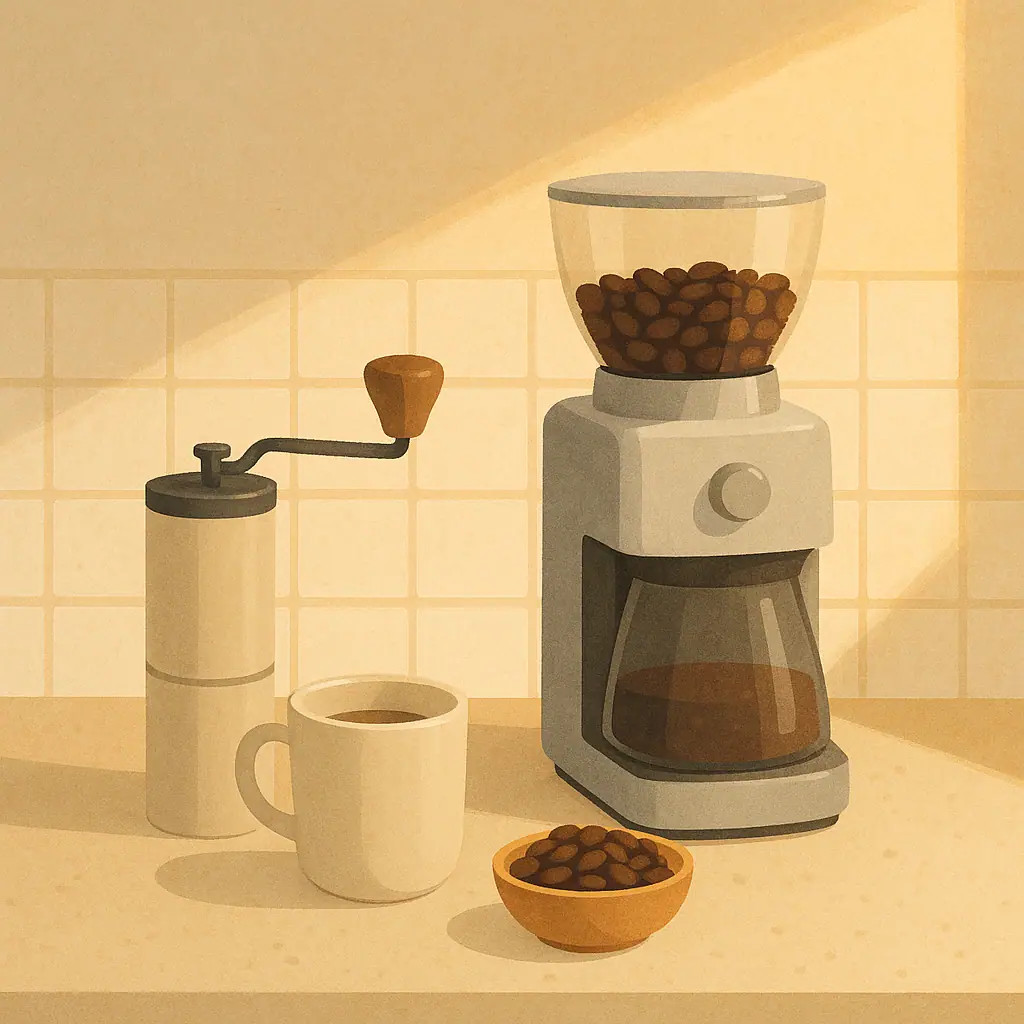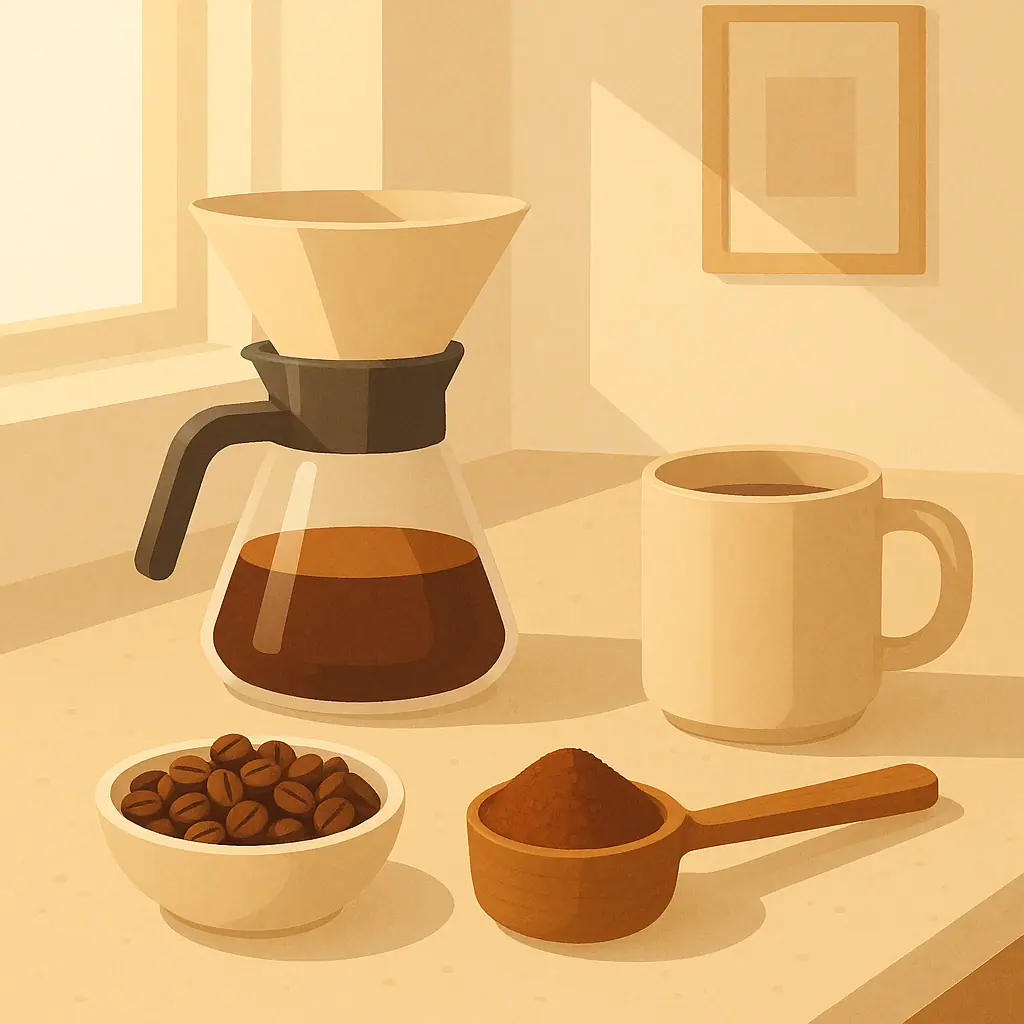
Whole bean vs ground coffee is not a test of whether you are a serious coffee person. It is a practical choice about freshness, time, equipment, and how calm you want your morning routine to feel. For many home brewers, either option can make sense when it fits the way coffee actually gets made in the kitchen.
The difference is simple: whole bean coffee waits to be ground until you are ready to brew, while ground coffee has already been broken into small pieces. Grinding exposes more surface area to air, so aroma can fade faster. But pre-ground coffee also removes one daily step, one piece of gear, and one more thing to clean.
Think of this choice like buying salad greens. Whole leaves usually stay lively longer, but chopped greens are easier on a busy day. The better choice is the one you will store well, measure consistently, and use before it sits around too long.
Why Whole Bean vs Ground Coffee Matters
Coffee flavor depends on many small variables working together: the beans, grind size, water, brew time, filter, and storage. The Specialty Coffee Association keeps a broad public library of coffee standards and resources for professionals, and the beginner lesson is still useful at home: consistency matters when you want a cup to taste repeatable.
Whole bean coffee gives you more control over one of those variables because you choose the grind right before brewing. That can help if you use different methods, such as French press one day and drip coffee the next. Ground coffee gives up some control, but it can make the routine easier to repeat if the grind matches your brewer.
Start With Your Real Morning Routine
The most useful question is not which format is best in theory. Ask what happens on an ordinary morning. If you are making coffee while getting ready for work, feeding kids, or trying not to wake anyone, adding a grinder may feel like one step too many.
When whole bean fits
Whole bean coffee fits well when you can spare a minute to grind, have space for a grinder, and want to adjust grind size for different brewers. It is especially helpful if you buy smaller bags and brew most days, because you can grind only what you need.
When ground coffee fits
Ground coffee fits when your priority is speed, quiet, and fewer moving parts. It can be the better choice for a shared kitchen, a tiny apartment, a travel setup, or anyone who is still learning basic ratios before buying more gear.
What to Check First for Whole Bean vs Ground Coffee
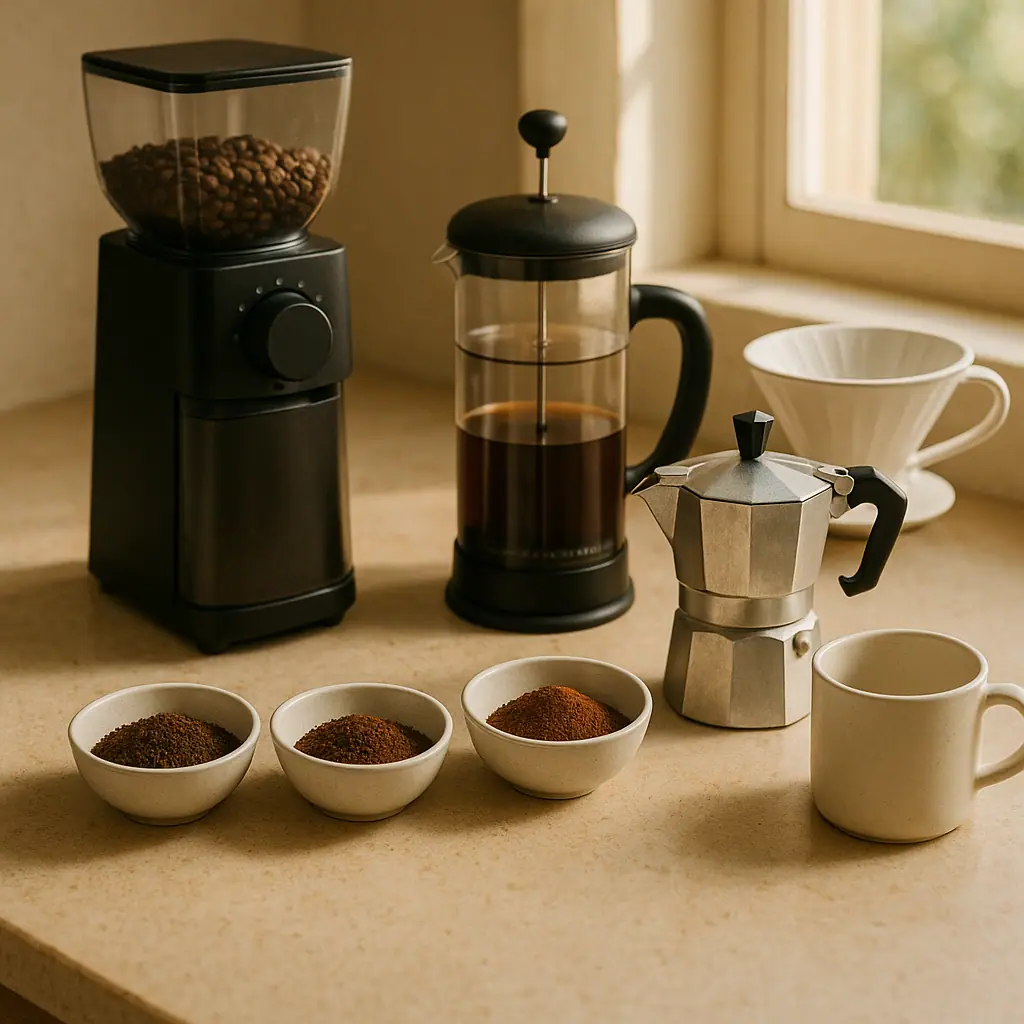
Before deciding, look at the brewer you use most. A French press usually wants a coarser grind, drip coffee often works better with a medium grind, and many pour-over brewers need small adjustments. If you buy ground coffee, pick the grind style closest to your actual method.
- Your main brewer: buy for the method you use most often, not the method you hope to use someday.
- Your storage habit: both formats need a cool, dry, closed container away from heat, steam, and sunlight.
- Your grinder quality: a poor grinder can make whole bean coffee less predictable than a good pre-ground option from a local roaster.
- Your bag size: smaller amounts are easier to finish while the coffee still smells and tastes lively.
- Your patience level: the right routine should feel repeatable, not like a project every morning.
If storage is your main concern, DailyBrewNook also has a practical guide on how to store coffee beans at home. The same calm idea applies here: protect the coffee from air, heat, light, and kitchen chaos without turning your counter into a lab.
How to Choose Step by Step
Use this short process before buying your next bag. It keeps the decision tied to your kitchen instead of internet opinions.
- Name your main brew method: choose the brewer you use most often during the week.
- Check whether you own a grinder: if yes, decide whether it gives you a reasonably even grind for that method.
- Estimate your weekly use: if one bag lasts a long time, smaller bags or pre-ground coffee in modest amounts may be easier to manage.
- Match grind to method: if buying ground coffee, choose the label that best matches drip, press, espresso-style, or another listed use.
- Keep the recipe steady: use the same coffee amount and water amount for several cups before judging the format.
- Change one thing later: if the cup tastes off, adjust grind, dose, or brew time one at a time.
Common Mistakes to Avoid
The first mistake is buying whole bean coffee without a grinder you like using. If the grinder is loud, messy, hard to clean, or wildly uneven, you may stop using it after a week. Whole bean only helps when grinding becomes a normal part of the routine.
The second mistake is buying a large bag of ground coffee because it seems like the better deal. If it takes too long to finish, the last cups may taste dull. A smaller bag used steadily often feels more satisfying than a bargain bag that sits open for weeks.
The third mistake is blaming the bean format for every bad cup. Weak, bitter, or sour coffee can also come from dose, water amount, brew time, old filters, dirty gear, or a grind that does not match the brewer. Whole bean and ground coffee both need a simple recipe.
Pros and Cons
Whole bean keeps more control in your hands
You can grind for the brewer you are using that day and make small adjustments as you learn.
Ground coffee is faster and quieter
It removes the grinder step, which can make daily coffee easier in a busy or shared kitchen.
Both can support a good routine
With sensible storage and a steady recipe, either format can make a satisfying home cup.
Whole bean needs equipment
You need a grinder, a little counter space, and a willingness to clean another tool.
Ground coffee gives less flexibility
If the grind is wrong for your brewer, you cannot make it coarser or finer at home.
A Simple Buying Checklist
- Choose whole bean if: you brew often, own a grinder, and want to adjust grind size.
- Choose ground coffee if: you want speed, quiet, and fewer cleanup steps.
- Buy smaller amounts if: coffee sits around longer than expected in your kitchen.
- Use a closed container: keep both formats away from heat, steam, sunlight, and strong odors.
- Repeat the recipe: judge the coffee after a few steady brews, not one rushed morning.
When to Get Extra Help
Ask your local roaster or coffee shop to grind a bag for your exact brewer if you are not ready to buy a grinder. Tell them whether you use drip, French press, moka pot, pour-over, or cold brew. That one sentence is more useful than asking for a generic grind.
If you already have a grinder but the cup tastes unpredictable, compare your routine against a simple troubleshooting guide before upgrading. DailyBrewNook's article on why your coffee grinder makes coffee taste inconsistent can help you decide whether the grinder, recipe, or cleaning routine is the real issue.
Frequently Asked Questions
Is whole bean coffee always better than ground coffee?
No. Whole bean gives more freshness control when you grind well, but ground coffee can be the better everyday choice if it matches your brewer and helps you keep a steady routine.
Should beginners buy a grinder right away?
Not always. If you are still learning your brewer, start with a good small bag of ground coffee. Add a grinder when you know you will use and clean it regularly.
How should I store whole bean or ground coffee?
Keep it closed, dry, and away from heat, steam, sunlight, and strong kitchen smells. Avoid leaving either format open on the counter between brews.
What if my ground coffee tastes weak?
Check the coffee amount, water amount, brew time, and grind match first. Weak coffee is not always a freshness problem; the recipe may simply need a small adjustment.
Final Thoughts
Whole bean vs ground coffee comes down to control versus convenience. Whole bean is helpful when you want flexibility and can make grinding part of the routine. Ground coffee is helpful when simplicity is what keeps your coffee habit realistic.
For your next bag, choose the format that fits the way you already brew. Store it well, use a steady recipe, and finish it at a comfortable pace. Better home coffee usually starts with one repeatable habit, not a counter full of gear.